


JoaMat
High Rollers
-
Joined
-
Last visited
Everything posted by JoaMat
-
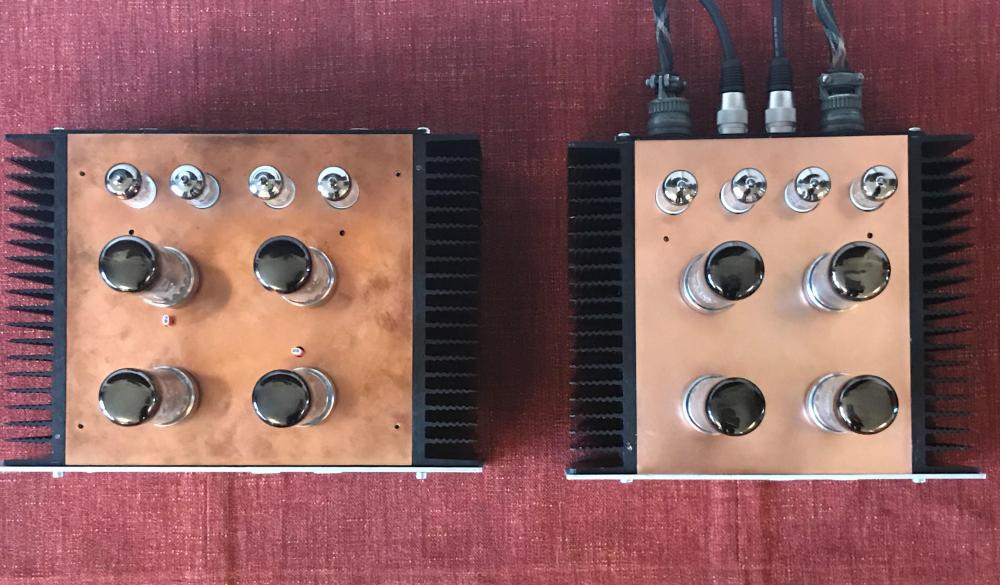
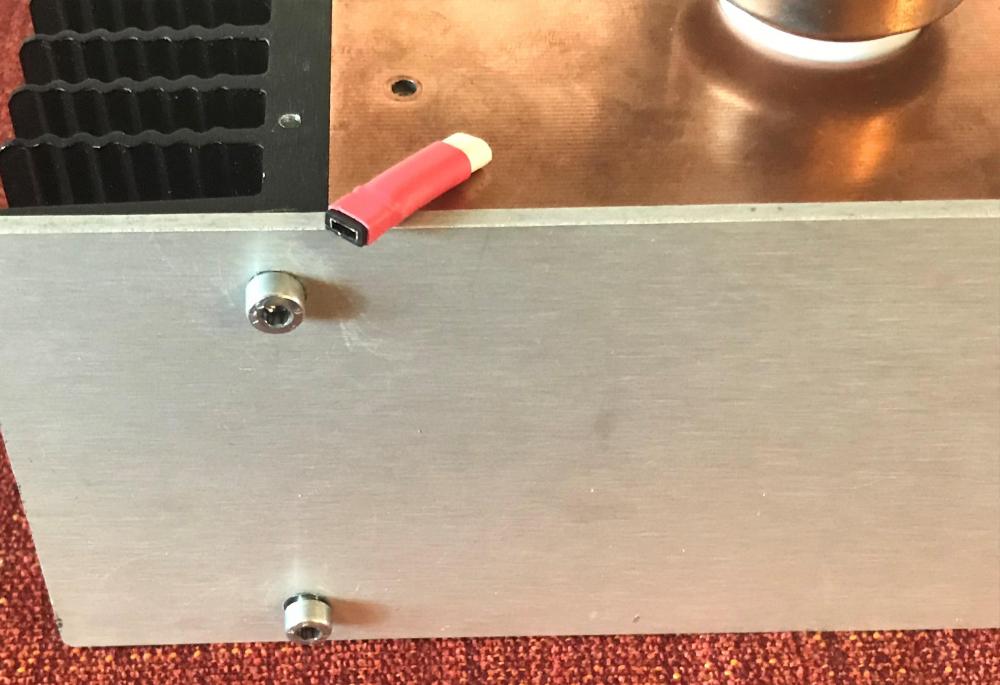
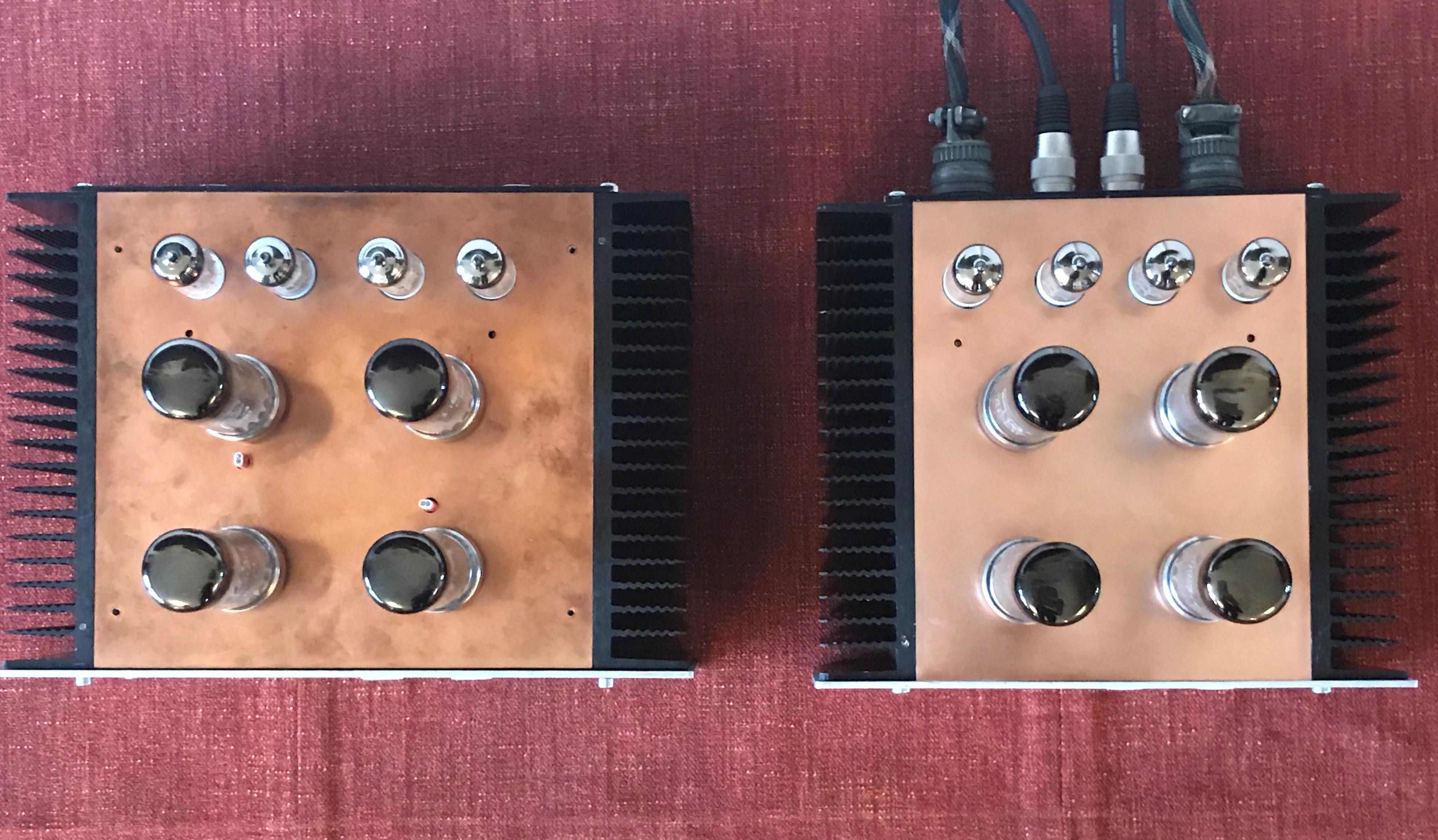
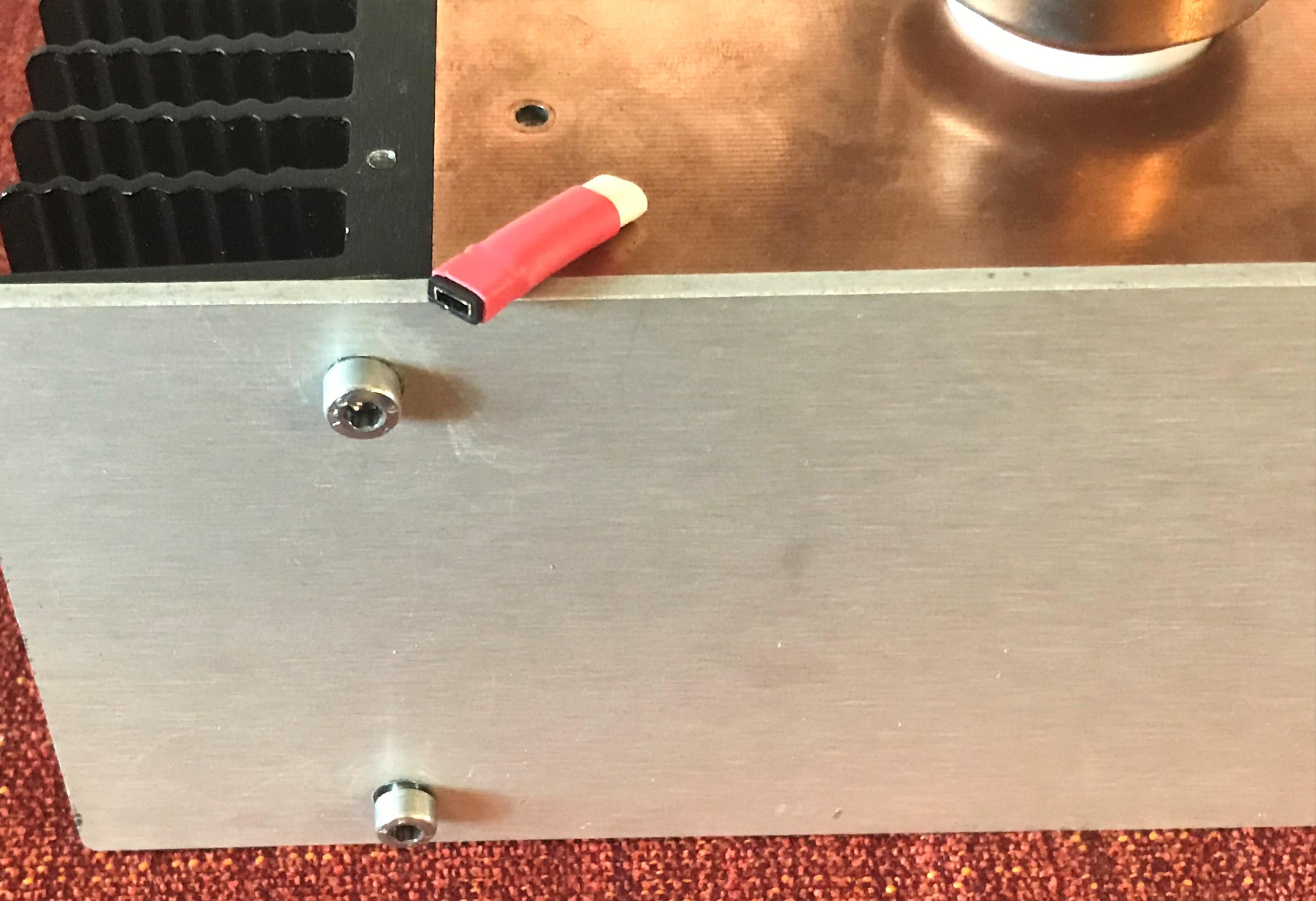
Thanks folks. Aerial picture of old and new “mini T2”. The new just got a top plate, looks rather nice when newly polished. Small holes in front of small tubes are for trimmers. I drilled two 6.5mm holes in the old to plate (between big tubes) for the balance servo jumpers. Made this jumper with a piece of cable and heat shrink.
-
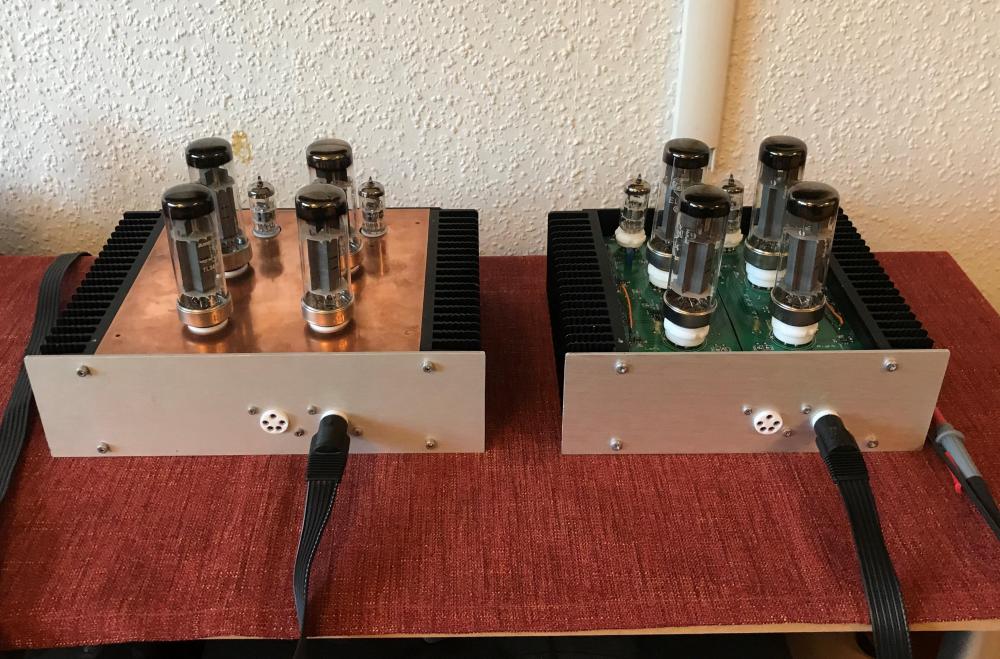
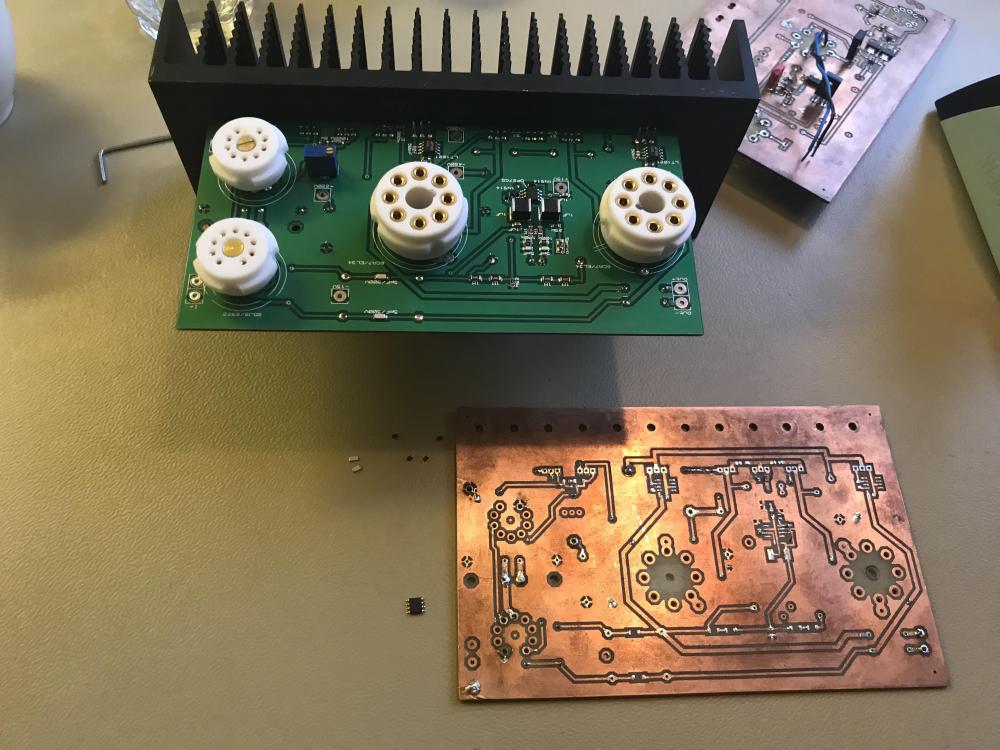
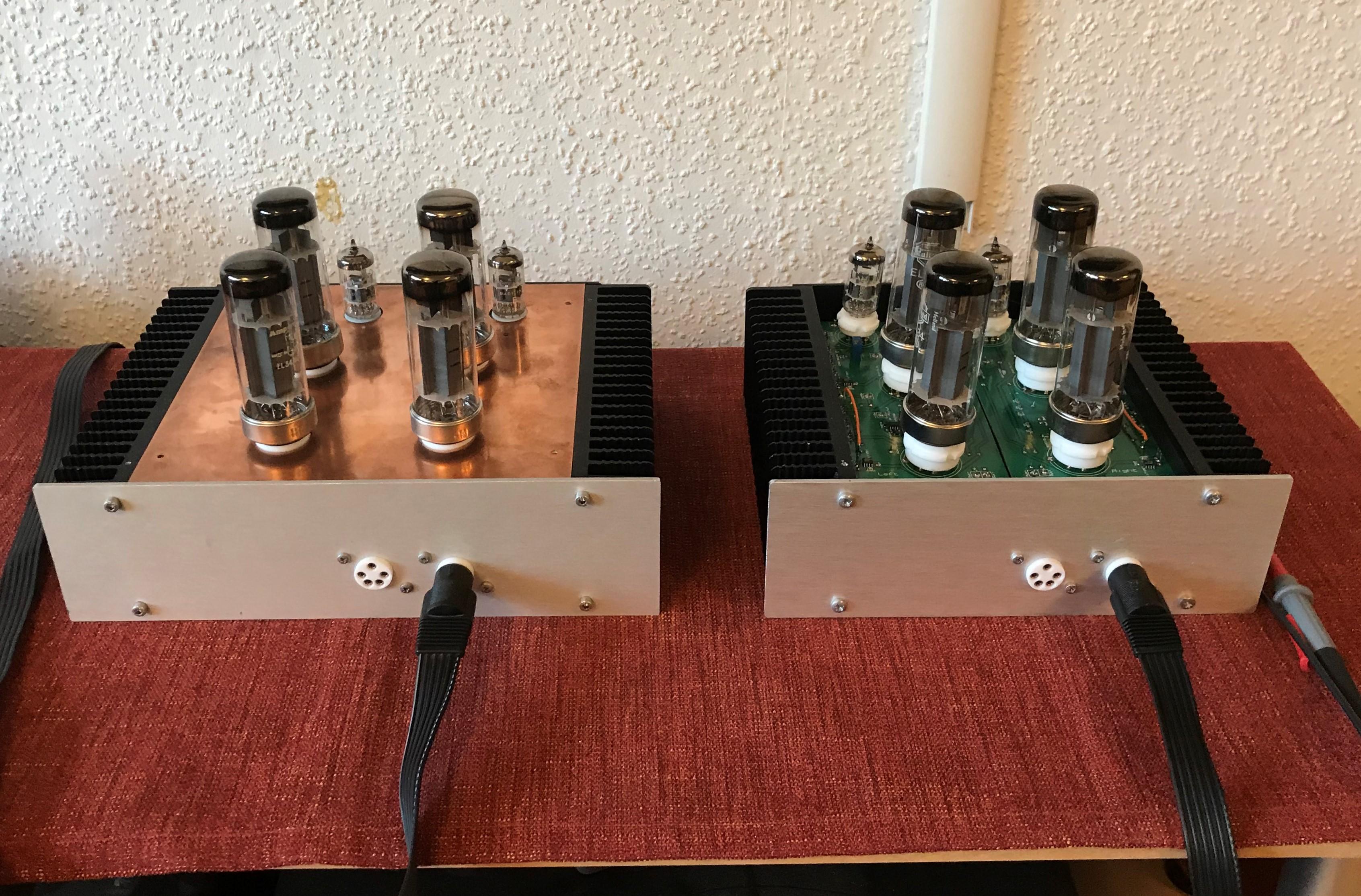
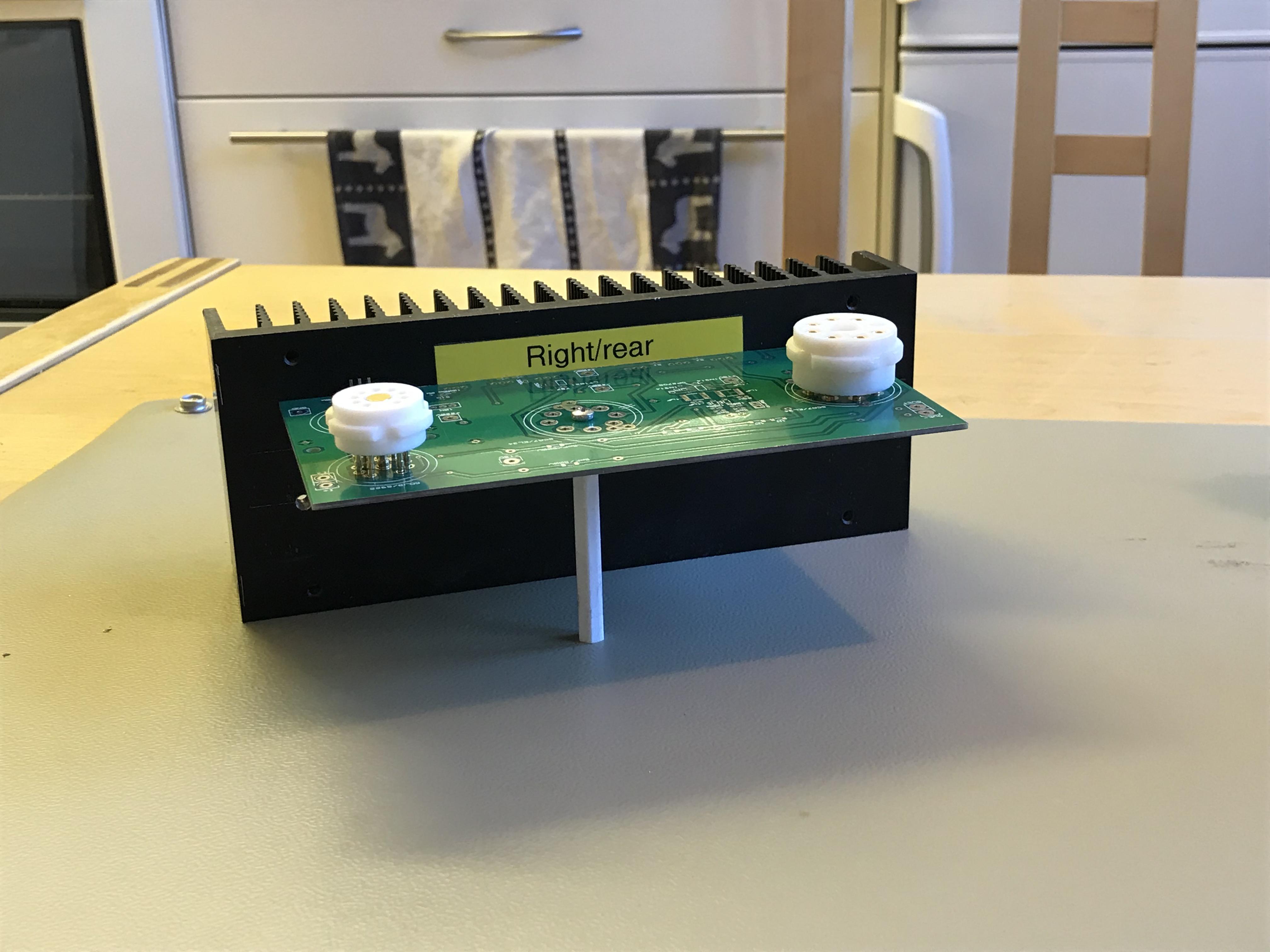
To the right is a just finished mini T2. Transistors mounted direct onto heat sinks. Inner width is 159 mm (6.26 in). Most of the components are moved from my first amplifier with in kitchen made boards, including the small LEDs and diodes. Heat sinks, all connectors (STAX, Neutrik, Amphenol) are from one of my full size DIY T2 (RIP – I’ll build a new one with all original parts) This is my third mini T2. The building process has been straight forward. The only thing is that left channels of all the three amplifiers have a bloody annoying hum during the first minutes after start up. I’ve no idea what causes it.
-
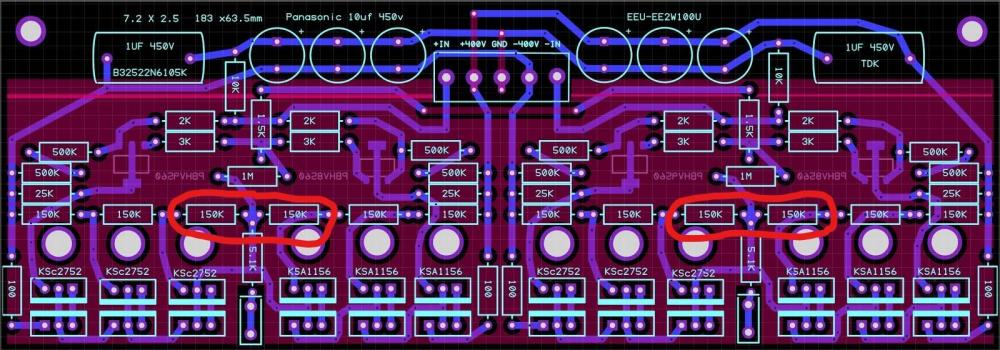
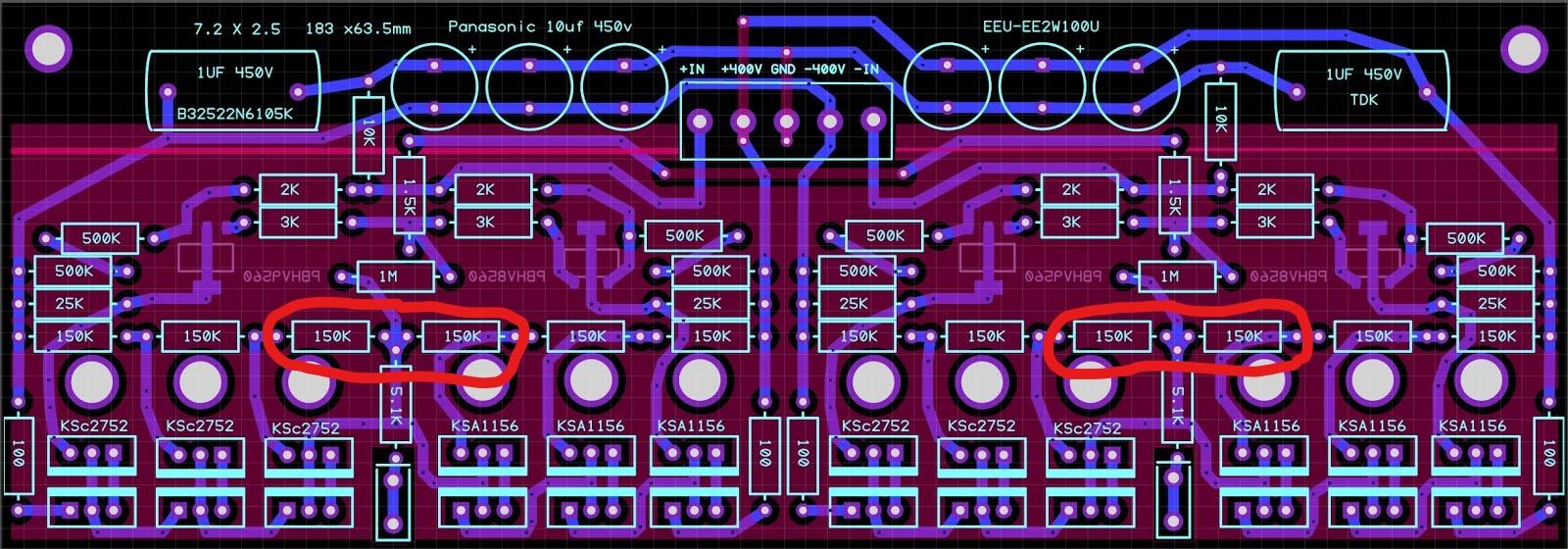
Shorted out the 150K resistors in red circles which then bypasses corresponding Darlington pairs. I run amplifier +/-400 V and 5 mA. IMO the amplifier sounds about the same as with higher currents and all transistors on duty. I believe it’s possible to build a decent all SMD version of the CFAE. Reduce voltage to let say +/-300 V - how small can one build a power supply?
-
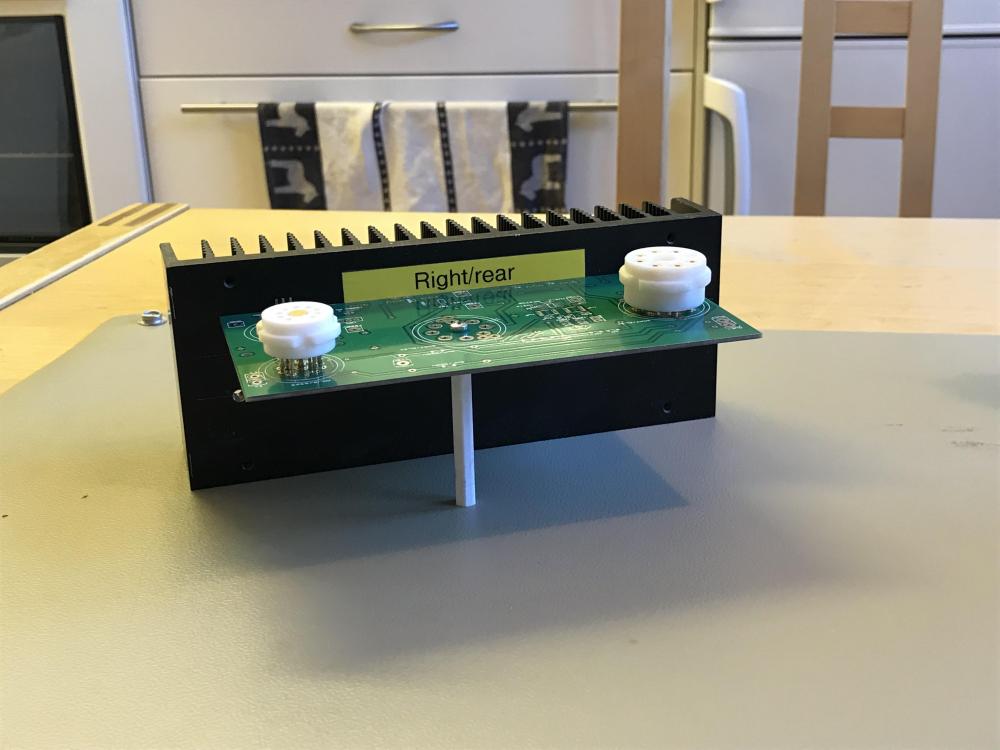
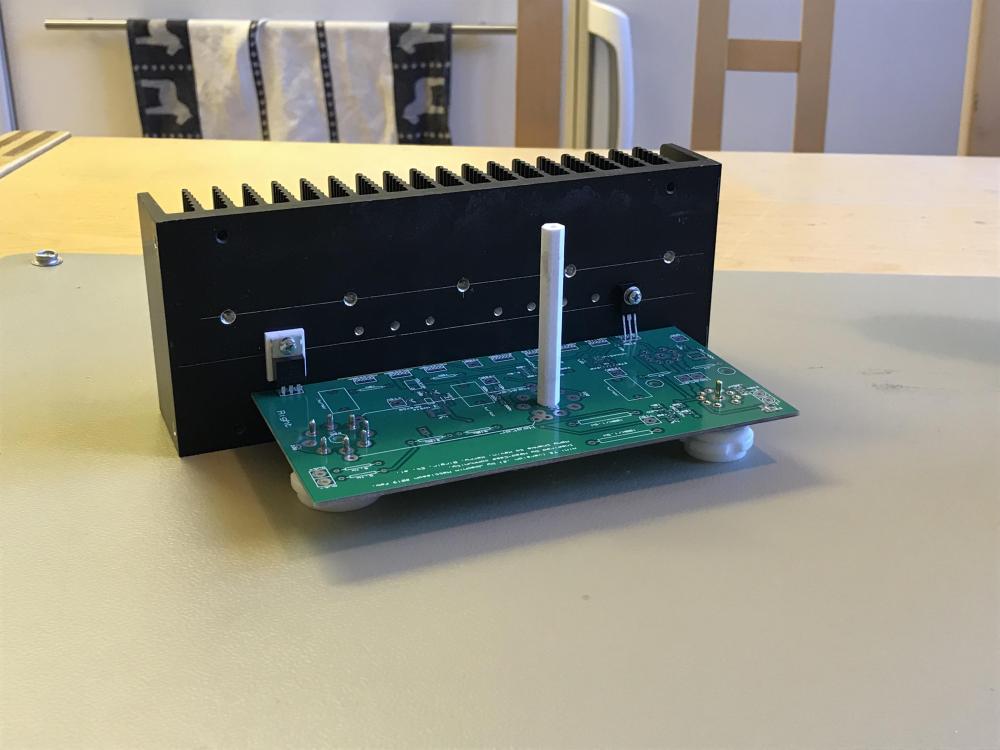
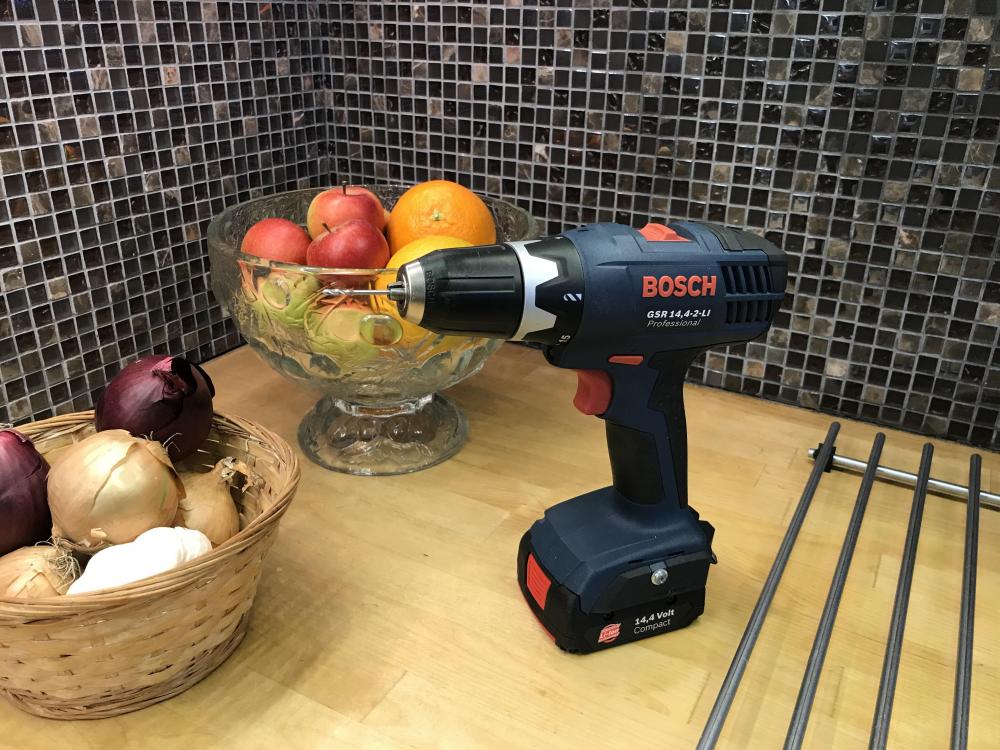
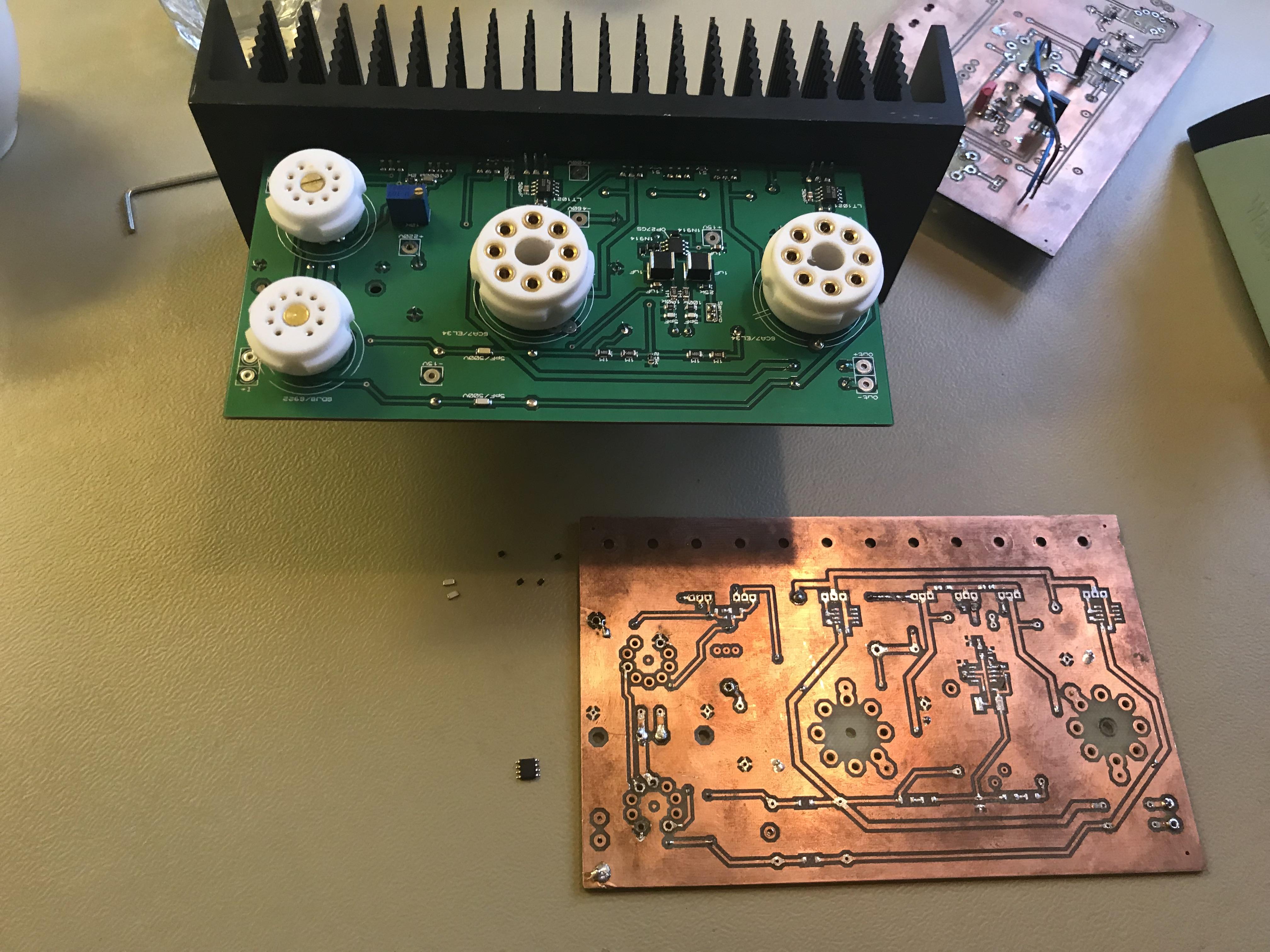
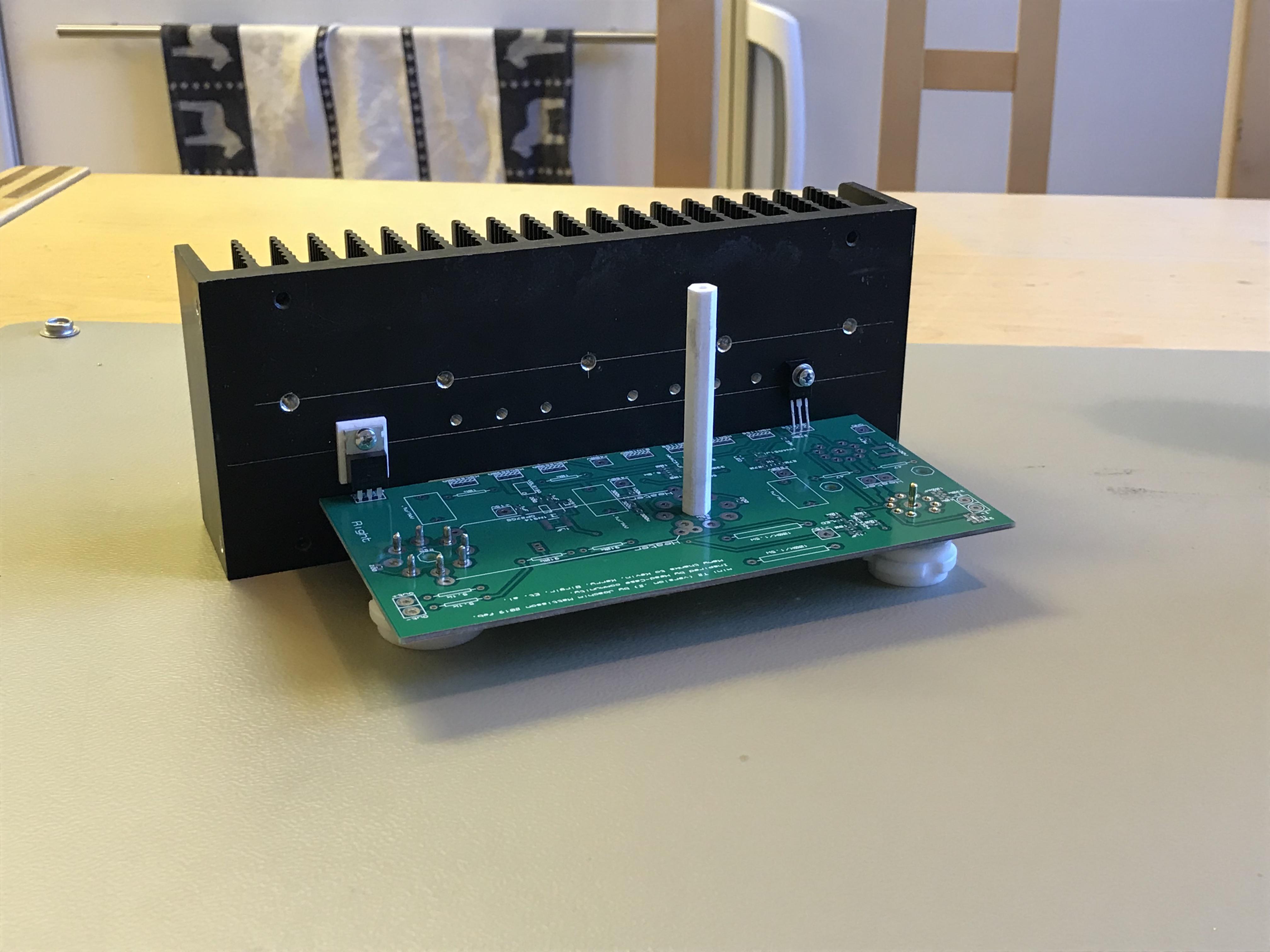
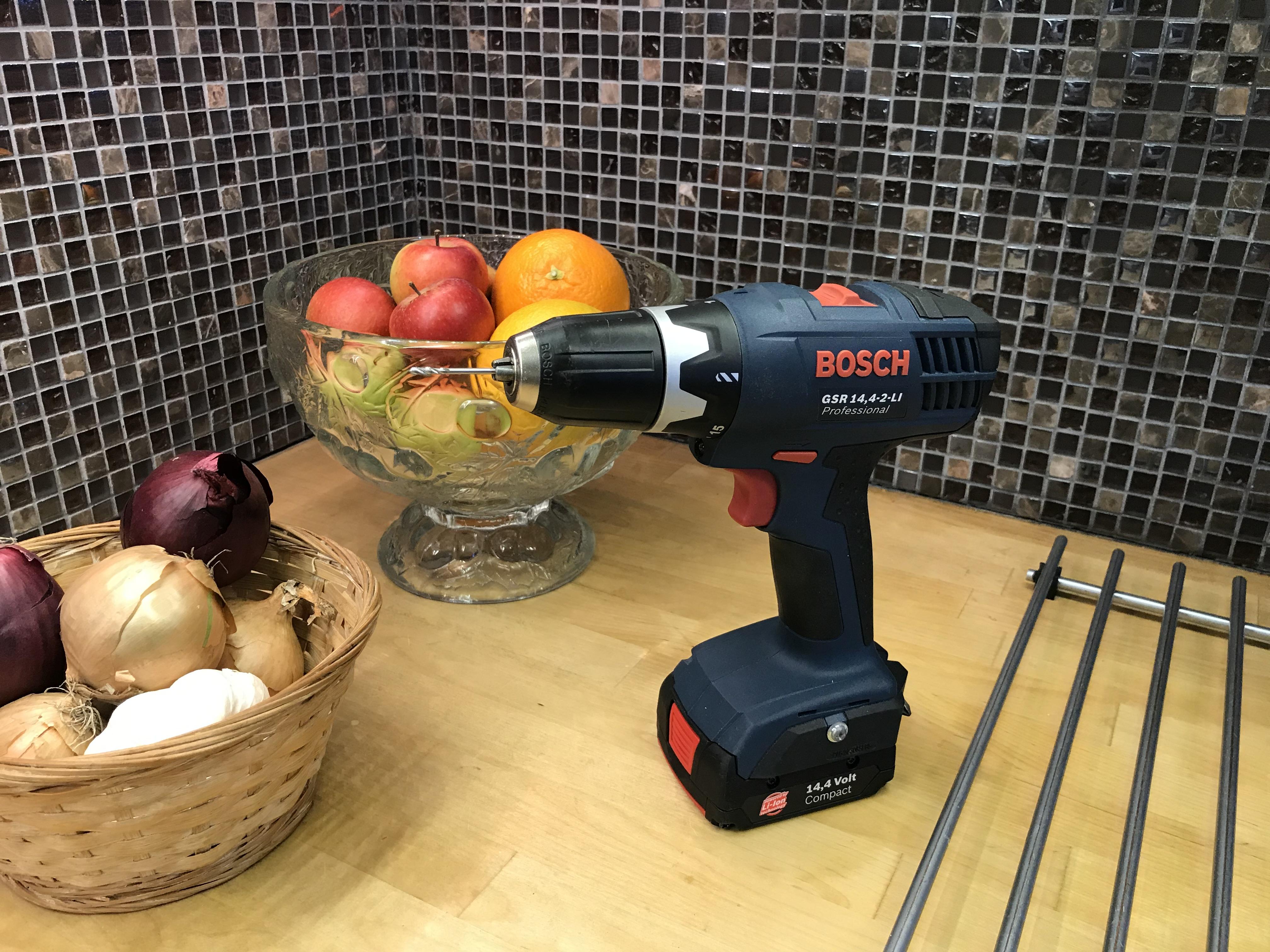
Now when there are nice tapping tools out there I think I try mount sands direct on heat sink. I've done this today. I cut of 20 mm of the board where the bracket should be so now it’s 80 mm x 160 mm. The layout was not meant for this so there is a need for a couple of extra jumper wires. Most things are doable. Here is my tapping tool with rather long shaft M3 tap.
-
There are three wire jumpers on each boards. Two for big tubes filament so two good wires between the tubes. Then there is a small jumper along one side of OP27 (see silk screen component side (which one now that is…)), easy to forget - I use a piece of a wire from power resistor. It connects -15V to the balance opamp.
-
-
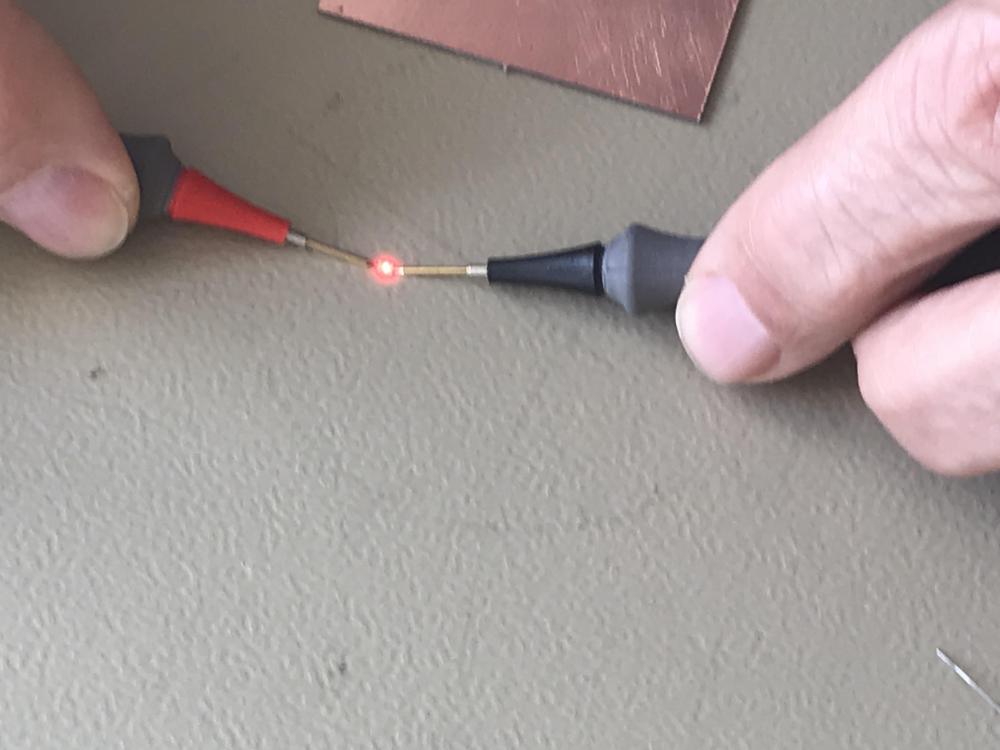
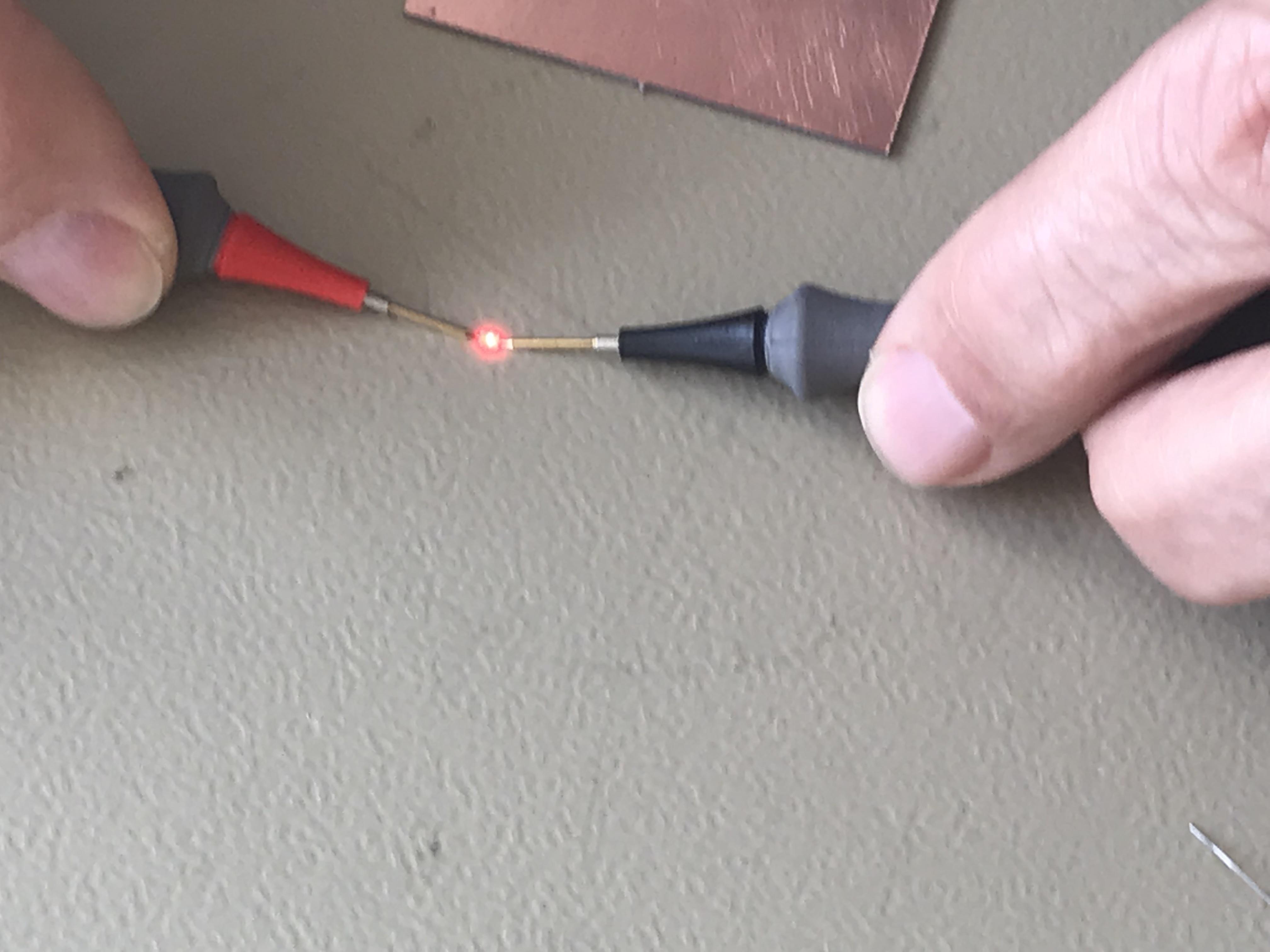
LT1021-7 is worth trying – in LTspice it acts like LT1021-10 and LT1236-10. The LED TLMS1100 is a tiny thing and personally I think that’s the most tricky part to handle and solder. I started to use it in battery daughter board for T2 and I did buy a hundred pieces right away. It might be a good idea to buy some extra in case if you lose one (on floor, overheat when solder or what so ever). Now days I solder in the LED first and then check it with DMM in diode test mode, positive test pin on anode and negative on cathode and the LED will glow if everything is right (no guarantee for bad soldering though - by own experience). It will not glow with transistor and resistors in place. We send the designer a bottle of Scotch each and see what happens…
-
As DIYer you are entitled to do whatever you like. IMO 18 mA is at the higher end. For the moment I run mine at one fourth of 18 mA. I’ve my house full of heat sinks but that’s not a reason for high currents.
-
It looks like the LT1021 is abandoned by most supplier. Mouser is out of stock but claims that it’s on order. There is another 10 volt reference LT1236-10 that I think should be a good alternative. I’ve tested it in LTspice model by Kerry (jump here for reference and more info) and it seems to do the same as LT1021-10 but with 0.2 mA lower current with same current set resistor. Someone has to verify LT1236 works. I guess Kerry needs a couple of LTxxxx in above PSU.
-
-
I haven’t run the amplifier with 20K resistors for more than a day. But after switching power on and off frequently I do think this will work. With R1 and R3 at 270 ohm I get 9.0 to 9.1 mA at +220V (each board) and with PSU positive rail set to 400 V a 20K/3W resistor seems to fit perfect. I think gepardcv idea will work and in my opinion it’s absolutely worth trying. Current demand positive rail is approximately 80 mA and negative is 60mA. My earlier statement that a +220 V supply is preferred might be a bit exaggerated.
-
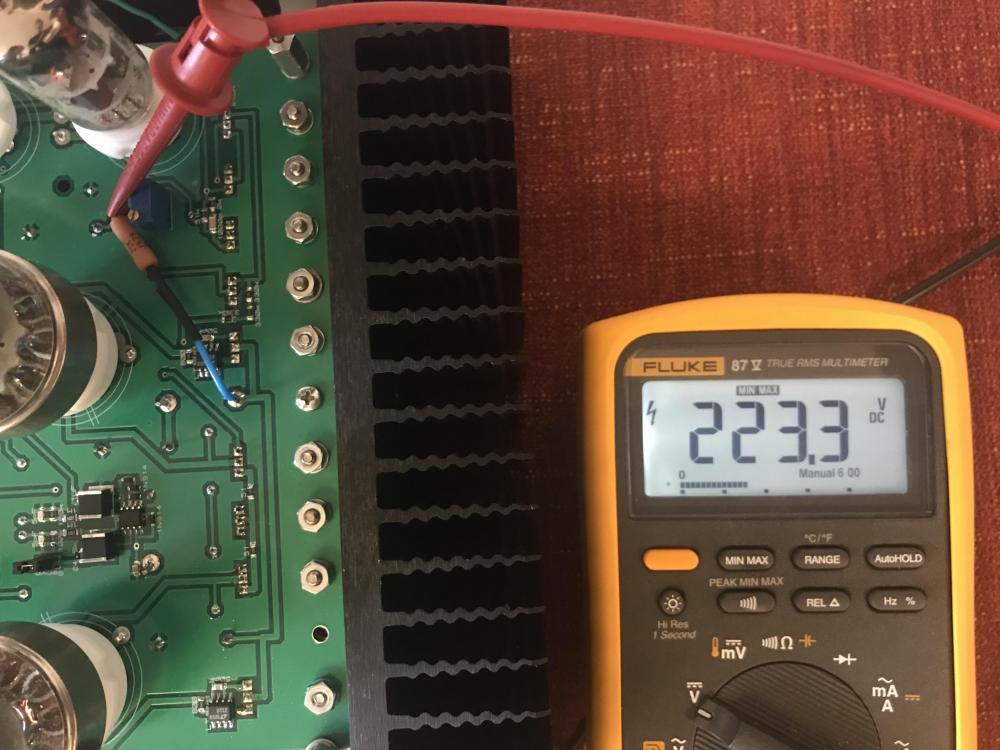
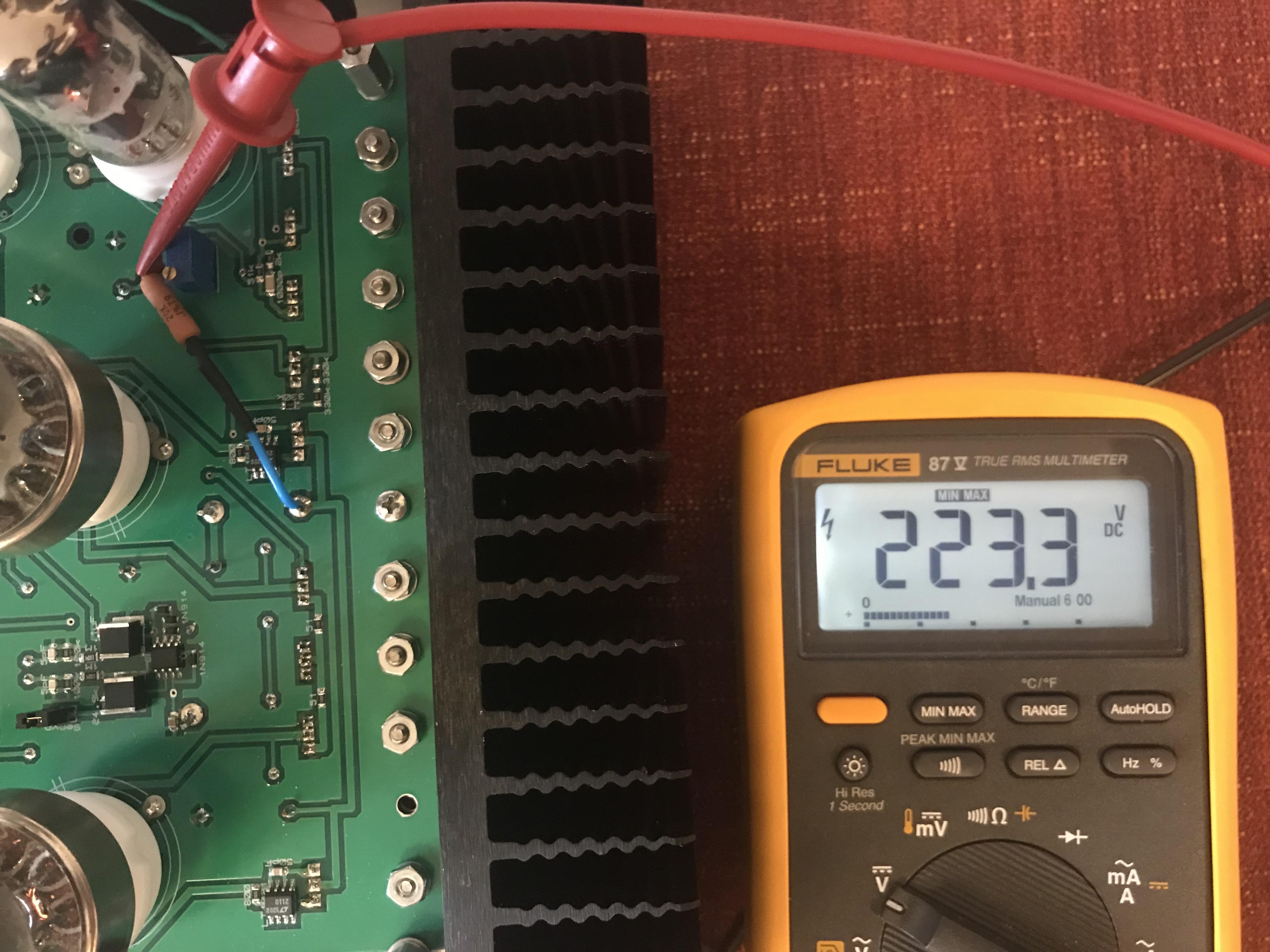
Back from skiing. Zoom in on the Vishay CPF3 resistor and you can read 20K. 400 volts in at the blue wire. The meter is in Min Max mode and it went up to 225.5 V at start up and then immediately down to what you see in Picture. Seems to work. I’ll change the other channel and will test this for some time. I have run the amplifier on a unchanged T2 PSU with +/-500 V and +250 V for a while and that also seems to work alright. Edit: Both channels now with 20K resistors to achieve the +220V. 220.3V respective 219.6V with PSU +400V trimmed to 401.9V on the clocks.
-
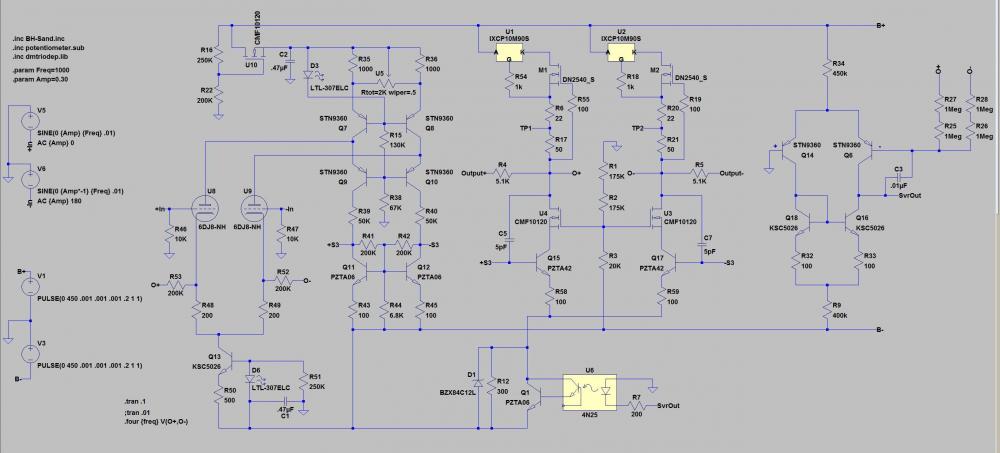
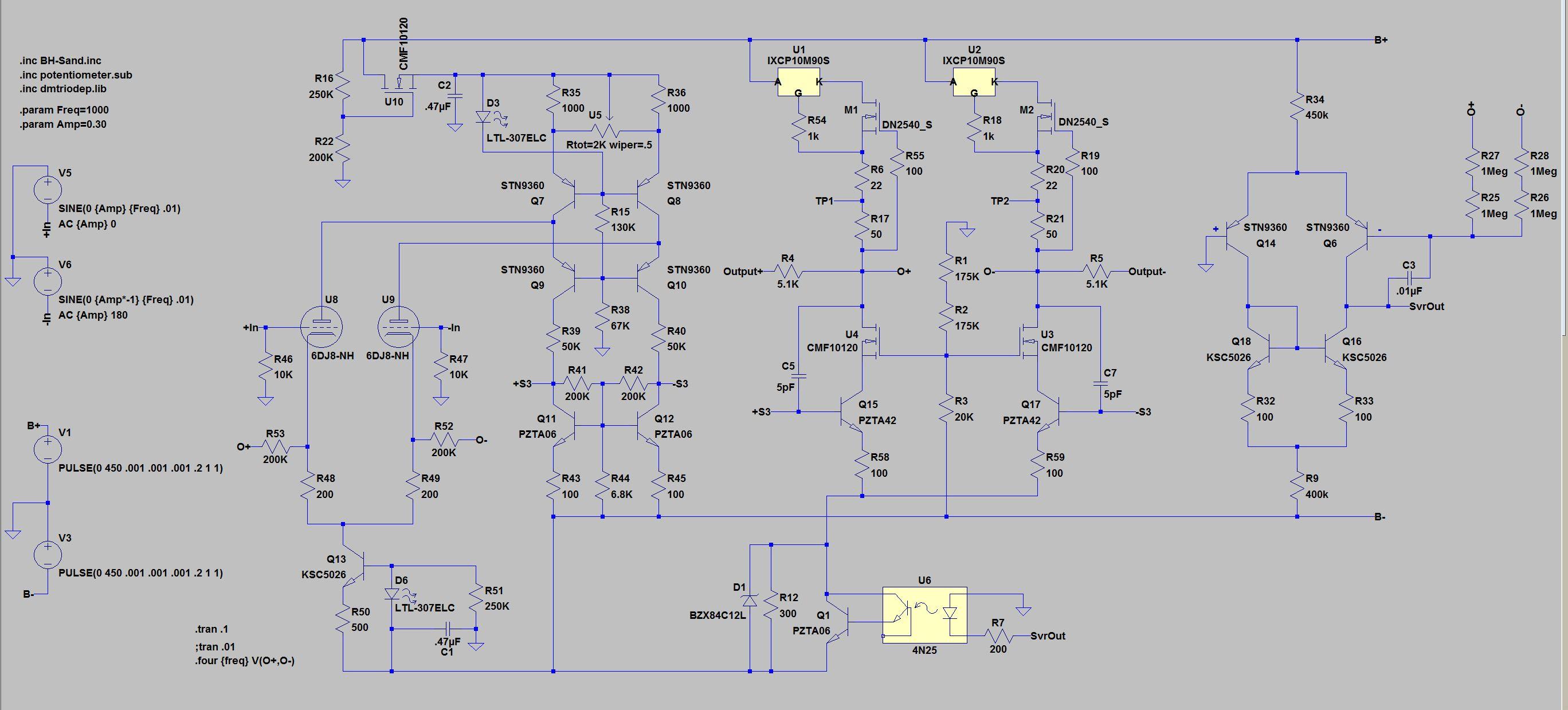
Maybe it’s not wise to entirely rely on a single 20K resistor. A better way probably is to use Zener diodes to achieve 220V as Kevin does with the KGSSHV-Tube-Sandwich. Another way could be using mosfet like Kerry did in below LTspice simulation – see U10, R16 and R22. Ref. Kerry post https://www.head-case.org/forums/topic/12949-stax-t8000-clone-well-sorta/?do=findComment&comment=764504
-
-
-
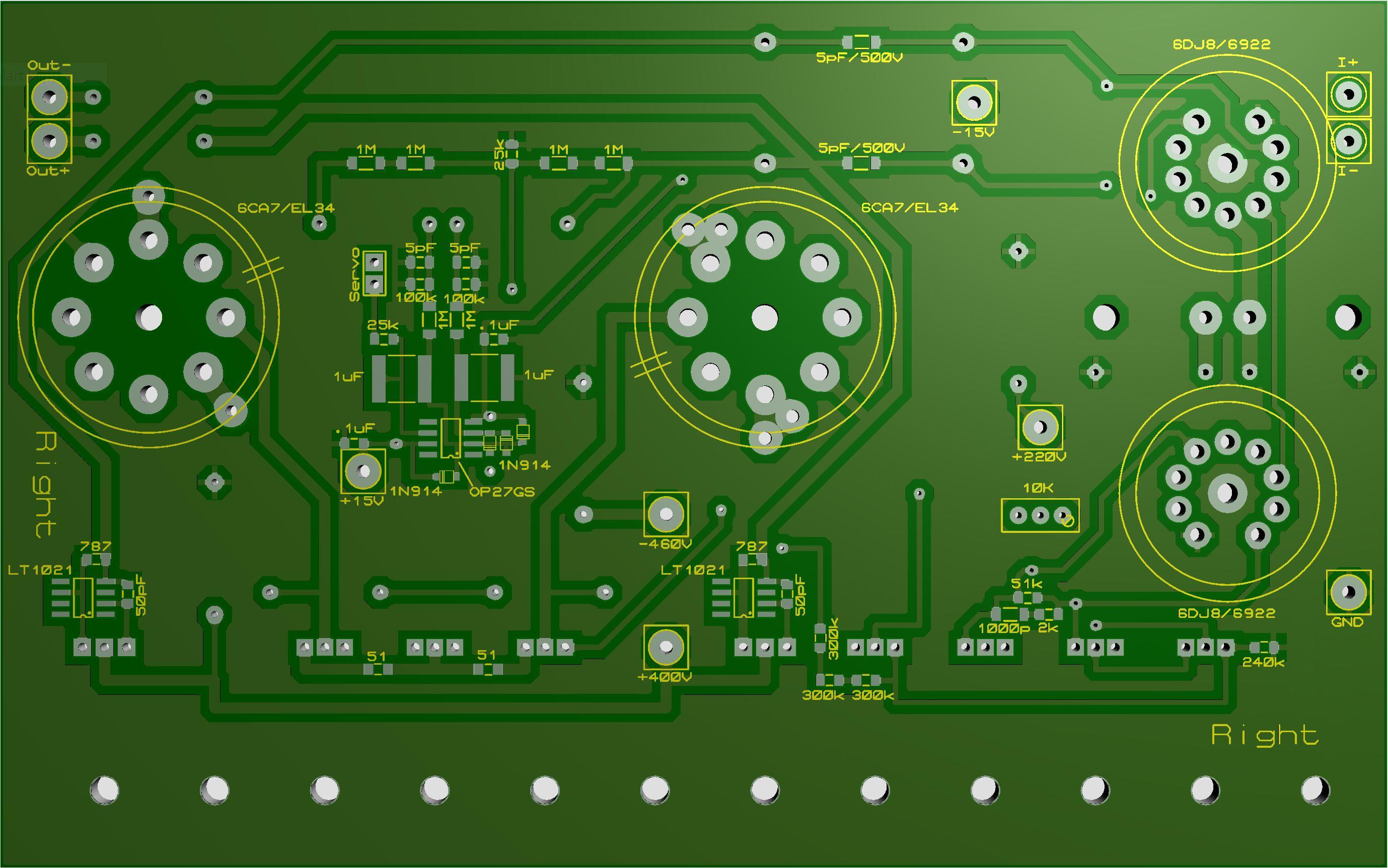
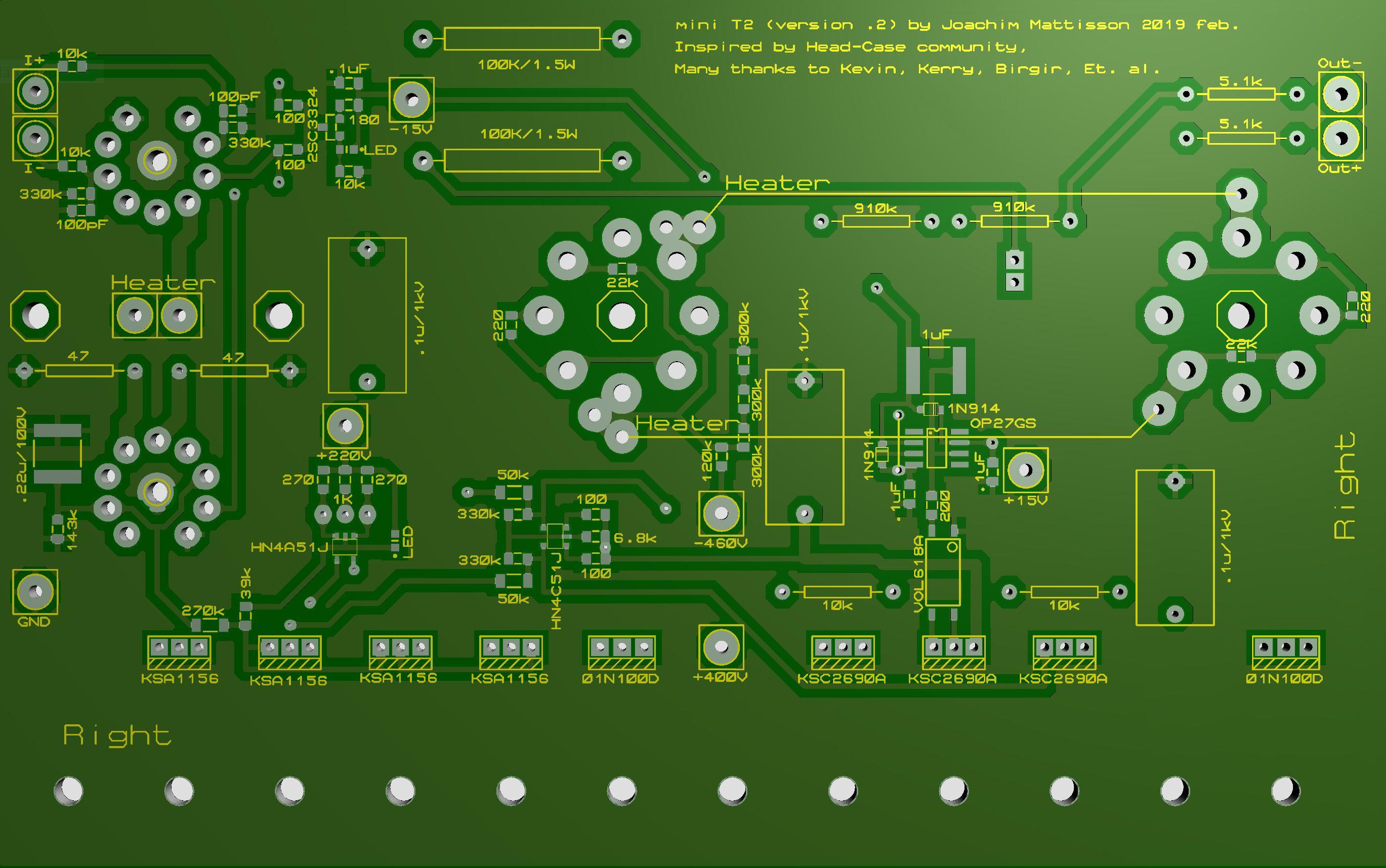
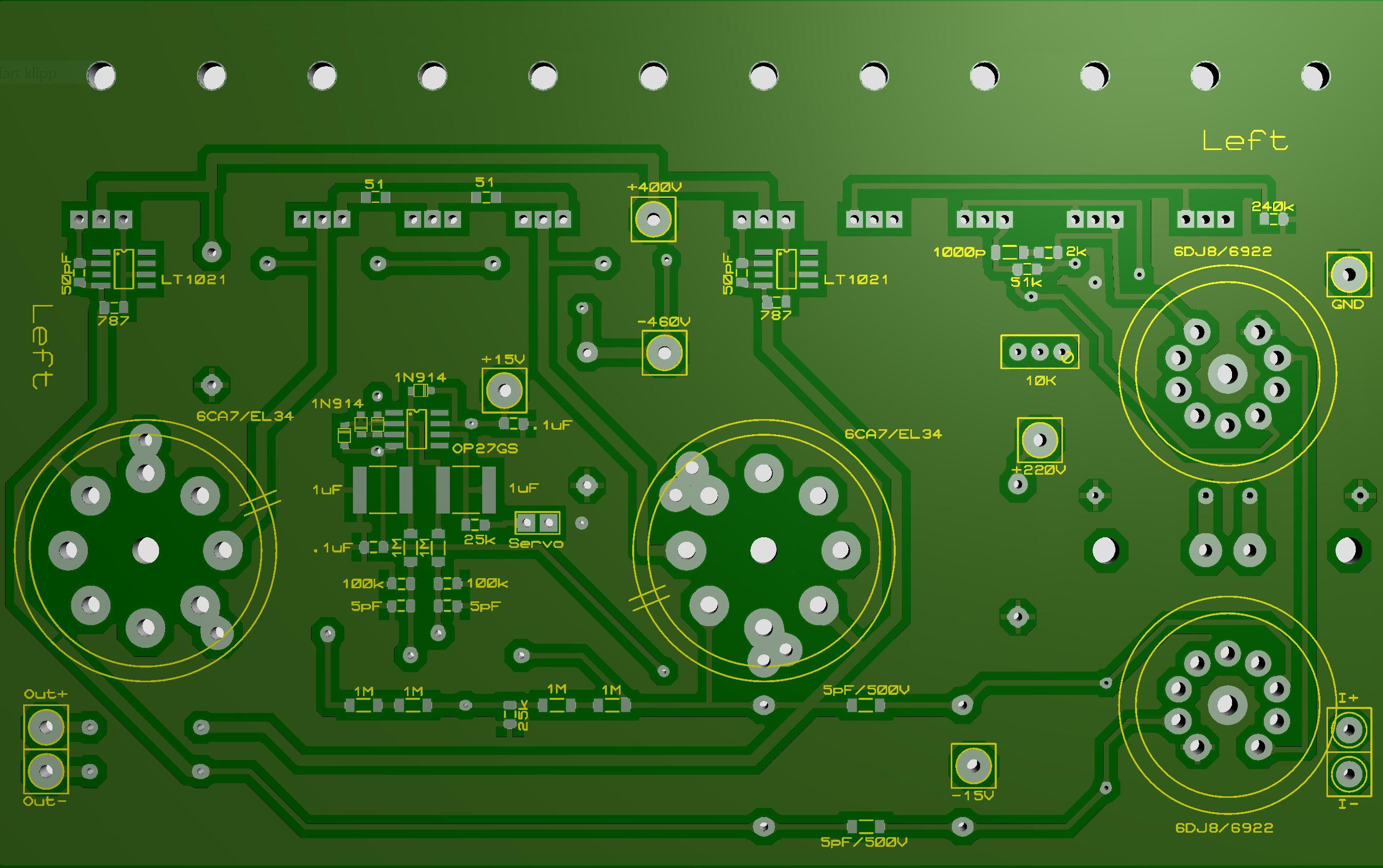
No I don’t. But that’s mostly because it’s beyond my understanding. Maybe someone out there can give us a hint. Made some rework regarding resistors value. Not much to say about it. The R24 and R25 - you probably won’t find 800R easily. Now changed to 787R. The resistor determines the current of CCS. Divide LT1021’s 10 V by resistance and add 1 mA and you get the current. 787 ohm give 14 mA. The four pictures (Top right/left and Bottom right/left) a few posts up are now updated to reflect new values. Schematic for the latest board layouts. Schematic mini T2 version .2.pdf
-
Rushed away to my local supplier and arrived just in time before they closed for the day. Got 0805 180R and 270R. At home they turned out to be 0603 but I managed to get them in place. On the test board I get exactly what I expected and I assume that that’s the case with the amplifier as well. Measured 18.5 V above -HV at bases of Q8 and Q9 with R13/14 @ 330K. I think Susumu RG is a good choice. ToshibaTTC004B is interesting – thanks INU. The smd transistors are also Toshiba.
-
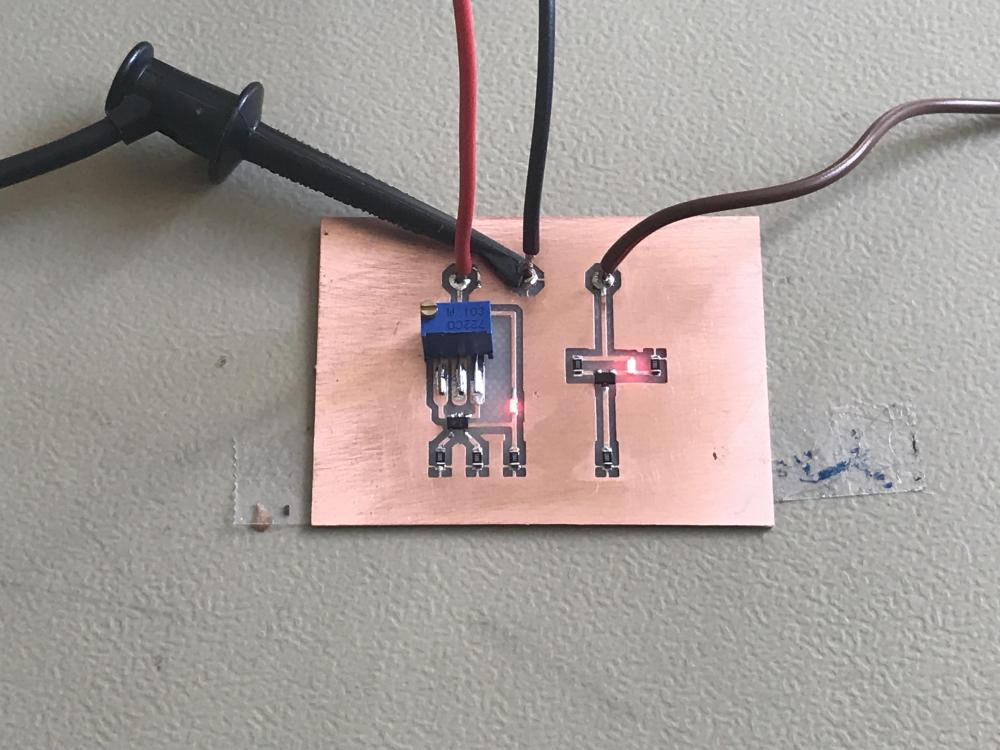
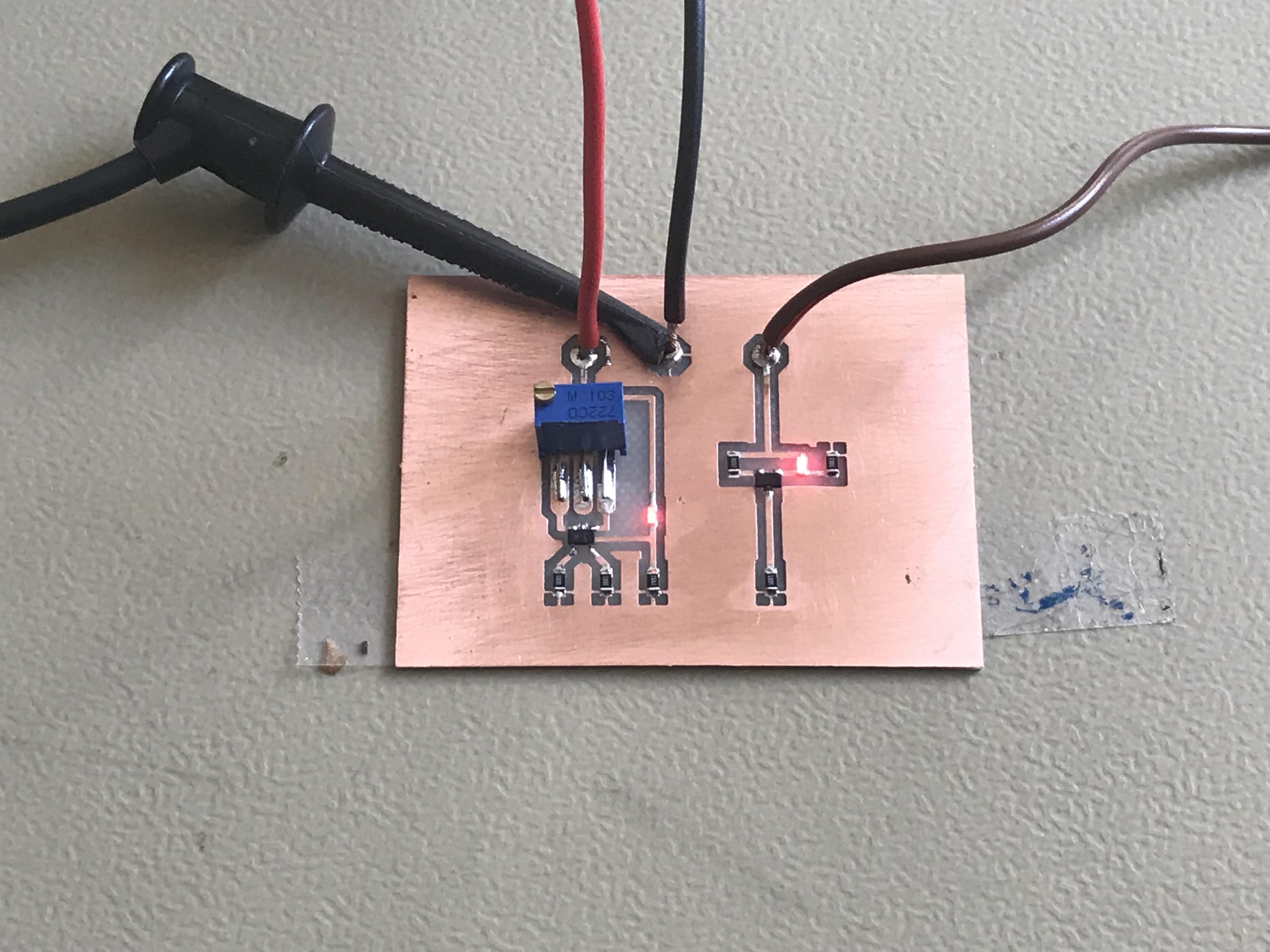
I wanted to find out the currents “produced” by Q1 and Q2. Since I don’t have the courage to stick my nose or test pins in a live amplifier I made this test board today. Measurement on the test board indicates voltage cross emitter resistors at R1, R3 and R9 close to 1.10 V. If we actually have 1.10 V than current through small tubes are 2.6 mA and not 3mA that I mentioned in previous post. The Q1 current sources give 3.8 mA each source. I’m considering changing R1 and R3 to 270R and R9 to 180R. Now days I check for the polarity of the LED TLMS1100 by using DMM in diode testing mode. Positive pin on anode and the other on cathode you get a red light. But be careful the LED will easily pop away and it’s not sure you ever will find it again.
-
R9 is 255R on silk screen on the boards now sent out by Michael. For some time I have run the amplifier with 200 ohms which increases current through the small tubes a bit. I haven’t made any measurements on the amplifier to verify currents but 200 ohms will give something like 3 mA through tubes (T2 has 5 mA). I do think the change improves the amplifier a bit. As I want voltage at base Q8 and Q9 to be 20 volts above -HV, same as the real DIY T2, I’ve today increased R13 and R14 from 200K to 330K. I don’t get +20 volts but it’s closer to it now. R9 on latest schematic is 200 and I think it should be so. R13/14 are 200K on schematic. To follow the DIY T2 you may increase it to 330K. But maybe it doesn’t matter which you choose. Any thoughts out there?
-
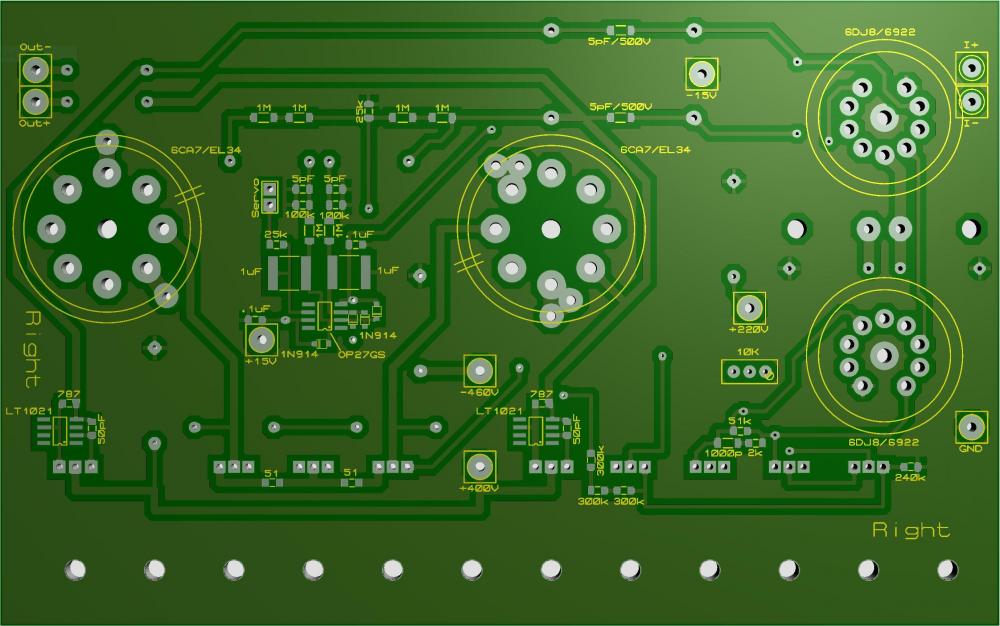
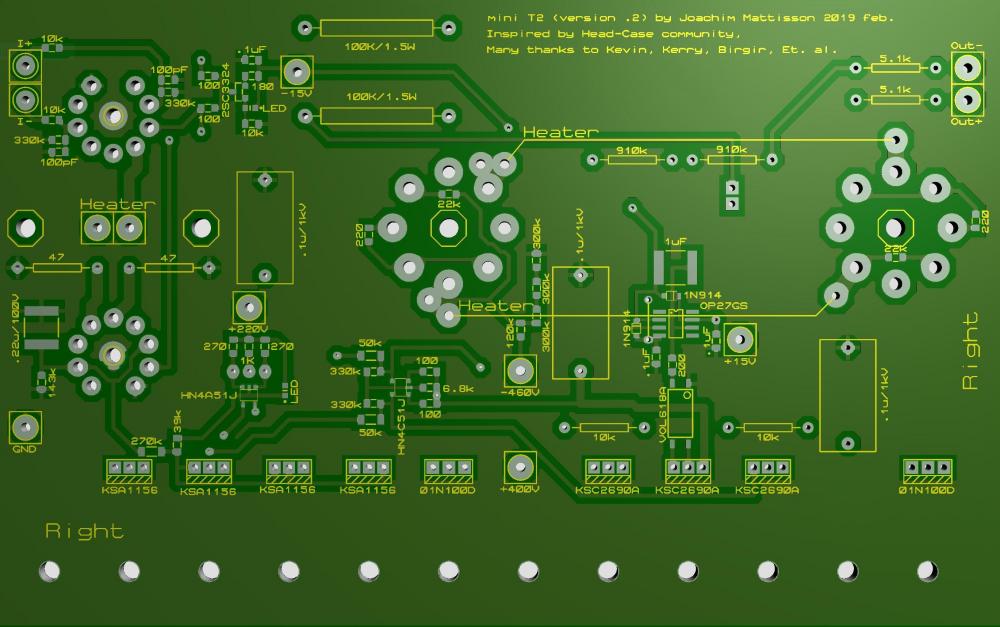
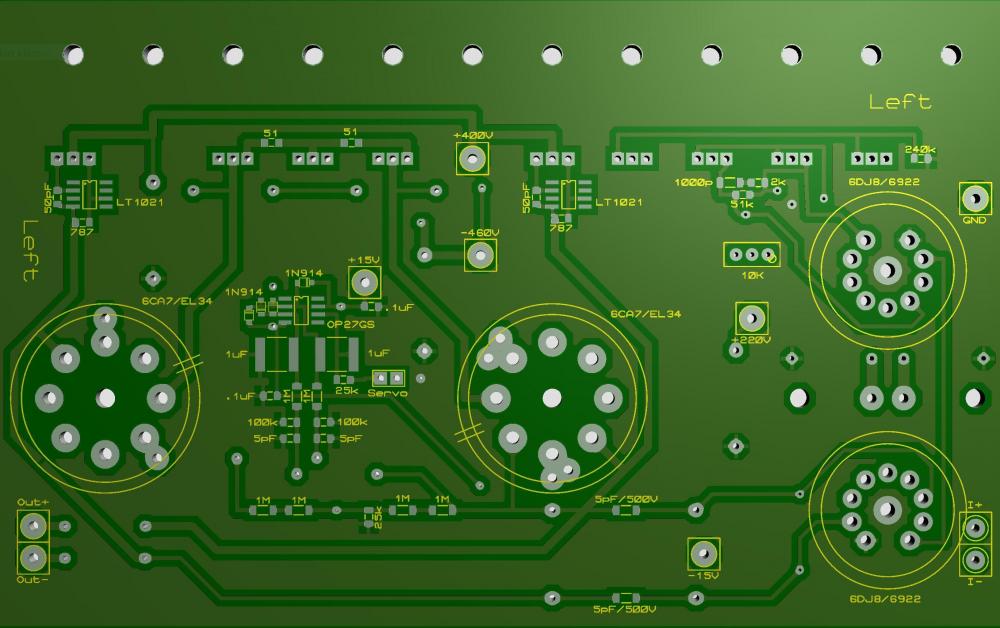
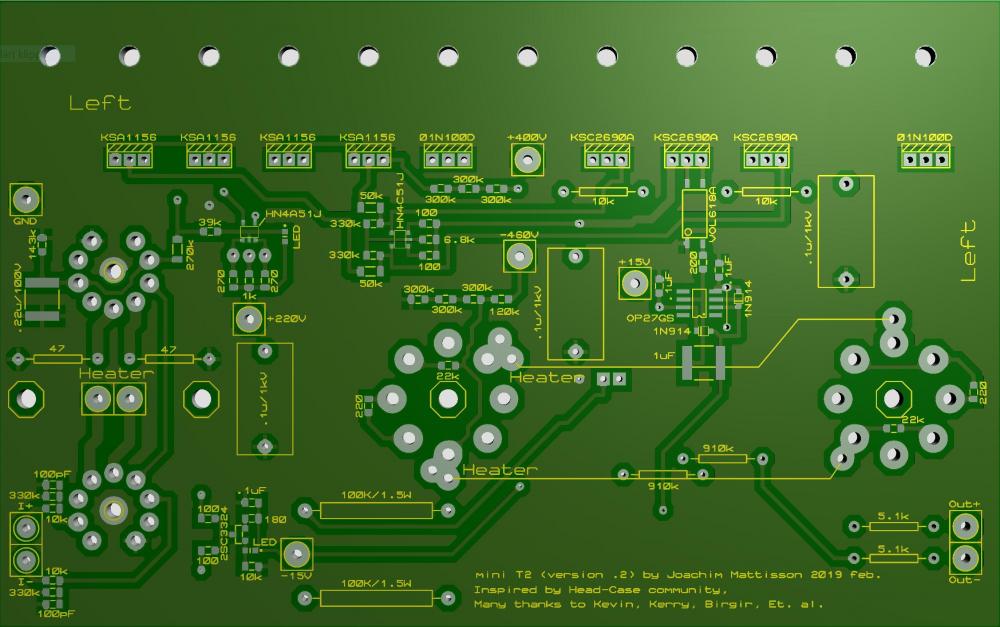
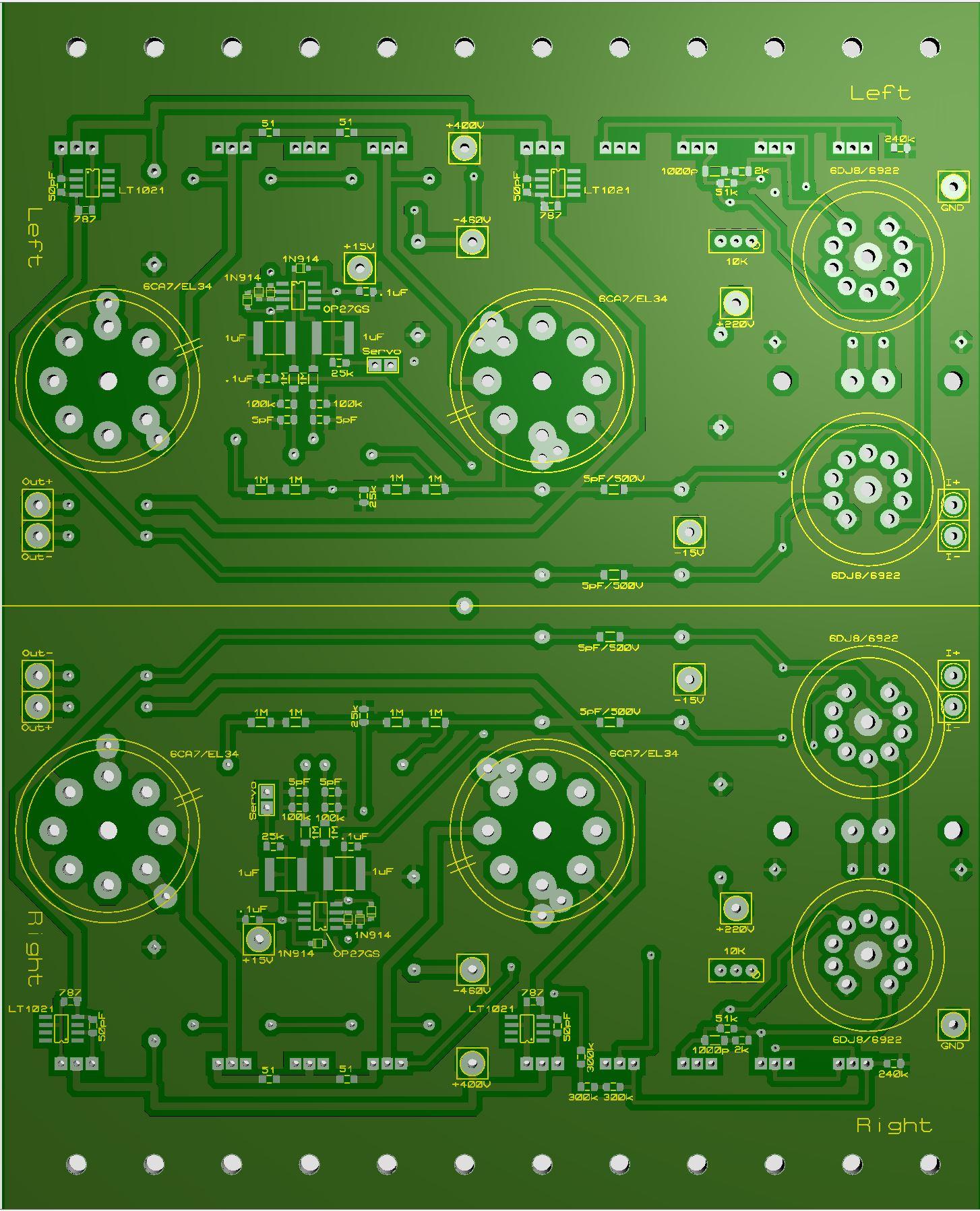
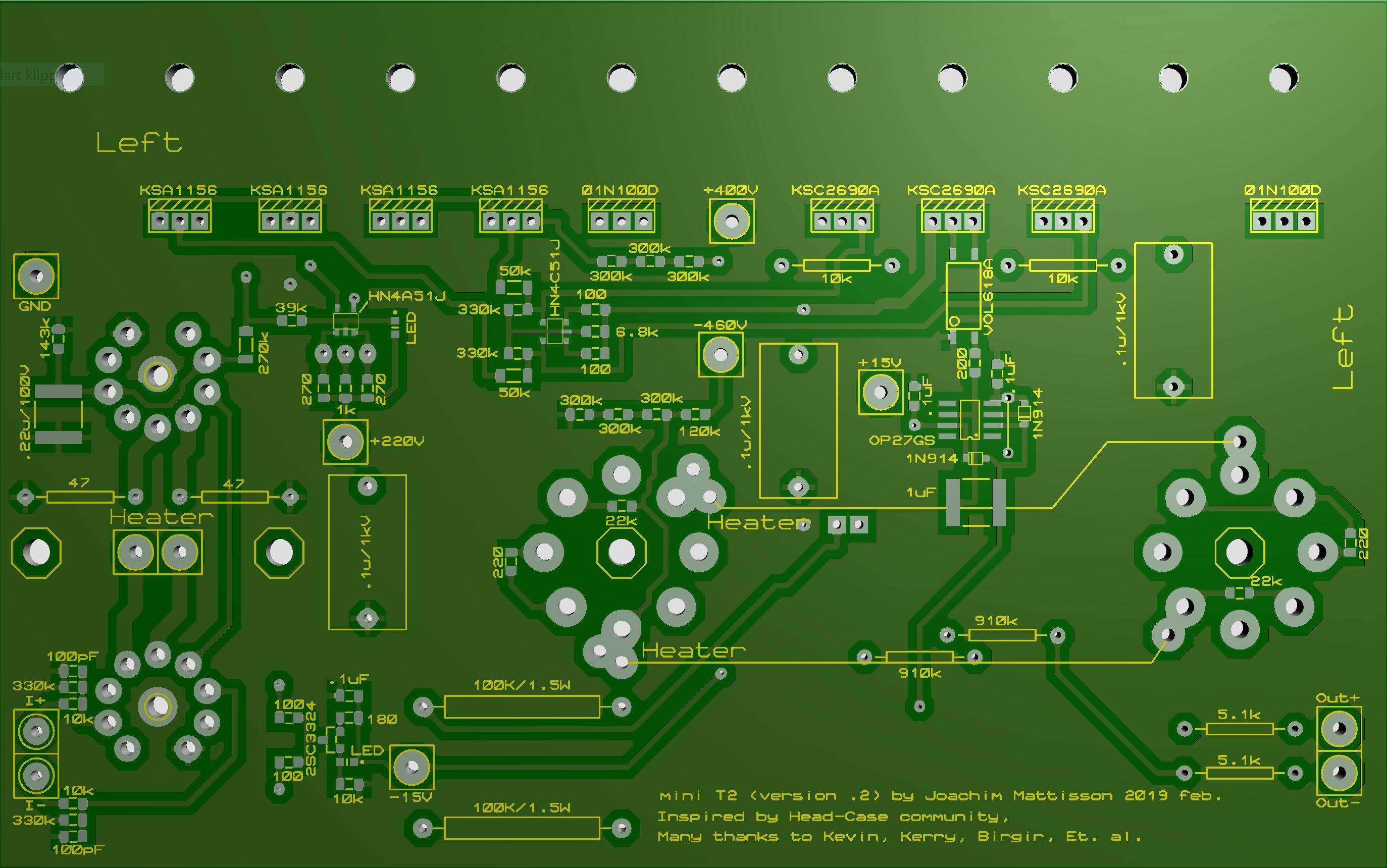
A few points regarding the boards Michael have had made on my gerbers. They are basically the same as my kitchen made boards I made five months ago. The small tube footprint has no hole for the center pin. So far I’ve cut away the center pin on the small tube socket after checking the pin holders to be not to tight nor to loose. One time I got tube sockets where the tubes fell out when turning upside down. So either you have to cut pin or drill a hole. Be aware that upper tube has a trace between the grids that might be to close to center pin. Right board 270K resistor has a 0805 pad (intention was 1206). It’s possible to solder a 1206 resistor on the 0805 pad. If +220V you get about 130 V cross the resistor so Vishay CRCW0805 is OK here. But with +250 V you get close to CRCW0805’s limit of 150 V. Some of component values on silk screen are poorly place and almost unreadable. The blame is entirely on me, I’m very sorry. There are four octagons on bottom side. One at each big tube socket center hole and one each side of small tubes filaments connections. Here I have standoffs. A few comments on updated layouts. Small tube footprint with center hole. 270K resistor pad corrected - now 1206. Silk screen remade. Pleas notify me if there is any left that needs additional attention. Now “value” of connections on both sides (except heaters). No terminal blocks on my boards. Top right. Updated 2019-02-27. Bottom right. Updated 2019-02-27. Top left . Updated 2019-02-27. Bottom left. Updated 2019-02-27. I call above version .2. My kitchen made and Michaels are version .1. Regarding this amplifier - there is nothing I've invented. I just have picked up different things and tried to put them together. As: Opto servo (the only offset servo you need) by Kevin. 01N100D/TL1021 current source by Kerry. Schematic of Stax T2 provided by Kevin, Et. al. Schematic of Stax T8000 provided by Kevin and Birgir. Etc. etc. Thanks for all knowledge, information and inspiration from you DIYers and Head-Case members. Please look for errors or other issues.
-
-
-
Board size 160mm x 100mm. Sure it's possible to shrink it, but that will be the micro T2, then we have nano, pico ….. Thinking about the possibility to use an unmodified T2 PSU. If applying +250V instead of +220V you get +79V at upper 6922’s grid and +230V at anode (with no changes on the board). T2 has +69V resp. +200V. Power at HN4A51J goes up from 2 x 76mW to 2 x 87mW, so still OK I think. Question is if the higher tube voltages make any difference. But I don’t think it’s wise to put 48V cross HN4A51J when bringing down anode voltage to +200V (with +250V supply). As for +/-500V; no problem with 01N100D it’s a 1000V device. I do think it might be possible to use original DIY T2 PSU. Has to be proven.
-
I don’t really want to make any comments on how things sound and compare them. Mainly because it makes me feel uncomfortable and I also lack the ability to analyze the sound. Anyhow I’m very happy with “mini T2” and I want to think that it is quite similar to THE DIY T2. Now I have put the original DIY T2 in the closet and I don’t miss it. I still have my modified T2 in our summer cottage and I like that one as much as the “mini T2”. But I have three more original T2 boards and all sands for them – no duck feeding the next couple of years.
-


.png.e5c4ad038a4648274d24dd140ea21bd9.png)



Important Information
By using this site, you agree to our Terms of Use.