Jump to content

Pars

High Rollers
  • Posts

    8,554
  • Joined

  • Last visited

  • Days Won

    7

Everything posted by Pars

  1. Talked to Kevin via PM a couple of times tonight. He sent me a pic of his board, so I've been going though it and have a discrepancy. R31-R34 on his board are 100R. In the Eagle files I have (which match his prototype and not the final group buy boards), the Eagle schematic says 10R, which is what I used. However, if I highlight R34 on the board in Eagle, it says 100R (these are the combo 0805/RN55 resistor packages that Jacob used on the board). So, which is right? I think I will go with 100R and see what happens. In the pic, for the Vbe multiplier, he has R17-R18 as 10K, I assume a 20K pot, and 4.75K for R19-R20. IIRC, he said in the thread that he changed the 5K resistors to 2K, so he may have replaced these since the pic was taken. EDIT: Was looking at the wrong resistors. 10R is correct.
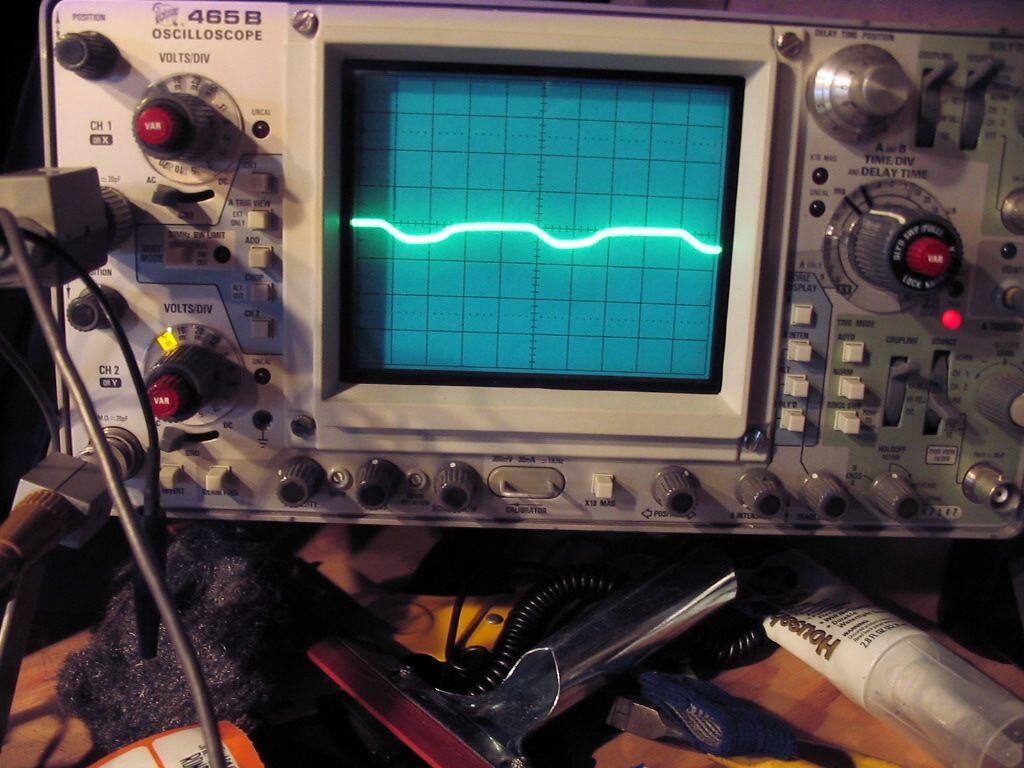
  2. Pulled one pair of output devices. Oscillation seems to be gone as far as I can see on the scope. However, running a sine wave thru it, it is obvious that there is still some oscillation present looking at the waveform instability. From a DC perspective, the bias, etc. seemed stable. Looking at waveforms, it is obvious it is not. Interestingly, I had pulled the 220pf input cap. This resulted in oscillation only when the volume pot was all the way down (or almost) or all the way up. Once I replaced the cap, this went away. Summary of changes to this point: 1) R17-R18 2.2K 2) R19-R20 2K 3) R62 1K 4) VR3 2K 5) One set of VAS transistors removed (Q11 and Q12) 6) Removed one pair of output devices (so only one pair installed) 7) Minor deviation from BOM: the bypass caps spec'd as 10nf are implemented as 22nf ERO MKP1837. Some of these changes are bandaids as the thing should run with all 4 sets of output devices, etc. I'm running out of ideas...
  3. Pulled Q11 and Q12... no joy. Initially looked like it had done it, but as soon as I connect anything to the input, it oscillates. I'll poke around some more. I would guess that the board would not like running without feedback? I assume feedback will inject oscillation back into the input? Any other input welcome. I have not looked at the rails yet, etc. Power is from a known good sigma22.
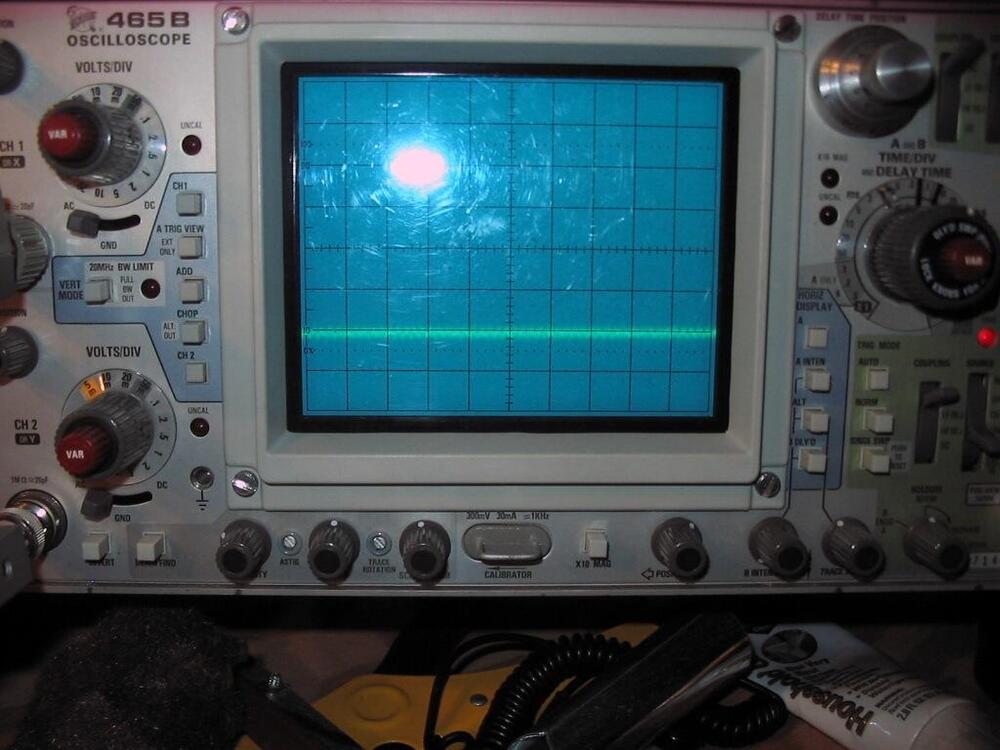
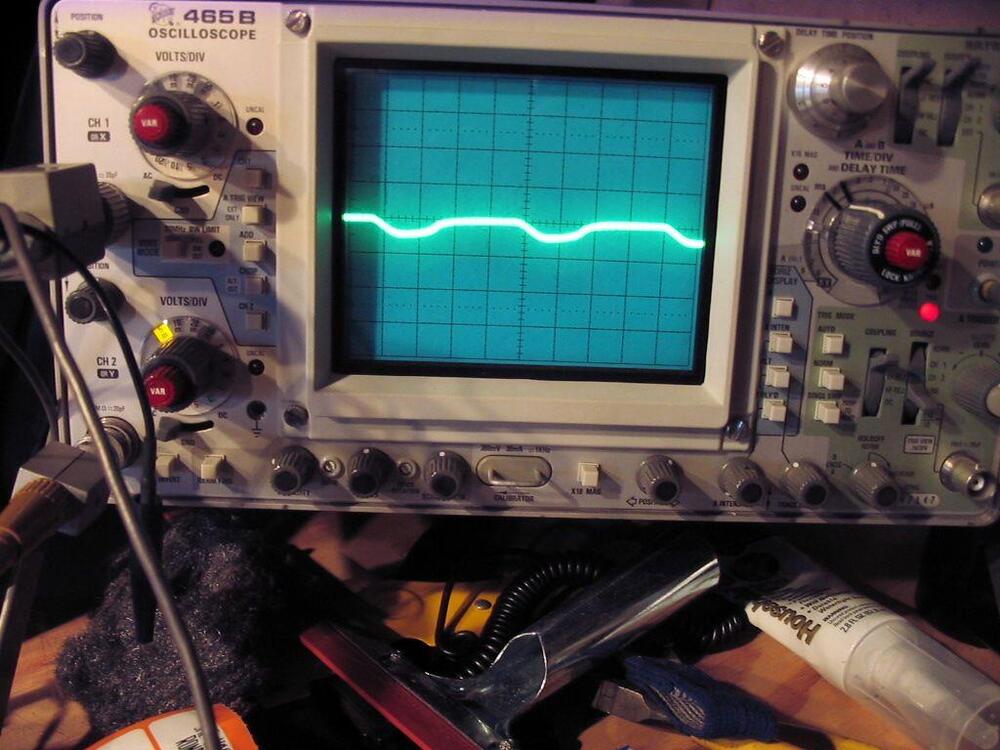
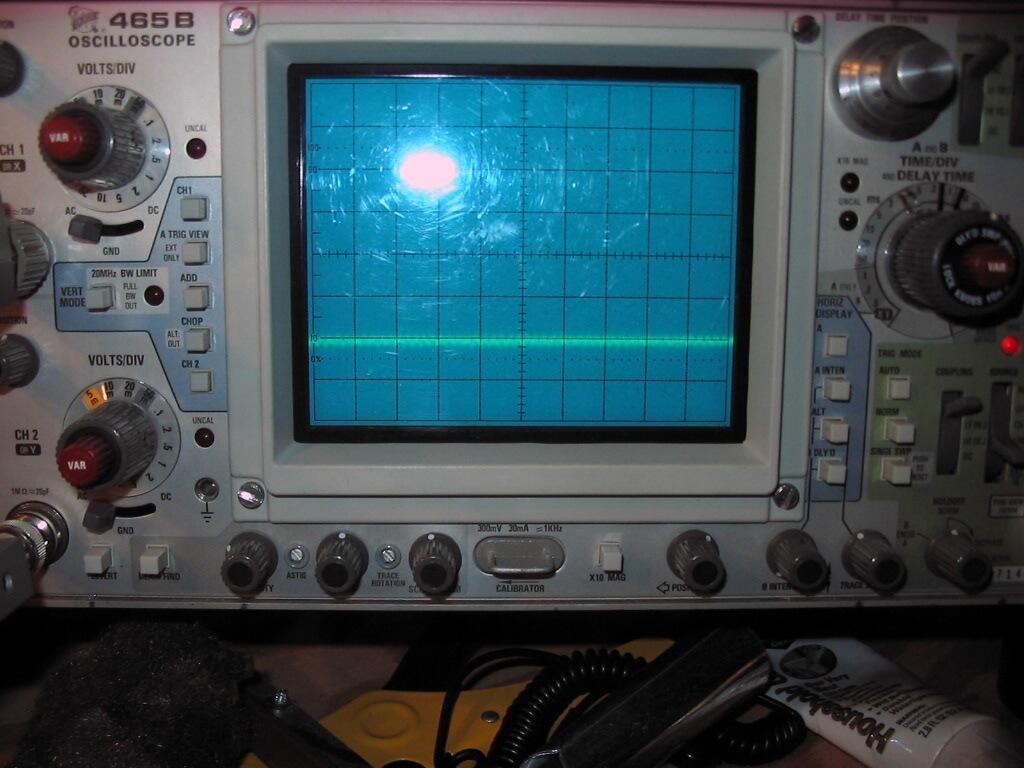
  4. Worked on the second board tonight, and then started doing some measurements etc. on the completed one. I seem to be seeing some oscillation on it. With the input grounded, I am seeing something in the range of 220mVp at around 62.5MHz (scale 0.02us/div, 0.8 divisions... think I calculated the frequency correctly?). This is at the default gain (1K, 100 ohm, so 11?) with a 10pf compensation cap (mica). Also, decreasing bias as far as I could (224mV or 112mA) did not have any effect. I'm currently running at 150mA bias. Varying which feedback method was used made no change. Any thoughts? I do have the gain resistor (R55) as well as R17/R18 and R19/R20 socketed. EDIT: After looking back at some of Jacob's posts, he seems to indicate that the paralleled VAS transistors might be causing some problems? These would be Q9/Q11 and Q10/Q12 on the schematic? I may try pulling one on each side and see what that does...
  5. Hmm, they are showing $34 now...
  6. Out the door to the deck... Towards the cul de sac... Towards the street. Still not plowed (12:30pm) Back out for round 2 shoveling/snowblowing. I need a bigger snowblower
  7. Still blowing like hell here and snowing as well. My employer will be open tomorrow, barring a power outage, but I don't have to go in and can work from home... or not. Let me think about that for a second... oh yeah, I think I'll stay home And take the day off I actually feel sorrier for those who have to deal with ice. Our power flickered a couple of times earlier this evening, but so far so good. Ice on lines can't be good. And roads. Everyone stay safe.
  8. Pete, Yes, that would be x4 for balanced, or 2 for stereo. I'll recheck my measurements on that also. Are you using Dynahi PSUs or sigma22s? Can't remember what a sigma is good for, but I think I should be alright with a single sigma22 for 2 channels. If not, I'll just decrease the bias a bit. With one channel, the heatsinks on the sigma don't even get warm after 15-20 minutes. I still have some dynahi PSU PCBs, so I suppose I could always build one up, but I like the sigmas I've used a lot. I'll also be sure to check the board over at a lower gain by changing the 1K to 475 or so. I don't have a signal generator, so I'll see what I can do with my M-Audio Firewire box as far as checking compensation. I think Scott did some testing also, and he kindly is shipping me a pair of K devices to replace the one I stupidly fucked up. I'm finishing the 2nd board now at the posted values.
  9. You'll never hear 650kHz, so carry on Hope you get over it quickly!
  10. Happy Birthday!
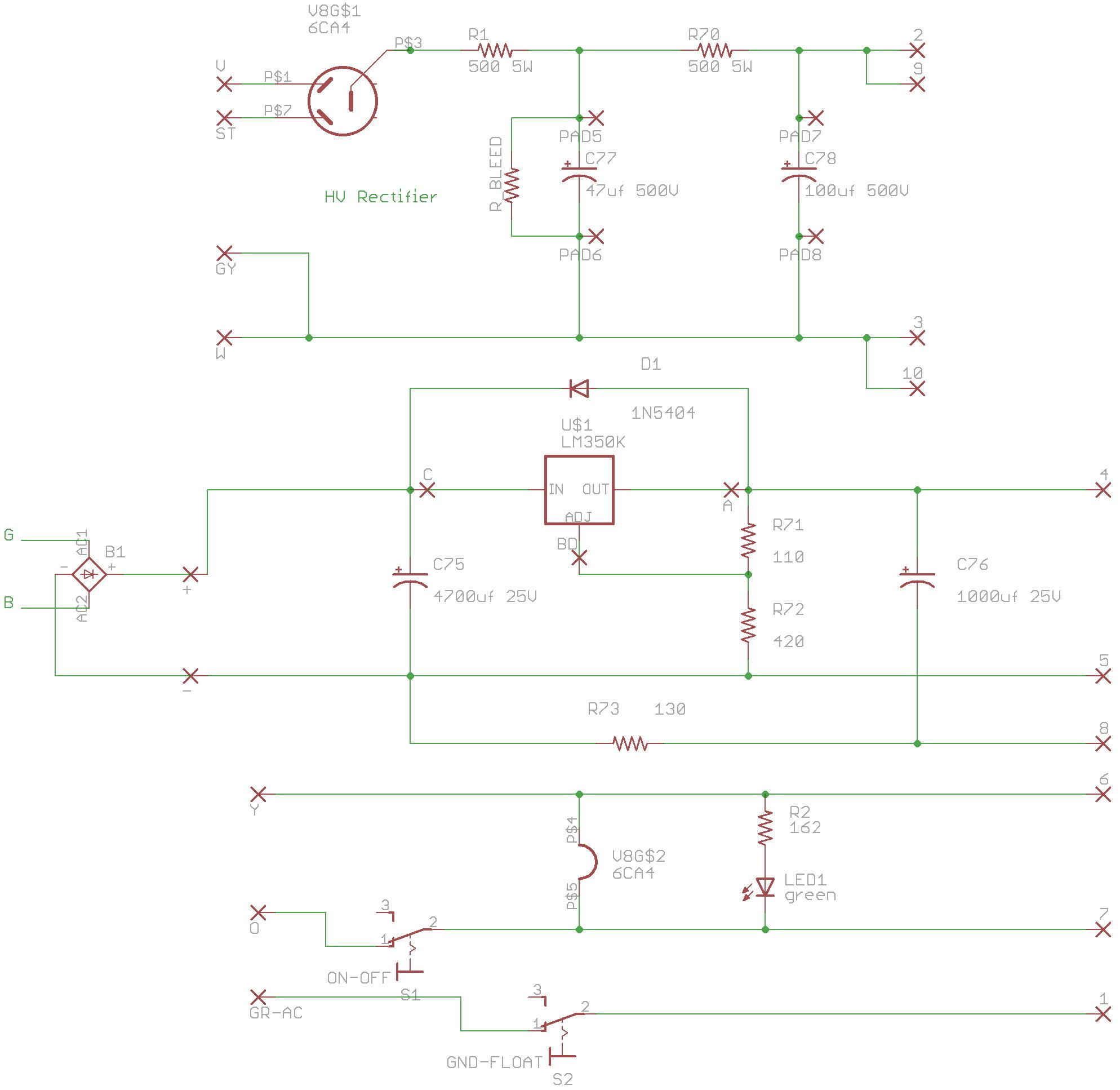
  11. DC offset goes up too high on the local feedback point. With no CCS adjustment (VR1/VR2), I'm at ~2mV or less using global feedback vs. 165mV at the local feedback setting. These are both without the servo in. I confirmed with Kevin that the 100 ohm to ground (R56) for the global feedback should remain for the local feedback as well. Not sure how to calculate gain using the local feedback setting. It would appear that the FB resistor (R55) and the combination of R19 || R20 are involved... He did state that the servo would be required for the local feedback to work correctly, but it seems that making a servo compensate for that much offset is the wrong thing to do. He also stated that global feedback was better.
  12. Soniccraft order came today I think I arrived at my final values for the Vbe, targeted to give me 150mA or higher (if I want). R17-R18: 2.2K R19-R20: 2.0K (I may go back to the 5K i had in here as I don't think I will use the local feedback option) R62: 1K VR3: 2K adjustment range: 241-600+ mV, for 120 - >300mA Values are almost identical to what Scott (digger945) arrived at. See link for BOM. My link EDIT: All testing so far has been at the default gain of 11 (1K/100 ohm). I'll do some testing at lower gains, maybe down to about 5. IIRC, that is about as low as this thing is stable? Someone correct me if I'm wrong
  13. I found some 2K resistors I had (NTE ), so went ahead and put sockets in for R19-R20 and put 2K in place of the 5K that I had in there. I also replaced R62 with a 1K (from 3.3K). Bias range (with a 20K pot) is now ~160mV to over 800mV. I also took a stab at using the alternate feedback point. Bias did not change from where I had it set, but interestingly DC offset did. It went from ~5mV to 165mV. I have not done any trimming of VR1/VR2 yet to compensated. I switched back to the std. feedback for the time being. Kevin (or anyone): how is gain calculated for the alternate feedback point? Also, I added a tab to the BOM spreadsheet and have a table in there of various Vbe combinations and the result on bias. Thought it might be helpful At this point it appears that I am going to wind up very close to where Scott did in his tests of the prototype.
  14. I'd think this would make you popular with many of Stereophile's advertisers
  15. Ordered from soniccraft. God I hate handling charges, so I bought 10' of UPOCC just to avoid it. Wanted the clear teflon; they of course were out so I had to take the red. Elliot did tell me they are getting some blue teflon in. Maybe I should call him back and wait for the blue...
  16. Thanks. Yes, I know where I can get them
  17. Check the PCB over carefully in that area as well. They can sometimes be under-etched with a bridge or the like...
  18. Anyone got any 2K or 2.2K 1/4W PRPs they could sell? Discovered I have none small enough for the dynafet (have RN60Ds).I'd take 10-12 or so if you can spare them.
  19. Thanks Scott! I replaced R17/18 with 3.3K resistors (and socketed them this time so easier play time). Min. bias of 160mV (80mA), max of over 500mV (250mA). Dug thru my parts and I don't have any 2.2K resistors . I do have some R60s but I'm not going to try to cram those in. I was going to replace the 5K R19/20 (the alternate feedback point) and see what effect that had. Then drop R62 from 3.3K to maybe 1K, per your findings. So if anyone has any 2.2K PRPs... If I have to order them, should I get 2K or 2.2K? The latter is probably more useful overall. I put the Fluke in series with the positive voltage feed. At 150mA bias, the board is drawing ~375mA. Heatsinks on the sigma are pretty cool, so I don't think running a stereo set biased at 150mA is going to be a problem. DC offset looks good, and pretty stable at 3mV. I have not put the servo opamp in yet, and have not tried to adjust offset with the pots which are both set to 500 ohms total for the resistor/pot combo.
  20. Sorry to hear about the fingernail Nate, and yes, it made me wince as well. Hopefully feeling better now. Hope you feel better Matt! Ken, I know the feeling of having to lay there. I had a inferior vena cava filter put in a couple of years ago before my hip surgery and had to lay there motionless for 4 hours afterwards. Having it taken out was more uncomfortable, but at least I didn't have to go through the motionless crap.
  21. Also, the gate voltage is at 2.99 Vdc currently (at the 450mV/225mA bias). I may be missing something, but don't the gates set the bias (or apply it I guess would be more accurate)? Since these are in parallel and driven by the corresponding diamond buffers, wouldn't the Vbe multiplier settings be pretty much independent of how may output devices you are actually running?
  22. I replaced R17/18 with 10K resistors and put the 20K pot back in. Down to 450mV. Scott: from one of your previous posts (a year ago or so, probably before the boards were even ordered) I may drop R17/R18 to 2.2K and see what happens. And also try to decrease the pot size further. I know I have some 2K, but will wait to do this until I can get it well below 150mA. I figured 150mA would be my target, but I want to have adjustment range on either side of that. I assume that if I start mucking with the pot size and series resistor (R62) before I am able to get it down that far that I will be cruising on fail At 150mA, would I be looking at ~300mA per channel for power draw (4 devices or 2 pairs per board), and should a single Sigma22 handle this OK? Since I already have this case, a single sigma22 is mandatory (no room for a second one).
  23. Yes, you told me to leave these at 20K (R17 and R18), so I did. Like I said, I have 4 devices (2 pair) in. R19 and R20 (alternate feedback point) are 5K. Either you or digger told me that was what you used when I asked if it was 2K or 5K.I sent you a pm also Marc.
  24. Update: I tried adjusting VR3... I can go up, but not down. I replaced VR3 with 1 100K pot. Resistance at max is ~34K (it is in parallel with R19 + R20 or 10K total), including R62 of 3.3K. Voltage across the 2 ohm resistors dropped to ~700mV, so 350mA bias current. I measured DC offset and it was around 2mV, and seemed stable (for as long as i dared to leave the amp on, or 30 secs.). What effect does increasing or decreasing R17 and R18 (currently 20K) have? Should I drop these to 10K or go up?
  25. Well, went ahead and put the output devices (2 pairs) in and fired it up. Seems to work. Had 2 DMMs, one on each J/K source resistors. Started out at 1.05Vdc (500mA), and was dropping. I only left it on for ~30 secs (2 x) and they had dropped into the 800mV range, but that is still 400+ mA. Did not try adjusting VR3 yet, as this seems to be too high. VR3 was set to max resistance, but I will verify this. It is bolted to a heatsink (hifi2000 pesante dissipante). The dynahi angle brackets I have do not go completely under the TO-220 tab (1x1" angle). 1x1.25" would be better. Thoughts?
×
×
  • Create New...

Important Information

By using this site, you agree to our Terms of Use.