


luvdunhill
High Rollers
-
Joined
-
Last visited
Everything posted by luvdunhill
-
Jim: I talked with the hotel on the phone today. They wouldn't give me the group rate, as they are saying it is sold out on the 4th and the 5th. Was I too slow, or is this (another) screw-up? Let me know! edit: I may have called corporate, so trying the hotel directly. Stand-by
-
(2) 8 Ohm 100W Non-Inductive Dummy Load Resistor @ $13.50 each DUMMY LOADS RESISTORS from Parts Express ship same day and come with 45 day money back guarantee. Free Shipping Available. Order free 10,000 product catalog.
-
well, galvanic isolation never hurts, right? I may want to route it to an external DAC in the future, hence all the extra stuff.
-
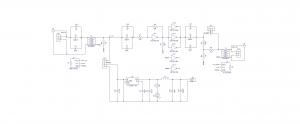
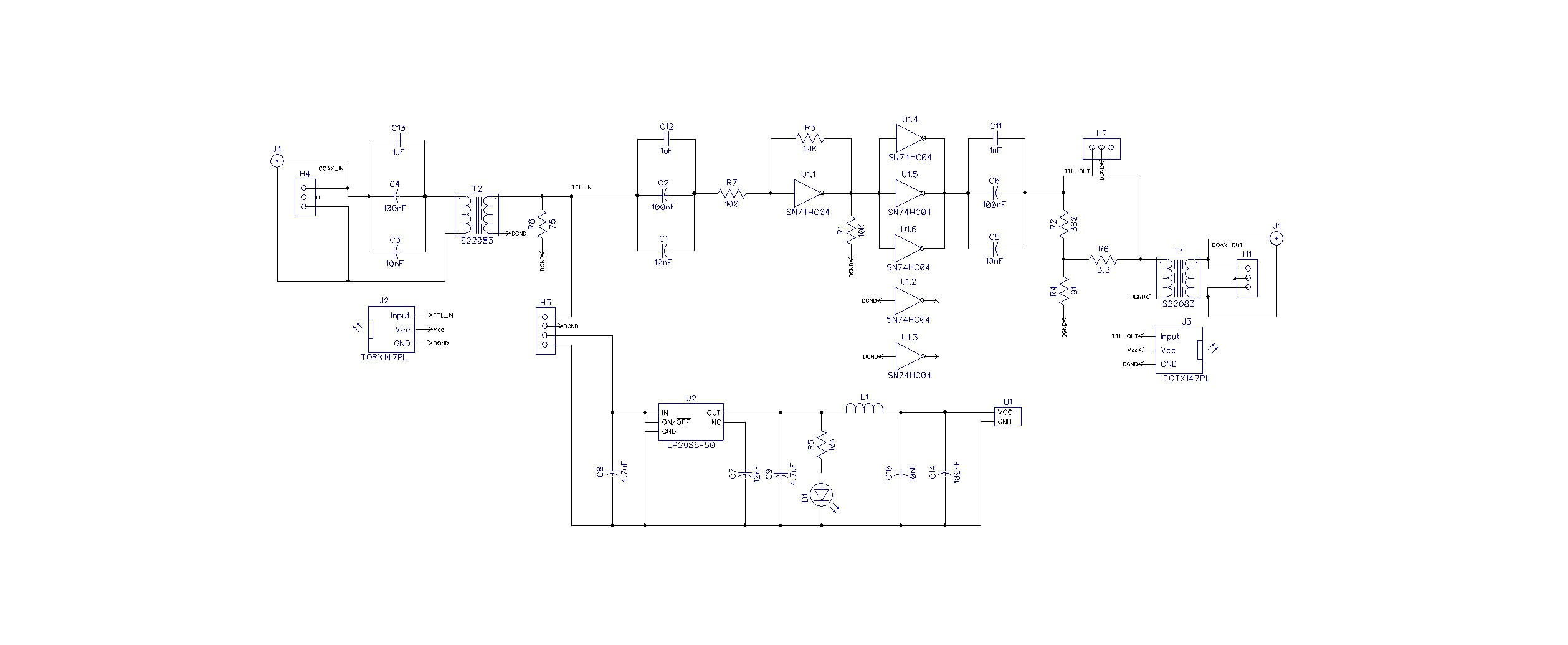
There doesn't necessarily need to be amplification if the feedback resistor is left off, in which case it just acts of a buffer. I guess it's just a bonus that two inverting stages cancel out. The reason I need the amplification is if I want to bring the signal up to TTL level, or go from 3.3v TTL to 5v TTL. (Worse case, I could use the voltage divider at the output to shift from 5v TTL to 3.3v TTL) The bypassing is so I can have one TH part (Wima MKS02) and/or two NP0 caps. Probably overkill, yes. So, my problem is that where I'm tapping the DSD1608 chip, the signal isn't very strong. Also, the Wolfson isn't 5.0v compliant, it expects 3.3v logic. So, what I'm assuming is that the DSD signal is basically needs to be 3.3v TTL logic and I either need to buffer the signal at a minimum to drive the signal a couple feet, or buffer and level shift down to 3.3v TTL. Same with PCM I'm assuming (need buffer and/or level shifting to 3.3v). The bonus of this approach, I could ship the data through a transformer to a BNC connector then out to an external DSD DAC and then use the same little board on the other end as well. So, some flexibility.... but more than anything, it's to experiment I guess and hope I get lucky and it works!yes, just going to PM you about that in fact Thank you so very much! Forgot about the whole cable thing, or I would have already ordered them. Probably could get them at Guitar Center or something, but so damn busy this week.Pair of 2' balanced TRS to TRS patch cables, for use in the great sound card wars.not hard at all. I've DC coupled the original Xono for example without a servo, and this looks very similar.Pete: In your case, I'd recommend building it and socketing a few parts. You're the outlier here. You're pushing it on heat sinking, PSU, and transformer, IIRC. For everyone else, the recommendations in this thread are solid, but they will depend on how much heat sinking you have. There's no way we can predict that, or plan for that. For compensation, just err on the high side, you'll be fine. I just don't think anyone is willing here is willing to figure out exactly the best part combination for every unique situation. Just too many variables. Take the first step and get a single board up and running and we can help you from there.yup, I've heard it as well several times. The Aesthetix was a constant factor in some gear swapping that took place over a day or so, so it's very hard to pin it down. I'd pay attention to the frequency extremes as well as the noise floor and instrument separation. Looking forward to what you think!yup, quadraphonic http://en.wikipedia.org/wiki/Quadraphonic_soundThe pins I sent Kevin are slightly different shape from the ones I previously had. From head on, they look slightly less substantial and you'd think they would have less force on the pins. However, I have a feeling this is aesthetic only, as I cannot tell the difference in a controlled double-blind test I told Kevin I'd be glad to source these for everyone. I have a family member that can pick them up and mail them to me at a pretty reasonable cost, if I'm not able to supply them from my current stash. I can also get a quote on the 9-pin sockets, and 8-pin sockets.Ok, here's where I am at. Three types of input, transformer coupled coaxial, optical, and TTL. After this input, there is DC blocking cap for the TTL case and then this is fed into a buffer that can be configured to have gain. This performs the optional level shifting from TTL. Then into parallel buffers that drive the output. There is also another DC blocking cap after, that might be used depending on the final configuration. The output can be taken as TTL, transformer coupled coax, or optical. A voltage divider plus series resistor allows for proper termination into a BNC connector. So, in my case I'll use TTL -> TTL. But this could be used for a coax -> optical, optical -> coax, ttl -> coax, ttl -> optical, etc. Perhaps now there might be a bit more discussion?
 I used to be within walking distance of that place Cool place.The wheels are in motion
 Does anyone know how people usually handle the clock IN/OUT signal that's available on the rear panel of various DACs? I'm curious about how to terminate both ends. I was thinking of treating it just like SPDIF.is this g code? or is there a special way to do step and repeat?looks very nice! Will you cut them apart after the fact and program an array?How well did this approach work for Sennheiser and the HD800?Mamoun's Falafel?x2I'll be attending sans family at this point. So, I'll be looking to grab a room as well, so I'd like to see what you guys figure out.I have a few supposedly coming my way. I can see if I can get some more, if I can find time to call my local sales rep.I use a Panavise Jr for exactly that. Even attaching 24ga wire to Molex KK terminals for example.
Important Information
By using this site, you agree to our Terms of Use.