

Leaderboard



Popular Content
Showing content with the highest reputation on 05/03/24 in Posts
-
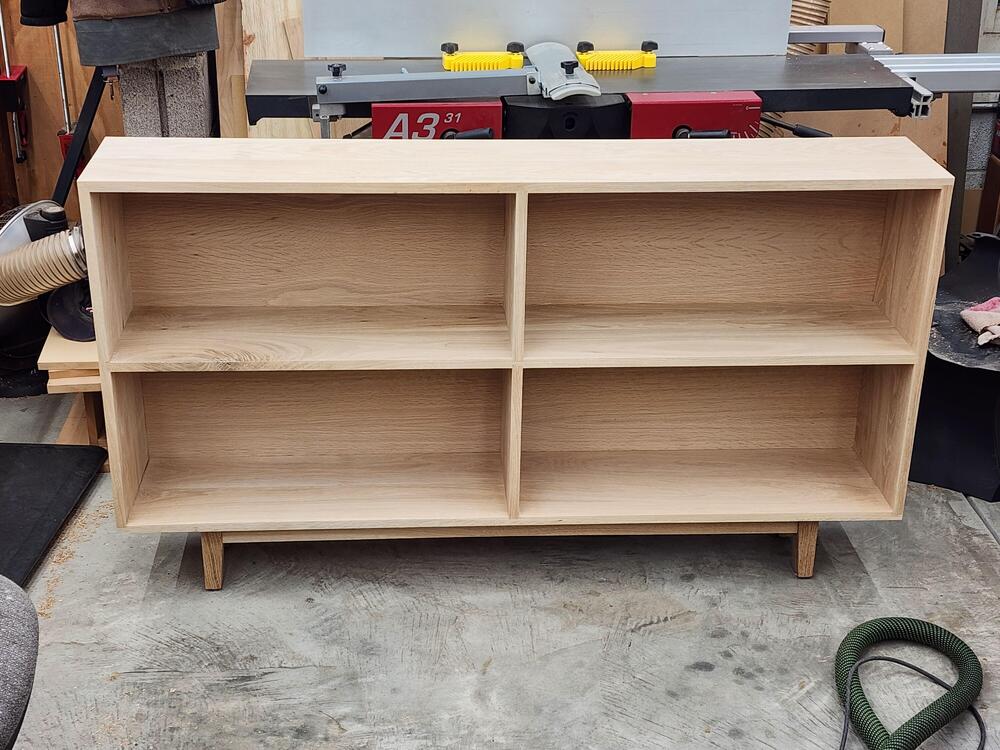
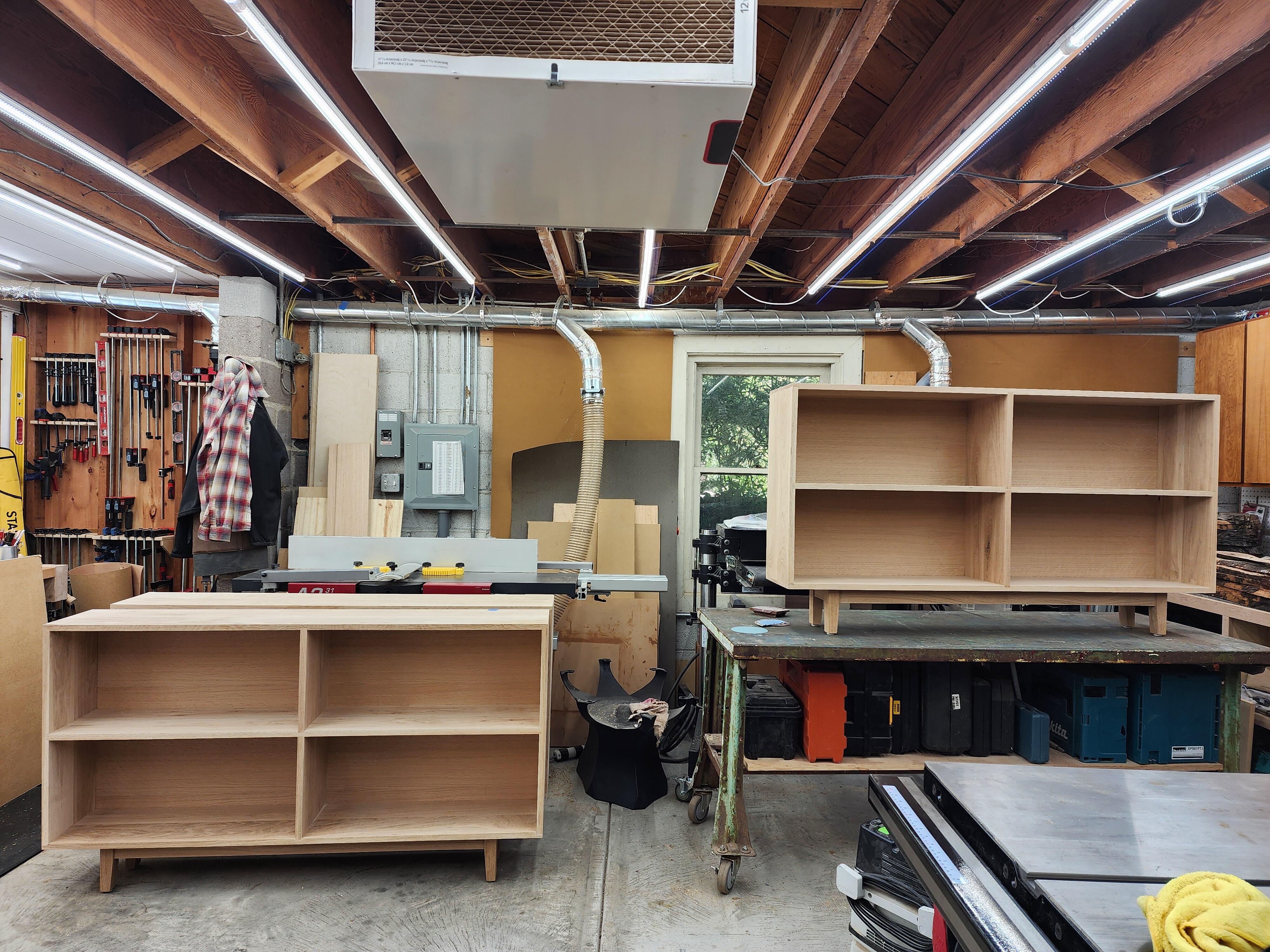
5 pointsOne of three. Still need to assemble the bases onto the other two, then apply some Rubio finish.
 5 points
 -
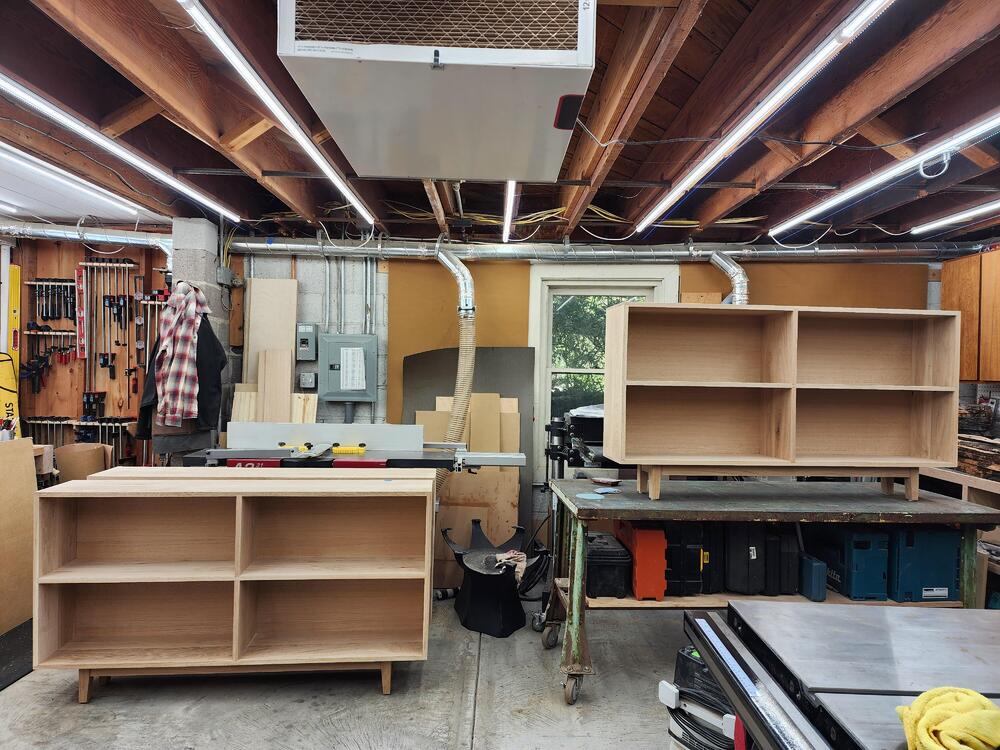
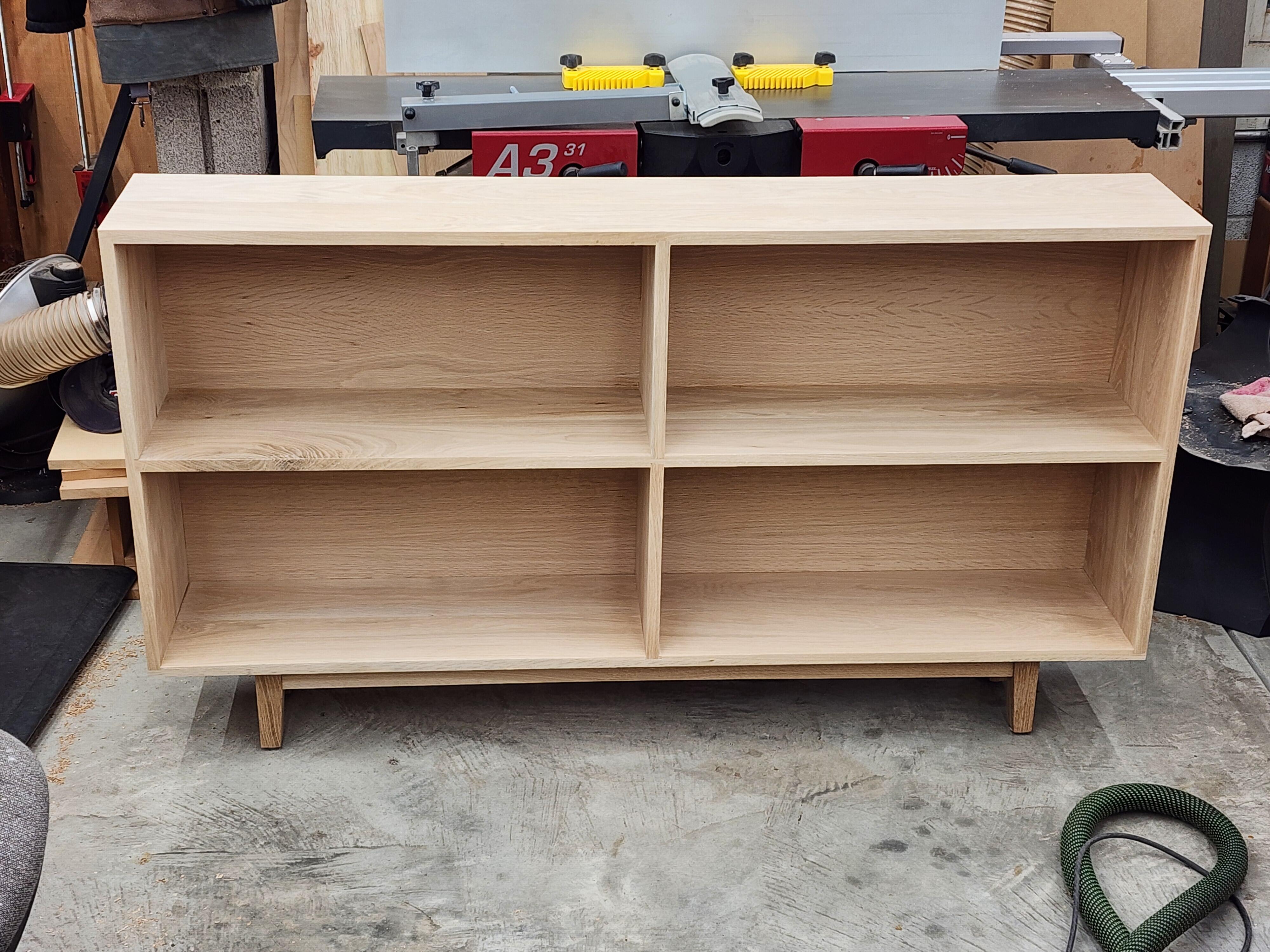
3 points2 pointsAll assembled, waiting for finish. Finishing is waiting for another project to get finish applied first. More to come on that.
 2 points2 pointsThe horns are a Nelson Pass design https://www.passdiy.com/project/speakers/the-kleinhorn-part-12 points2 points2 points1 point1 pointhttps://archimago.blogspot.com/2016/08/my-favourite-movie-audiophile-scene.html?m=11 pointListen Without Prejudice by George Michael (1990) https://album.link/i/1625866382 Example: Starting with the incredible opening track of - Praying for Time. Which became very poignant, but then drops into the killer Freedom! '90. I can't help but move with this one, with George putting down the bass track for it. The rest of the album is full of great writing and highlights George's voice. But also surprisingly mellow comparatively. I am not sure I listened to the album other than when it dropped. I was over a college buddy of mine's place, and he put it on. While he took like 4 phone calls, I listened away. (and he has the reverse of my first and middle names)1 point^ I feel like I should listen to more sax now. but Older by Lizzy McAlpine (2024) https://album.link/i/1729662067 Example: I do really appreciate Lizzy's work. I don't like this as much as her last effort. But there are some really great tracks in there. The title track being one of them. I hope that she continues to develop as the singer/songwriter she is.1 pointProduction CFA3 enclosure arrived yesterday 😃 I told the machine shop to not bead blast the heatsink mounting side, just leave it mill finished. They must have thought I meant to mill it after anodizing. I can't figure out if it's a win or not but it's different?1 point1 pointI love the bm869s "it just works" (tm) is well built and just inspires confidence, has good accuracy and good resolution - especially on dc volts, has great input protection and a micro amp range. Its a great set of features for not crazy money. Many compare it to Flukes - which are double to triple the price. Ok, nit picking is in my DNA: it does not come with a case and the included probes are only okish and maybe the back light could stay on longer but otherwise its really nice. pc sound card into stax amp input works fine. I do this myself - its actually lower distortion and noise than most signal generators (many low cost arbitrary digital signal gens are more interested in high frequency in the 10s of Mhz rather than low noise and distortion in the audio range and are often only 12 bits of resolution - bellow compact disk resolution). The only things to bare in mind is the limited bandwidth of pc sound. Many soundcards have a capacitor in the output so the output will be down by multiple DBs at low frequencies ( 5 to 10hz) whereas many of Kevins Stax amps have no coupling caps and have a very extended low frequency response. Also at the upper end even a 192Khz sample rate sound card will probably have little output above 50khz-70khz. But for basic functionality testing it should be fine. A second hand old school analog signal gen might also be an option if you are on a budget and don't need the features of all digital gen. Windows can and often will re-sample the sound adding more noise and distortion so ideally you need asio drivers which can bypass most of the windows sound system including the windows sound mixer and deliver a far more pure output. if you pc has a digital output you can do digital output to external dac which can result in even lower noise and better distortion and sometimes better bandwidth (depending on if the dac has coupling caps and how it implement high frequency filtering). I also do this. personally I find arbitrary wave forms a gimmick - you cant analyse crazy wiggly waveforms and the software for making them is often primitive and basically you "draw" the waveform with a mouse and end up with something not really meaningful for audio. About the only time I used awg in audio was I created a symmetric wave so I could check absolute polarity and because of the asymmetry it effectively had busts of dc and so you could see the effect of the coupling caps reacting to the sudden changes in dc conditions. The ability to do a sine wave sweep is useful - for quickly getting a visual feel for frequency response on a scope and detecting peaks and trough's. Same with square wave sweep for quick look at instability vs frequency and triangle sweep for determining clipping vs frequency. (glad to help - my way of contributing to the community. In return I hope the community does not flame me if I express something they don't agree with 🙂 ) personally if you have no test equipment I would say in order of priority 1. good reliable robust multimeter with a good selection of probes, hooks etc and preferably a temperature probe input and K type thermal couple. For checking temps are sensible, searching for shorted and therefore overheated components, checking components are running within thermal spec, checking transistors are properly bolted down to heatsinks etc etc. 2. audio signal generator and scope (one is not much use without the other in my opinion) if you plan to do quite a few builds/start to get serious: 3. variac for slowly starting up new builds in a controlled way 4. semi conductor analyser - useful for checking for fakes, checking for failed transistors, matching small signal transistors. e.g. peak dca75 5. LCR meter 6. high voltage transistor breakdown tester - for testing fake transistors, diode breakdown and high voltage zeners one possibility is the dy294 although in stock form the clips are crap. I modified mine to have flying leads with good quality clips on the ends. The manual is also pretty bad. (common theme with cheap Chinese stuff but it does work and I have found it useful e.g. measuring and matching the output of high voltage (75V+) zeners. 7. capacitor leakage tester if you take electrical safety importantly and have separate power supplies from the amps 8. high voltage insulation tester for testing the wiring chord and connector between psu and amp 9. pat tester for testing primary winding of psu transformer, chassis safety earth etc if you plan to do lots of surface mount sense peak do a set of probes which are self standing and have very fine spring loaded tips. great of looking at individual pins on opamps etc. https://telonic.co.uk/product/4018-sensepeek-pcbite-kit-with-2x-100mhz-and-4x-sp10-probes/ and can be connected to mutimeters, scopes etc. real luxuries because you are taking things too seriously: ability to measure distortion and noise e.g. keithley 2015 x10 x100 differential scope probe more multimeters dim blulb tester (arguably as important or more important as a variac) if you are dealing with a known bad or unknown condition amp NOTE this list does not cover tools for building/repairing amps... only for testing/troubleshooting. I'm sure other headcase members can add to this list and include their own favourites. (I will not recommend anything I have not owned and used multiple times myself.)1 point1 pointquick answer: Scopes are useful for two things 1. verifying that your device is working as expected, normally this also involves a signal generator and inputting a set of known waveforms and seeing what comes out and 2. troubleshooting. The issue with multimeters is they can tell you that Ac voltage but NOT what the waveform looks like, for example is it noisy, has the top and or bottom been squared off due to clipping distortion etc etc. with the scope you can work backwards from the output and work out where things are starting to go wrong in the circuit... for example looking at a square wave output you can check for instability (ringing on the top and bottom edges of the square wave), bandwidth, (a rounding of the corners of the square wave) etc. using a triangle wave you can easily see clipping of the output (loss of the sharp top and bottom of the triangle wave) etc. In other words you need a signal generator to provide test signals for the scope to be able to see what is going on.... You can look at the outputs of DC power supplies and look for noise. ripple, start-up overshoot, undershoot etc. A scope allows you to dynamically see changes in a way a multimeter simply cant convey. The probes decide the voltages you can measure (most scopes internally can only handle low voltages typically a few 10s of volts) . For example a 1x probe passes the voltage unmodified. A 10x probe divides by 10, a 100x probe divides by 100. probes themselves will have a voltage rating - which will depend on if they are 1x, 10x etc. Some probes are switchable between multiple divisors e.g. x1, 10x switchable. The main issue with most scopes is that the ground lead is earth referenced (this is not the case for almost all multimeters) so if you clip the ground lead to something in your device which is not ground then you have just shorted that thing to ground and this can kill the device and the scope as well as being dangerous to the user. You can buy differential scope probes which don't suffer from this danger but these are far more expensive than normal probes and far more noisy. A battery power scope would normally not be earth referenced and so be fine without differential probes... 4 channel scope is a luxury, it enables you to look for example at both the + and - outputs of both channels of a stereo a differential pair, or the output of one channel and the input at the same time. A 2 channel scope is ok but to check output against input on both channels you will have to unclip the probes and move to the other channel. I have the rigol ds1054z... its an oldish design but it quite good value for money for its features... especially if you can get a deal with the extra software options enabled for free e.g. more memory, serial bus decoding etc. If you dont want to spend 1054z even an old second hand analog scope will be useful - just most dont make automatic measurements and require a bit more skill to use and read the screen to measure manually do you have a signal generator? either software you can run on your computer and output from the sound card or an actual standalone signal gen? without one a scope is of much more limited use... Some scopes have the option of a built in signal gen but with some you pay more than a standalone gen, lose some versatility etc. So dont assume built in is cheaper.. check. For audio you probably will not need a bandwidth higher than a few 100Khz both for signal gen and scope. Almost all scopes go into the 10s of mega hz or higher so that's not a problem. Cheap scopes will not be able to measure distortion or signal to noise ratio etc or give you a good FFT analysis of the harmonics in a signal but this is only necessary if you are benchmarking, developing, debugging or comparing etc. If you are more serious about audio quality measurements there is a keithley 2015thd multimeter which has a built in signal generator and can do distortion, fft and noise measurements but its quite old, many of the advanced features require talking to it via a program and they are grossly overpriced on ebay. I managed to get one before they become crazily expensive and by modern standards they are behind the curve for example the signal gen is only 10hz to 20khz, the fft has a maximum of only 1000 bins and can't analyse bellow 20hz or above 50khz. it cant calculate distortion + noise for a fundamental frequency bellow 60.8hz etc etc. The user interface is not great for the advanced features and programming it is a pain (I have written some control software for it but its in beta and desperately requires more testing and refinement). I wish someone would make a modern version of the 2015 but i guess the potential market is just too small.... Don't connect the output of a stax amp to the input of a line level sound card , audio precision analyser etc.to try to do some measurements these devices are only designed to take a few volts input and a stax amp can fry them really easily. If you need a good multimeter I highly recommend the brymen bm869s it can handle very high voltages in any mode. For example, I by accident had it in resistance mode and connected it across a 350V DC power supply. Multi meter survived no problem.. its very robust... and the dc power supply fortunately was robust and had current limiting and also survived. the brymen will handle multiple KV across any input: (Joe smith does some comprehensive multimeter testing)1 point0 pointsStax has removed the L300 and Sr-007 mk2 from their website. Looks like it wasn't just the 007a after all.0 points







Important Information
By using this site, you agree to our Terms of Use.