luvdunhill
High Rollers
-
Joined
-
Last visited
Everything posted by luvdunhill
-
as silly as this sounds, I've done a good amount of research (I won't call it listening, for fear of being laughed at TOO hard) and settled on a relay that comes in 24 V version (well other, like 5v etc. but these aren't stocked at Mouser). That being said, yeah I'll try and using my variac and see how low I can go
-
Doug: I have to power some 24 VDC relay that sit after a LM317. It would be cutting it close
-
cool! I got mine is as well. Your story reads like mine... I think mine are nearly twice as thick as the SumR transformers (62mm each) due to the multiple taping layers...
-
I'm looking for a split bobbin style transformer that is rated 2 x 22 VAC @ ~ 25VA and is PCB mount. Haven't found much out there though
-
compare the words letter by letter and their relative positions on the keyboard
-
I'm rather upset to learn there is a time limit, honestly... I was putting it off until I could go for a while without them..
-
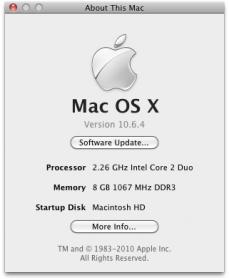
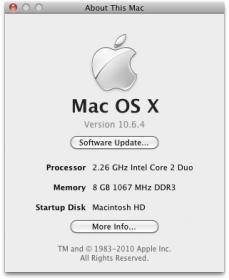
[ATTACH=CONFIG]3532[/ATTACH] well, everything went smoothly. Let memtest run for a bit to be certain: Memtest version 4.22 (64-bit) Copyright (C) 2004 Charles Cazabon Copyright (C) 2004 - 2008 Tony Scaminaci (Macintosh port) Licensed under the GNU General Public License version 2 only Log file written to //memtest.log Mac OS X 10.6.4 (10F569) running in single user mode Memory Page Size: 4096 System has 2 Intel core(s) with SSE Requested memory: 7490MB (7854333952 bytes) Available memory: 7490MB (7854333952 bytes) NOTE: Memory request is too large, reducing to acceptable value... Allocated memory: 7280MB (7634412544 bytes) at local address 0x0000000101000000 Attempting memory lock... ERROR: Memory lock failed - reason unknown. WARNING: Testing with unlocked memory may be slower and less reliable Splitting allocated memory into 2 comparison buffers... Buffer A: 3640MB (3817206272 bytes) starts at local address 0x0000000101000000 Buffer B: 3640MB (3817206272 bytes) starts at local address 0x00000001e485f200 Running 5 test sequences... (CTRL-C to quit) Test sequence 1 of 5: Running tests on entire 7280MB region... Stuck Address : ok Linear PRN : ok Running comparison tests using 3640MB buffers... Random Value : ok Compare XOR : ok Compare SUB : ok Compare MUL : ok Compare DIV : ok Compare OR : ok Compare AND : ok Sequential Increment: ok Solid Bits : ok Block Sequential : ok Checkerboard : ok Bit Spread : ok Bit Flip : ok Walking Ones : ok Walking Zeroes : ok Test sequence 2 of 5: Running tests on entire 7280MB region... Stuck Address : ok Linear PRN : ok Running comparison tests using 3640MB buffers... Random Value : ok Compare XOR : ok Compare SUB : ok Compare MUL : ok Compare DIV : ok Compare OR : ok Compare AND : ok Sequential Increment: ok Solid Bits : ok Block Sequential : ok Checkerboard : ok Memtest version 4.22 (64-bit) Copyright (C) 2004 Charles Cazabon Copyright (C) 2004 - 2008 Tony Scaminaci (Macintosh port) Licensed under the GNU General Public License version 2 only Log file written to //memtest.log Mac OS X 10.6.4 (10F569) running in single user mode Memory Page Size: 4096 System has 2 Intel core(s) with SSE Requested memory: 7490MB (7854333952 bytes) Available memory: 7490MB (7854333952 bytes) NOTE: Memory request is too large, reducing to acceptable value... Allocated memory: 7280MB (7634412544 bytes) at local address 0x0000000101000000 Attempting memory lock... ERROR: Memory lock failed - reason unknown. WARNING: Testing with unlocked memory may be slower and less reliable Splitting allocated memory into 2 comparison buffers... Buffer A: 3640MB (3817206272 bytes) starts at local address 0x0000000101000000 Buffer B: 3640MB (3817206272 bytes) starts at local address 0x00000001e485f200 Running 5 test sequences... (CTRL-C to quit) Test sequence 1 of 5: Running tests on entire 7280MB region... Stuck Address : ok Linear PRN : ok Running comparison tests using 3640MB buffers... Random Value : ok Compare XOR : ok Compare SUB : ok Compare MUL : ok Compare DIV : ok Compare OR : ok Compare AND : ok Sequential Increment: ok Solid Bits : ok Block Sequential : ok Checkerboard : ok Bit Spread : ok Bit Flip : ok Walking Ones : ok Walking Zeroes : ok Test sequence 2 of 5: Running tests on entire 7280MB region... Stuck Address : ok Linear PRN : ok Running comparison tests using 3640MB buffers... Random Value : ok Compare XOR : ok Compare SUB : ok Compare MUL : ok Compare DIV : ok Compare OR : ok Compare AND : ok Sequential Increment: ok Solid Bits : ok Block Sequential : ok Checkerboard : ok Bit Spread : ok Bit Flip : ok Walking Ones : ok Walking Zeroes : ok Test sequence 3 of 5: Running tests on entire 7280MB region... Stuck Address : ok Linear PRN : ok Running comparison tests using 3640MB buffers... Random Value : ok Compare XOR : ok Compare SUB : ok Compare MUL : ok Compare DIV : ok Compare OR : ok Compare AND : ok Sequential Increment: ok Solid Bits : ok Block Sequential : ok Checkerboard : ok Bit Spread : ok Bit Flip : ok Walking Ones : ok Walking Zeroes : ok Test sequence 4 of 5: Running tests on entire 7280MB region... Stuck Address : ok Linear PRN : ok Running comparison tests using 3640MB buffers... Random Value : ok Compare XOR : ok Compare SUB : ok Compare MUL : ok Compare DIV : ok Compare OR : ok Compare AND : ok Sequential Increment: ok Solid Bits : ok Block Sequential : ok Checkerboard : ok Bit Spread : ok Bit Flip : ok Walking Ones : ok Walking Zeroes : ok Test sequence 5 of 5: Running tests on entire 7280MB region... Stuck Address : ok Linear PRN : ok Running comparison tests using 3640MB buffers... Random Value : ok Compare XOR : ok Compare SUB : ok Compare MUL : ok Compare DIV : ok Compare OR : ok Compare AND : ok Sequential Increment: ok Solid Bits : ok Block Sequential : ok Checkerboard : ok Bit Spread : ok Bit Flip : ok Walking Ones : ok Walking Zeroes : ok All tests passed! Execution time: 36376 seconds. I'll probably wait a few weeks to be sure then see if anyone is interested in the two 1G modules... I figure some people will probably pay a bit higher than the normal rate for genuine mac memory modules? Same memory used in the notebooks...
-
Reks, I can probably pick some up. Might even have an old tin, but I've never had much luck reviving flake before...
-
I bet Nate will have some ideas, but in general replacing a fuse and hoping for the best can be a dangerous proposition. That said, you could disconnect the amp boards and still see if you blow the fuse, but again you really should bring the amp up more carefully...
-
ok, me again. This time four $0.06 parts from Mouser. Also, don't hesitate to post in this thread, I'm ship parts daily to people it seems (2) 512-BC860AMTF (2) 512-BC850AMTF
-
what does C1 exactly do? It's 1nF across the plates of the input stage tubes. Looks like some sort of filter or compensation? Can the working voltage be considerable lower, say 100v?
-
That article admits that most coaxial lines are incorrectly setup, but that doesn't change the fact that when things are done right it is galvanic just like toslink... Another artcle that does nothing more than confuse the issue, IMHO
-
Well, close.. "BNC" as you say, with transformers is galvanic as well, not sure what ground isolation means...
-
a few ideas: Build a jig to test and measure your past projects Find an underdocumented project without boards and learn a PCB CAD program and make a set of boards for said project Modify something Get into speakers (build speakers, power amp, etc.) Identify more large scale design decisions that you don't have experience with and build something alon those lines, say a BJT output amp, or a parafeed amp, or solid state transformer coupled amp, etc. Find a project that gets you involved in another website, say diyaudio.com. ... Just a few ideas, once you narrow it down a bit, i'm sure there will be lots of help choosing something..
-
I may have some small boards for the LVDS pair at some point.
-
I haven't found any non-Mac memory with the same specs as the stock memory. Specifically ECC non buffered with the same timing and latency. edit: that and there are very few 8 GB (2x4GB) choices at Newegg. I think I'll just buy something there.
-
ok, back to looking for a 8GB upgrade kit for my Mac mini. First option is a kit from OWC. The strange thing, is they seem to have rebranded another manufacturer? Here's a link: 8.0GB (4.0GB + 4.0GB Kit) PC-8500 DDR3... (OWC8566DDR3S8GP) at OWC other option is Mushkin from Newegg: Newegg.com - Mushkin Enhanced 8GB (2 x 4GB) DDR3 1066 (PC3 8500) Dual Channel Kit Memory for Apple Model 976644A Any opinions?
-
Both the PSP and iPhone screens are cheap and easy to get ahold of...
-
thinking out loud... the thermal resistance goes down of the heat sink itself as it heats up, but as that happens the junction temperature of the devices rise, which in this case are positive temperature coefficient devices (BJTs). The issue is that since the devices are paralleled, one device will hog the current as this happens. I wonder if you could add some sort of thermal feedback resistor/transistor/thermistor to the heat sink to help mitigate this effect to some extent. This feedback device would turn on at a low voltage and effectively regulate the bias voltage (i.e. in this case the CCS current) allowing it to slowly come up to spec.
-
ok, I'm assuming that's diagonal. Lots of options in that range.
-
yeah, that's partly what I'm referring to. I'm wondering if the thermal junctions present in a normal case don't actually help lower junction temperature though. For example, in this design, the air around the fins provides a much higher thermal impedance than say the bottom of the case. But since it's all one large block of aluminum, it seems that natural convection to air would be sort of a "last resort". Also, if you've ever heated up a block of aluminum, you know it takes forever to cool down via natural convection. I'm wondering if the internal temperature will rise dramatically as well, despite any attempts to add holes for natural heat convection.
-
what's the maximum size screen that would make sense here?
-
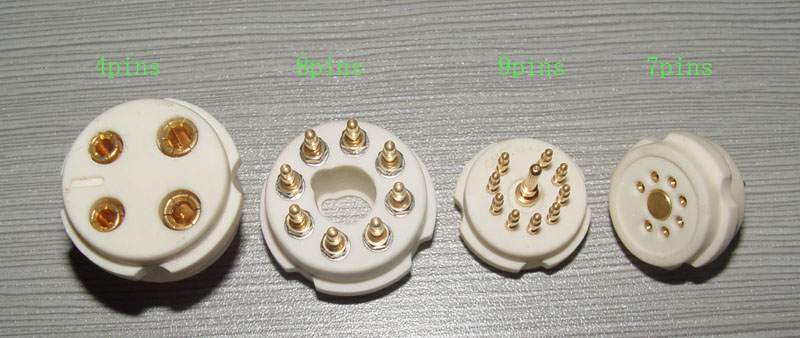
like these? [ATTACH=CONFIG]3496[/ATTACH]
-
Do you have any way of doing some sort of thermal imaging on the thing while it is running? I'd like to place the contrary bet that you'll end up with a higher junction temperature when it's all said and done.
-
That's why you by a second F1J when the time comes, obviously