Leaderboard
-
naamanf
High Rollers18Points6661Posts -
swt61
High Rollers14Points22273Posts -
Fitz
High Rollers13Points5813Posts -
chinsettawong
High Rollers12Points729Posts



Popular Content
Showing content with the highest reputation on 11/09/20 in Posts
-
12 pointsWent over to a friend’s house and made a pair of field coil loudspeakers over the weekend. They sound surprisingly nice!12 points
-
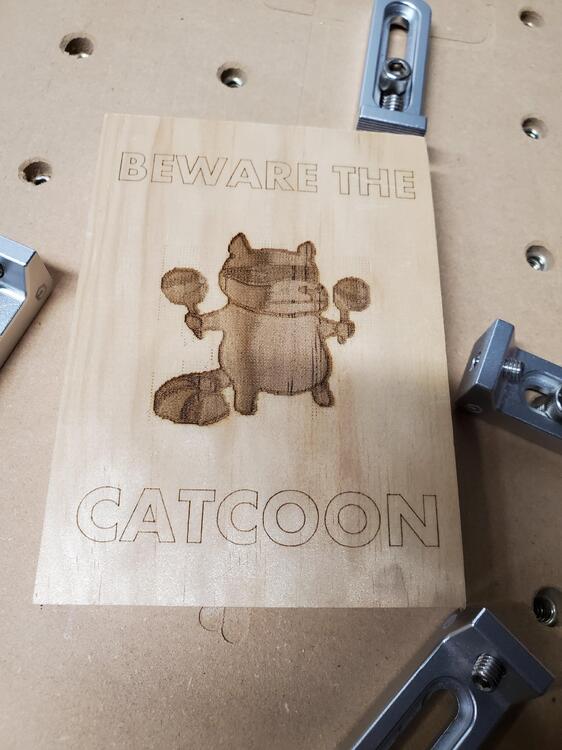
9 pointsIt's been a nasty weekend, weather-wise. Perfect for staying in and doing stupid things with lasers. I needed an image to test out dithering and came up with this:
 9 points
 -
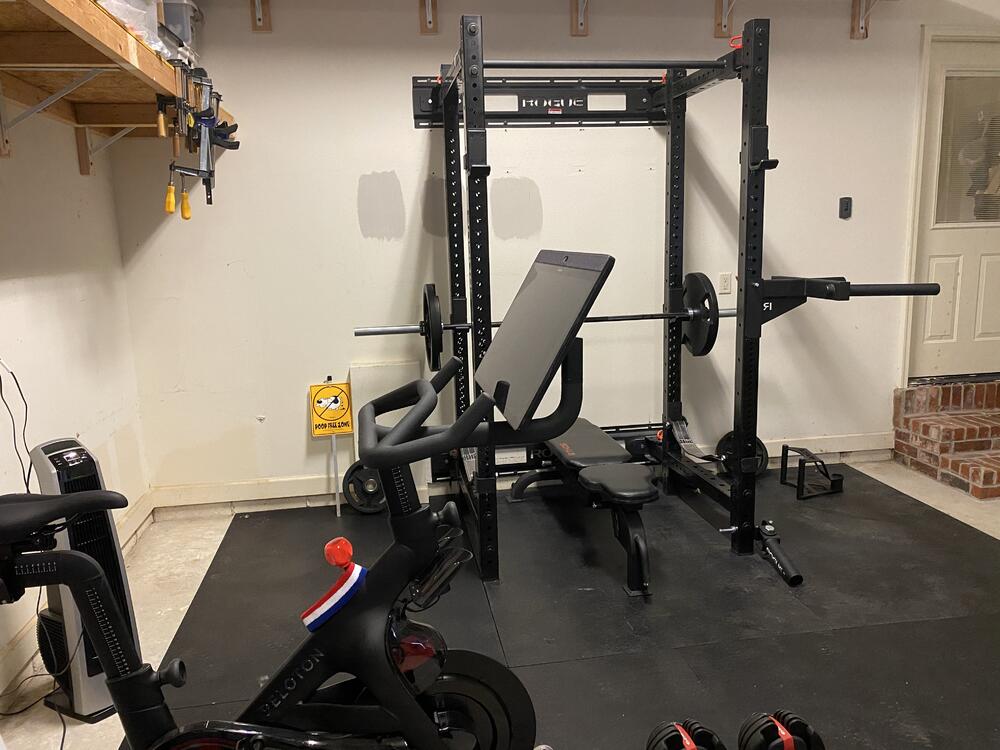
5 pointsWorkout space started. Need to get my soldering arm back in shape.
 5 points
 -
4 pointsI've never seen one without coat hangers. BTW, I pick the grey swatch on the left. Gay designer fee waved.4 points
-
3 pointsI made myself a Rosamunde-style mergez sausage. So sad they pulled out of the little shop next door to Toronado. The newer Rosamunde brew pub and restaurant is good but doesn't have the same feel.
 3 points
 -
2 points
-
2 points
-
1 pointJust picked up a DIY Kludge headphone amp. The base circuit came from a Vacuum Tube Valley #11 on page 24 and 25. Here is the link: https://web.archive.org/web/20131122141643if_/http://www.jumpjet.info/Pioneering-Wireless/eMagazines/VTV/VTV11.pdf A few minor mods were made to improve the performance, such as additional power supply filtering, HEXFREDS, DCed all filaments, etc. This amp sounds great. Has NOS Tung-Sol 6080 and 6SL7 tubes. Has plenty of power. Easily drives Abyss 1266 phi.1 point
-
1 point
-
1 pointNice Nate. And yes, it always surprised me how much colder it felt around any body of water, even a little creek.1 point
-
1 pointGetting the mixing right is not the easiest thing in the world! As they say, mixing is about hundreds of little things that sound inconsequential by themselves but add up to big differences. Here's a pretty good video on OH mixing. I'm terrible at letting percussion take over my compositions so I know from first hand experience!1 point
-
1 pointThe track has a lot of forward momentum, I enjoyed it. I agree about the hard-panned perc, but sounds like you do too @acidbasement. The breakdown with the bloops lost me a tiny bit, but that might be a matter of taste. I like the way you got the wishy-washy middy synthwave sound nailed, that sounds lovely- though being unsubtle, I'd be wanting to punch various stuff up. It's a good job it's you at the controls of the mix, not me. Meanwhile, I continue to eschew all signs of melodic progression and make weird noise. I think there's something wrong with me. This is today's stereo-straight-from-the-modular single take. No editing barring some gentle mastering and fading ends. It was actually loads of fun to do.1 point
-
1 pointThis. Here's to hoping SNL can pull off a Jeopardy in Heaven episode w/ both Connery and Trebek now being gone.1 point
-
1 pointSeriously, it was so nice here yesterday that I rode my bike to work. I think the last time I did that in November it was 19F when I left the house. Yesterday it was 52F and was still in the 60s when I got home (after dark). It was funny to ride by the various small bodies of water near my house and feel how cold the thermal influence of that mass made the surrounding air. It was like riding through pockets of the refrigerated isle at the grocery store.1 point
-
1 pointI finished my first SRX+ build yesterday. It is overall quite satisfying. It doesn't have the breathtaking bass or unforgiving resolution of KGSSHV Carbon, but is rather non-fatiguing for long-term listening. I took the SRX+ Gerber file Kevin created (Thanks, Kevin!), added larger footprints in order to use the cheaper tube sockets, TO-92 footprints for the DN2540s and moved the heater-lift resistor dividers to the amp board so the wiring between this and the PSU board can be more streamlined. I also changed the small tubes to use 6.3V heater in order to match the surplus power transformer. The PSU board from Kevin follows JimL's original shunt PSU schematic. I added a normal bias tap in the zener diode string with a copied low pass filter, different lead spacing support on the output film caps in case a certain part number is out of stock. It is also cut short 1/2" from the original. Got too aggressive in fitting these boards into the small chassis. The internal space is barely large enough for the two boards to lay side-by-side. Had to mill off internal supports here and there, and ended up not having enough space for a real volume pot (the place holder is a rotary encoder waiting for a future attenuator board. The build started with a faint hum. Swapping tubes can reduce it to a certain level. Then I found a 55mVp-p saw-tooth ripple on the power, which is not supposed to be there (the shunt PSU has >120dB ripple rejection at power line frequency according to simulation). It turns out, the bias circuit voltage doubler drops its leg on the virtual ground and injects >1mA of ripple current, because the bias has to be ground-referenced. The virtual ground is not really a low-impedance node (about 60 ohm @ 60Hz with two 22uF caps). Any noise on the virtual ground is considered common mode to the shunt regulator, and is pretty much out of the control loop. Besides, with transformer HV voltage suitable for this design (I used 600V center-tapped), the voltage doubler doesn't have enough juice such that the 10M90 bottoms out at the low voltage points. So I modified the bias circuit to have its return tied to the output B+ and let the shunt regulator deal with the ripple current. Pro-bias is still easy to obtain, but the normal bias would have to come from dividing the B+ like in the original SRX circuit. The final assembly has 2.5mV hum in one channel and 5mV in the other. I don't think I can reduce them significantly beyond that without using DC heater and take care of the common mode noise from the header windings, perhaps also need to shield the small tubes. There is always some coupling from the heater to the cathode and it varies from tube to tube. With multiple tubes sharing the same AC heater I don't think you can balance it out completely using a pot, either. This simple amp performs well, THD+N is as low as 0.01% between 35dBV and 45dBV (40dBV being the rated operating voltage for the SR Lambda Pros to output 100dBSPL, which is pretty loud). One thing I'm not too happy about is the -2dB drop @ 20kHz when loaded with the AP (200k ohm + 66pf including cables). So I played a little with the open-loop performance. The driver stage has only -1.4dB drop @ 20kHz when disconnected from the final tubes, but the Miller cap of the 6SN7 is killing the high output impedance common-grid driver stage, dropping it to -9.5dB @ 20kHz. Negative feedback helped but didn't bring it back to ruler flat. It might help with a cathode follower stage before the 6SN7 but then there goes the simplicity. A rolled-off top end could explain the more forgiving sound, though. Thanks again to Kevin and Jim to make this such a fun project. If you are going to build it, I'd suggest using Jim's Revised shunt power supply for SRX Plus or any other dual voltage regulators. And don't use a chassis too small!
(640x401).jpg.6e1f25f76808dbebb769628f65303026.jpg) 1 point
1 point -
1 point
-
Thanks! The bias current drifts at 22VDC rails sitting in open air as well. I do think that it drifts more with higher supply rails and with all the guts in the chassis (re: higher running temperature). By the way, although this chassis makes for a compact and neat build, I would suggest using a larger chassis unless you like your amp to run rather warm. The heatsinks for the amp boards are adequate (45 C after 5 hours) but I think the pass transistors of the GRLV are putting out lots of heat - case temperature is about 55 C bolted to the bottom plate. It probably has to do with my stupidity - I am using a 28vac trafo so the pass transistors have to drop 12VDC and provide over 1A current. I should probably have opted for a trafo with 24 vac secondaries. (EDIT: I should mention that the Antek AS1228 secondaries (28 vac) sag to about 26.5 vac with this heavy load and with that input the GRLV could not sustain regulation for 28VDC rails as I originally planned. I am not certain how high a regulated output a 24 vac trafo can provide.) This amp rekindles my love for the LCD 2. Thanks Kevin for yet another great amp that seems curiously overlooked by many. And thanks to congo5 for leading me to it and all the help and advices through my build.1 point
-
0 points
-
0 points"You think you’re pretty smart, don’t you, Trebek? What with your Diegomustache and your greasy hair!" In just over a week, we lost the two best Celebrity Jeopardy characters.0 points
-
0 points