

Leaderboard
-
Voltron
High Rollers28Points34514Posts -
shellylh
High Rollers17Points18862Posts -
Hopstretch
High Rollers12Points16779Posts -
swt61
High Rollers11Points22243Posts




Popular Content
Showing content with the highest reputation on 10/30/16 in Posts
-
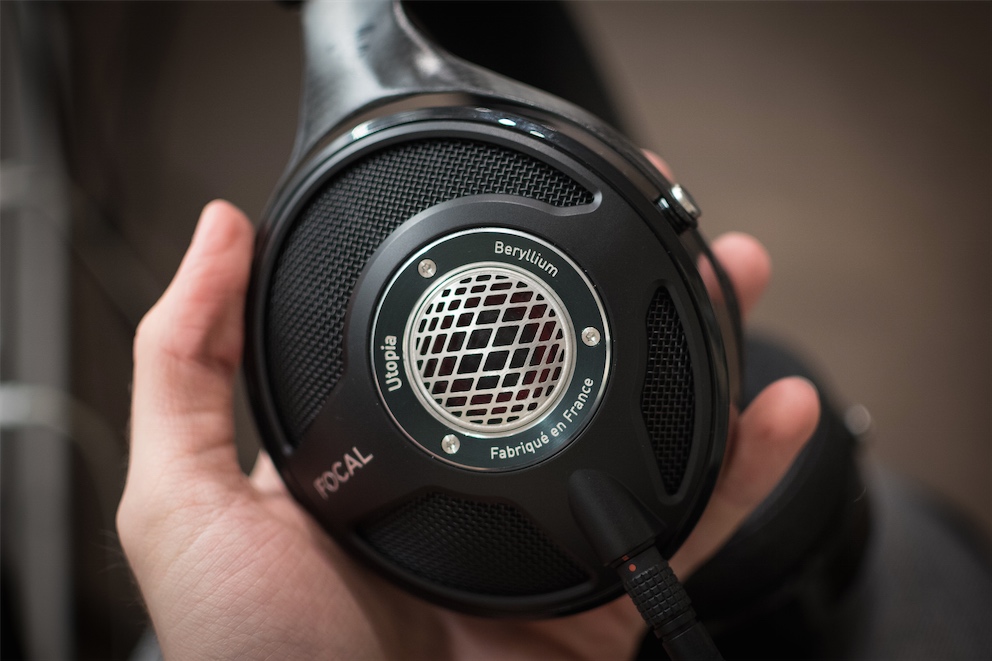
8 points8 points4 points3 points2 points2 pointsWent for a lovely hour ride today. Took this in front of the George Washington Masonic Monument. I am slow but it feels great to get out.2 points2 pointsDamn! If I could teach you to roll over on command, I'd put a ring on that finger Colin!2 pointsYep, they're awesome. Hasn't been a lot to be excited about since the HD 800 came out, but this is one exception for sure. While the Elear is very nice and enjoyable on its own, the Utopia breaks new ground. I simply haven't heard a more balanced, nuanced and coherent sound from a headphone... ever. Treble seemed absolutely spot-on. Very, very impressed.
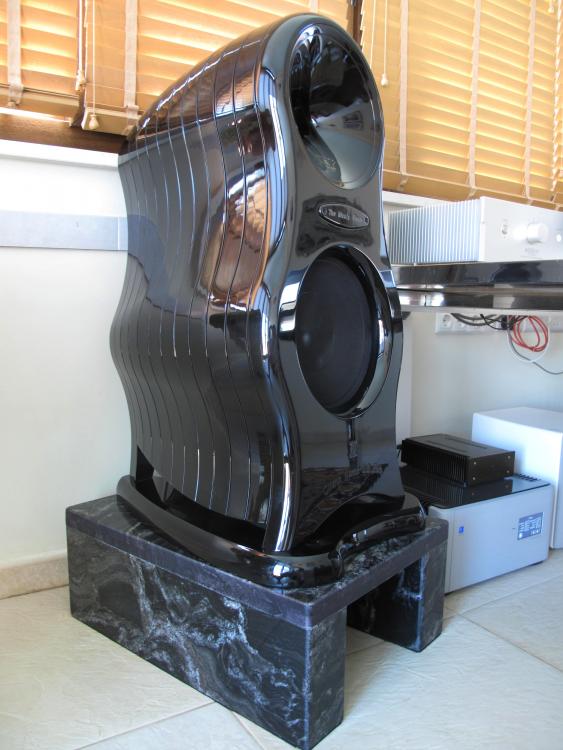
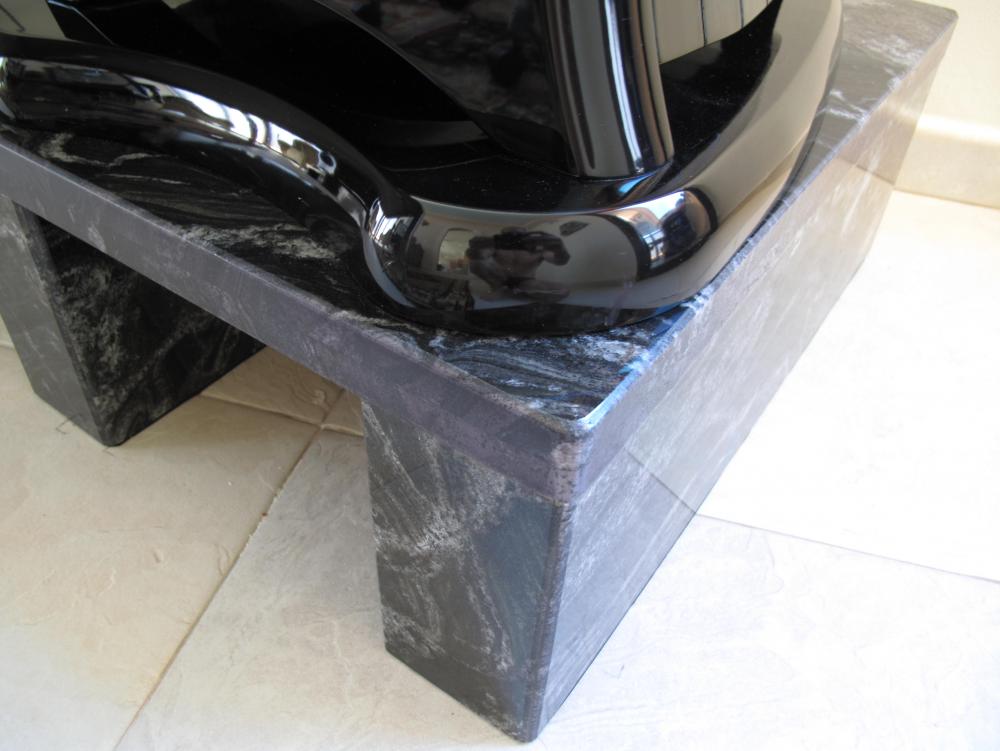
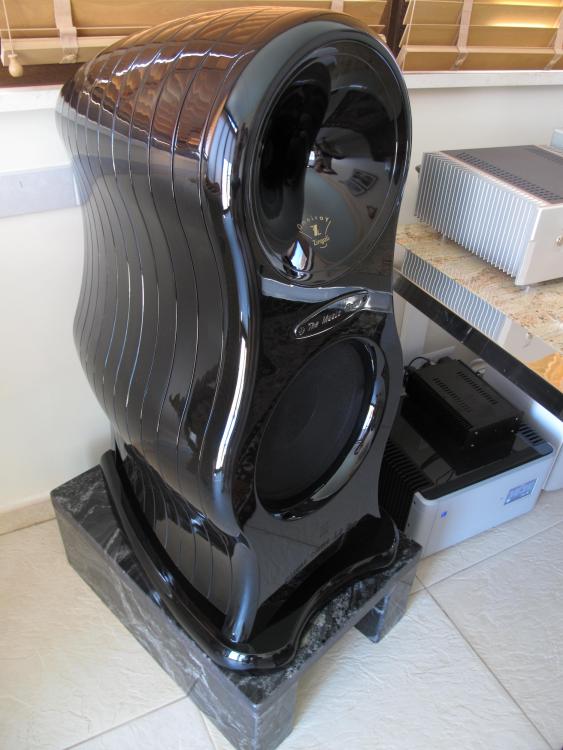
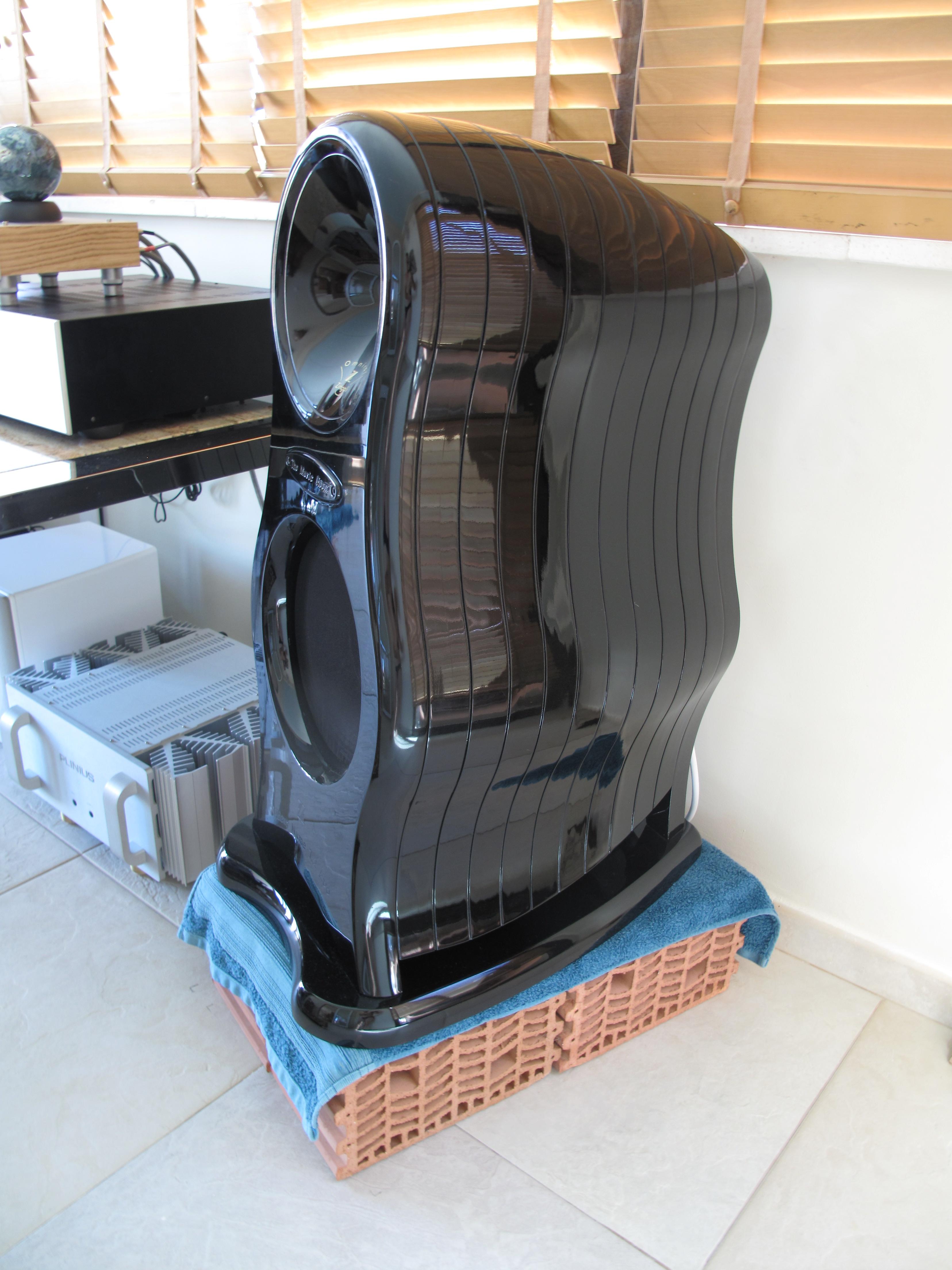
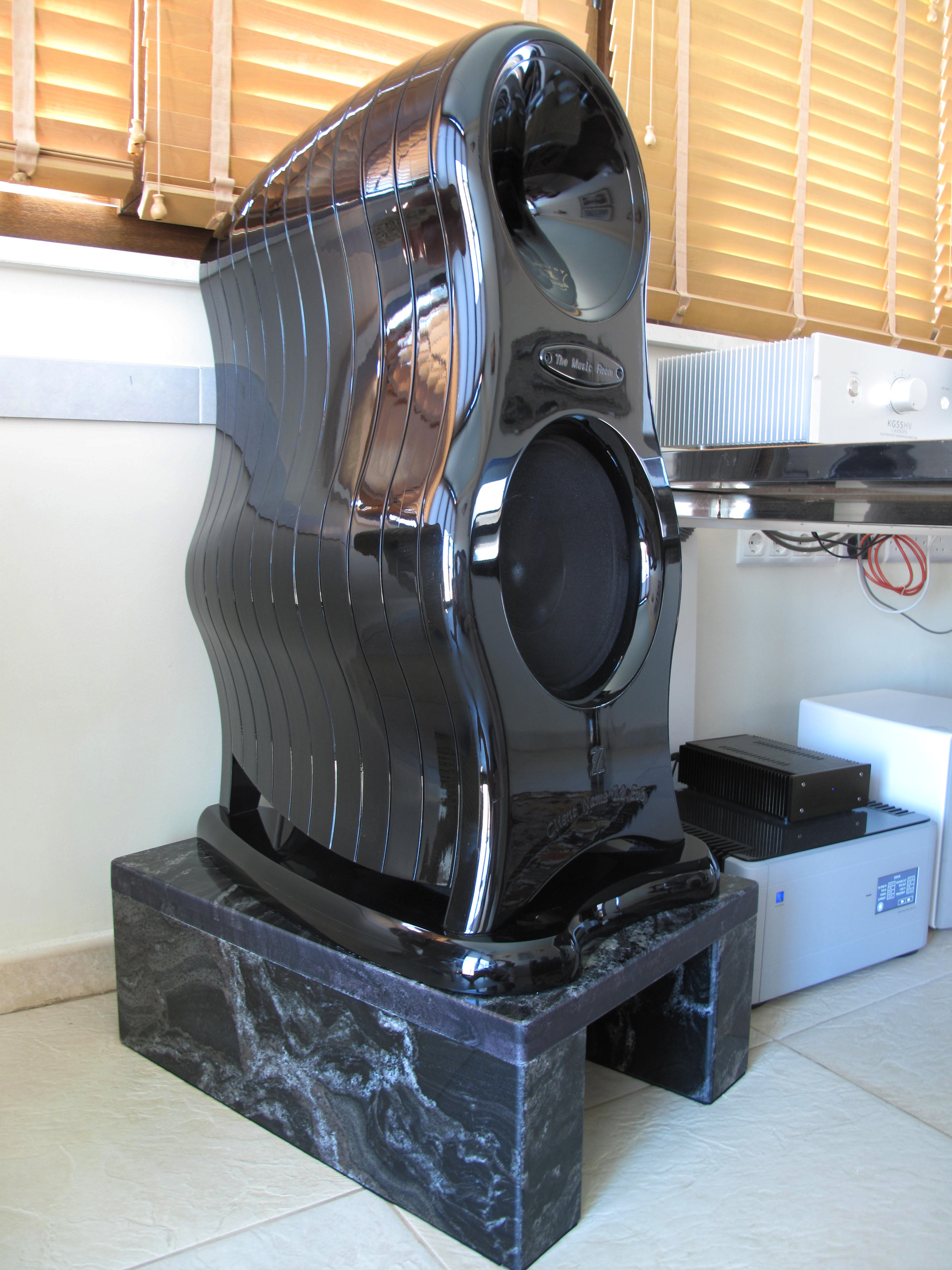
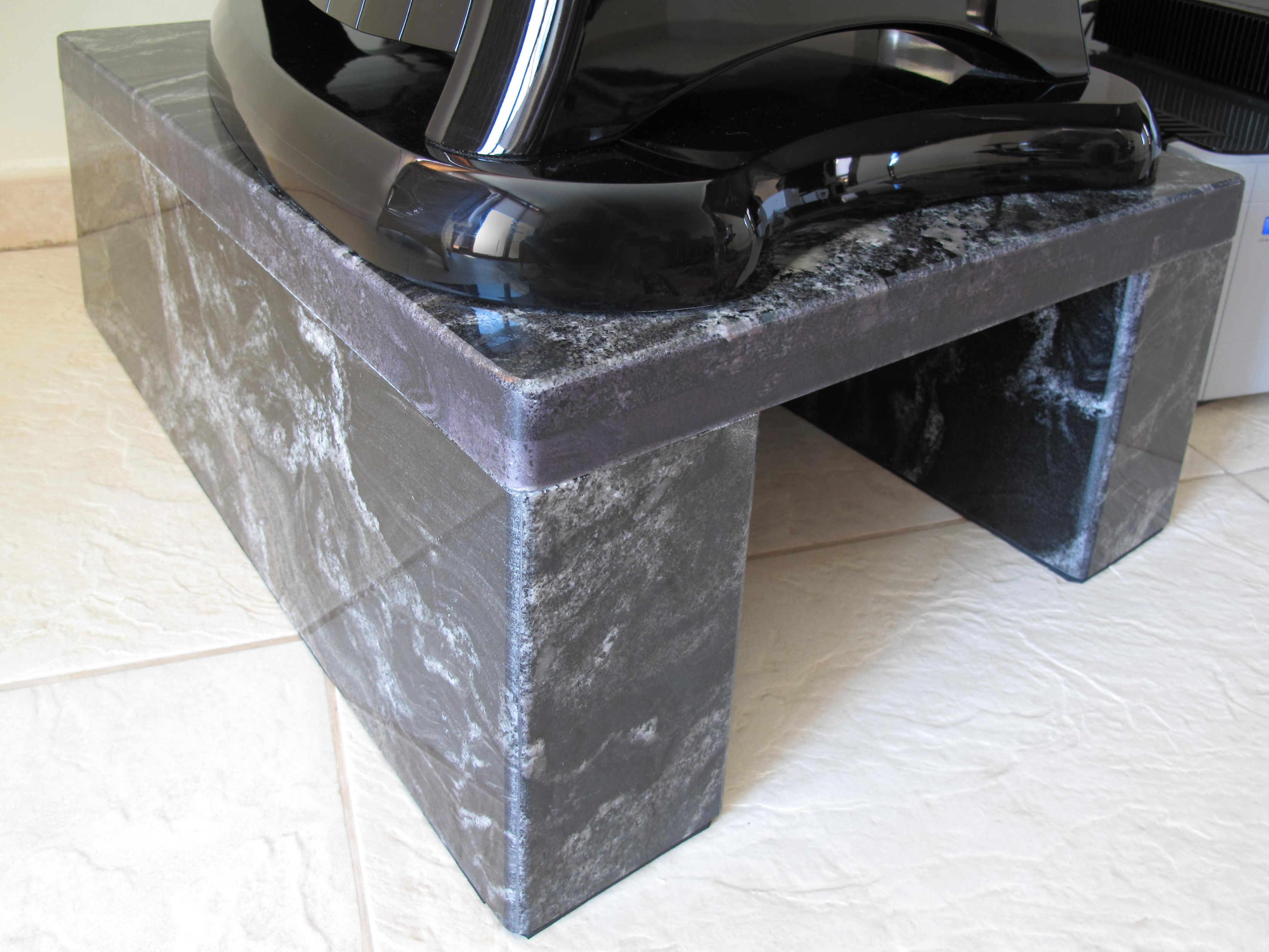
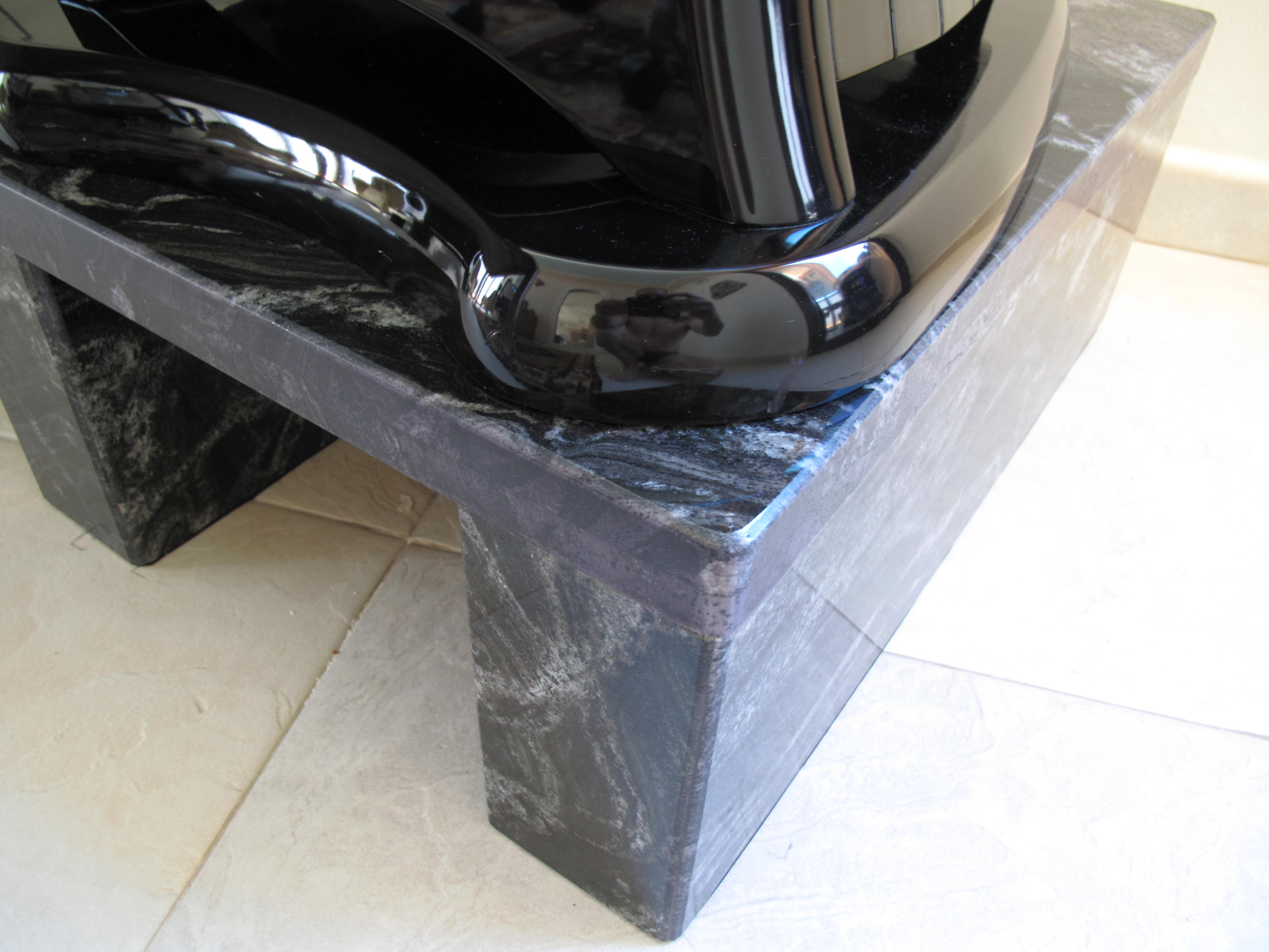
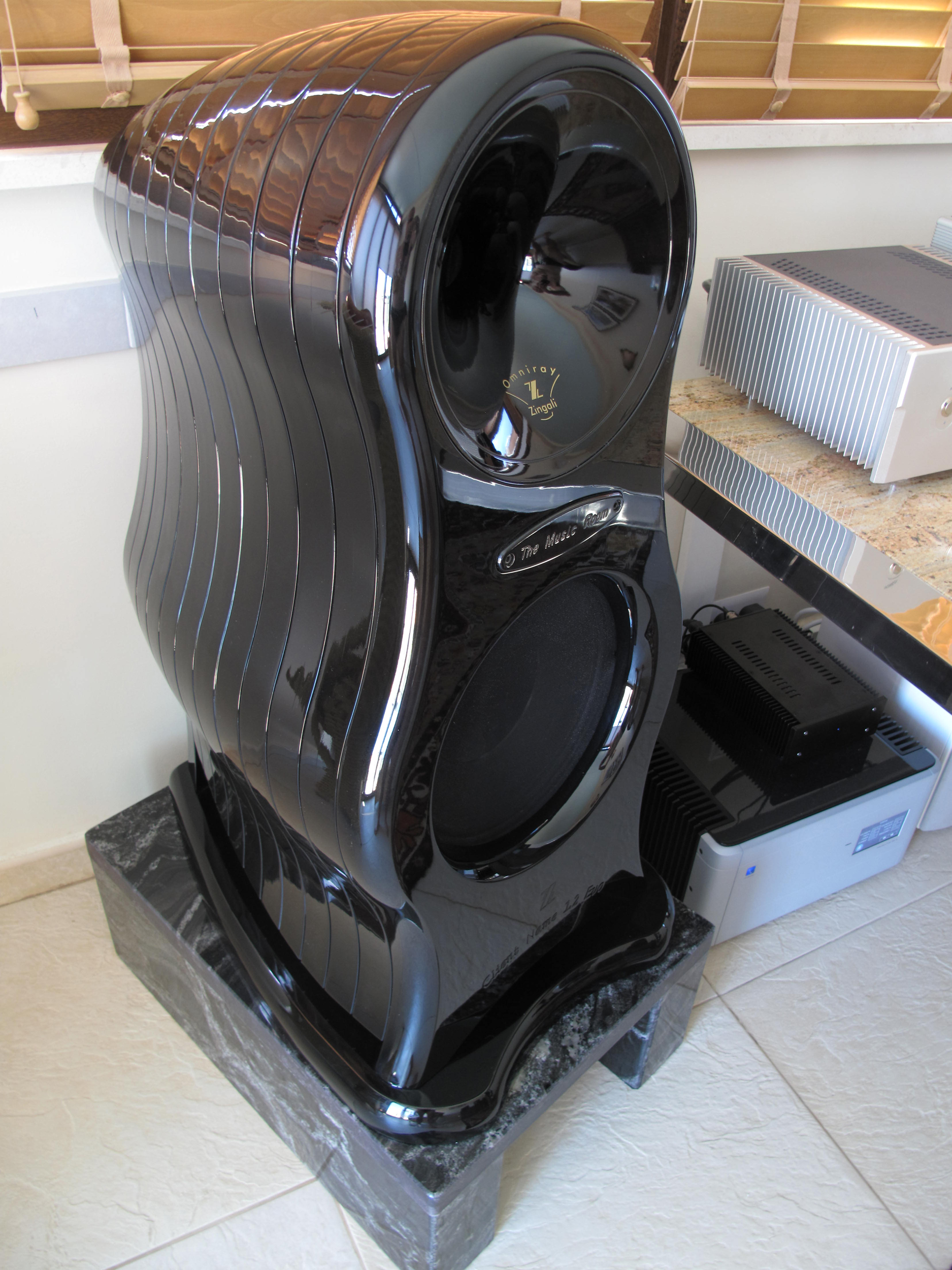
 2 points2 pointsCan't wait for the standalone Touch Bar keyboard for iMacs and Mac Pros. Must be coming ... Wife is in for a 15" MacBook Pro as her next corporate machine after 20+ years of ThinkPads. Progress.2 points2 points1 pointHi Guys I got some horn speakers about 8 months back. They are floor standers, and naturally I sat them on the floor. But found they were slightly too low for my desk system. I thus raised them on ceramic house bricks to 20 cm off the floor, which worked ok but looked awful. Anyway, I finally got around to replacing the bricks with custom black marble plinths. They look better but interestingly the bass now is less bloated and goes lower and jus more tuneful. Odly I think the imaging and treble are cleaner as well, I think I am not imagining that. Maybe the whole speaker being sat on a wobbly mount of fowl and bricks was not so hot? It think the ceramic bricks were vibrating to some extent or / or the holes in them were interacting with the energy from the down firing 12 inch bass unit. I filled the leg cavities with expanding foam to remove and resonances, and fitted adhesive backed neoprene tape to the base of the legs, and epoxy glued the legs to the top plate. On top of the plate I used thin foam packing film, about 2 mm think. It has resulted in a super solid and movement / resonance free mount from speaker case to floor. Each plinth is about 50 kilos.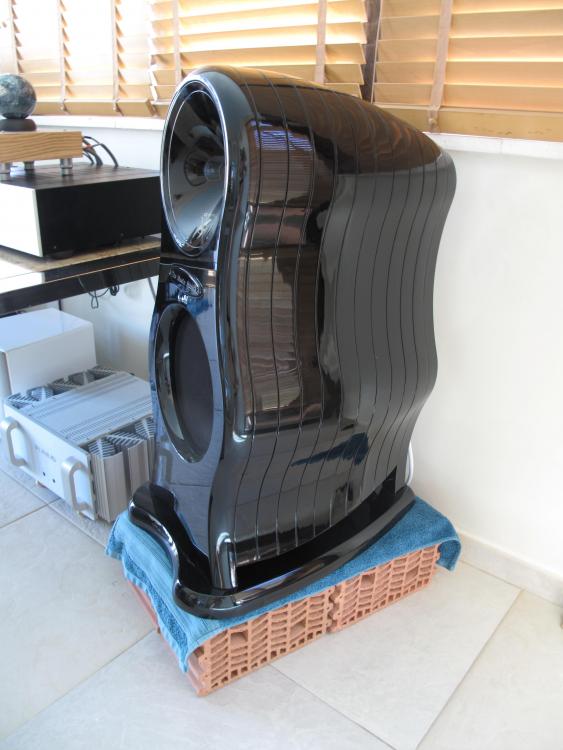
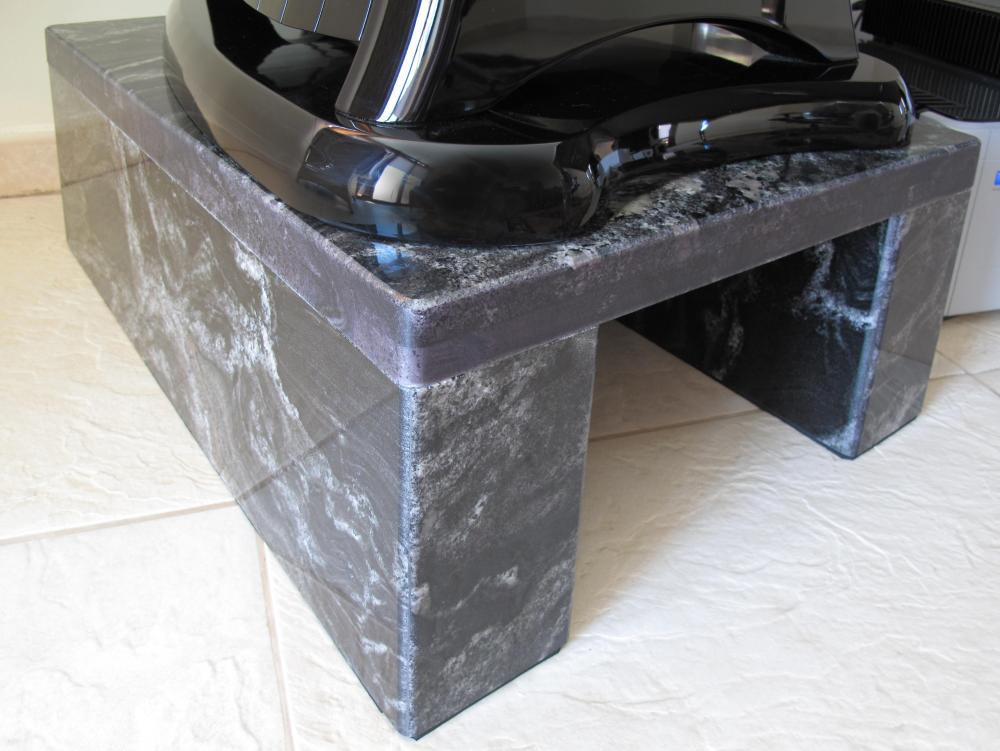
 1 point1 point1 pointOk, I had some rubber honey comb door mat in the house, so I cut a 4 hole section (about 6cm square) piece. It is around 3 cm thick with small nodule underneath, then a central hole and 4 columns of rubber at each corner. I placed 4 under the speaker base, one each corner. I ran my 200hz to 10hz sine wave text and it transmits NO energy at all to the top panel of my marble stands, zero. At any frequency. So it is physically dead as regards vibrations. Next a played a batch of well known dance tracks and reggae with tuneful bass line. The bass is very slightly lower in level than before, BUT is totally linear, i.e. goes much deeper and is more tuneful. There was a slight bass hump at maybe 100hz before possibly the loudspeaker case sending energy down into the plinth below. The other odd thing is the midrange has tightened up and the soundstage is more stable and 3D. I understand this as the speaker cabinet in now 'free' or 'floating' in space sonically. If I touch the top of the speakers they wobble slightly then settle. They are I guess as floating as I can make them without using the bike inner tube technique? I can't press down on the speakers and make then defend at all, so downward movement is not exaggerated. This decoupling mount cost me zero dollars, and seems to do the trick. My speaker dealer recommended some isolation devices ranging from 800 - 3K USD. Ha Ha, no way.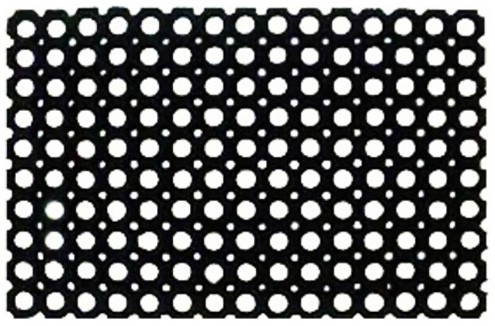
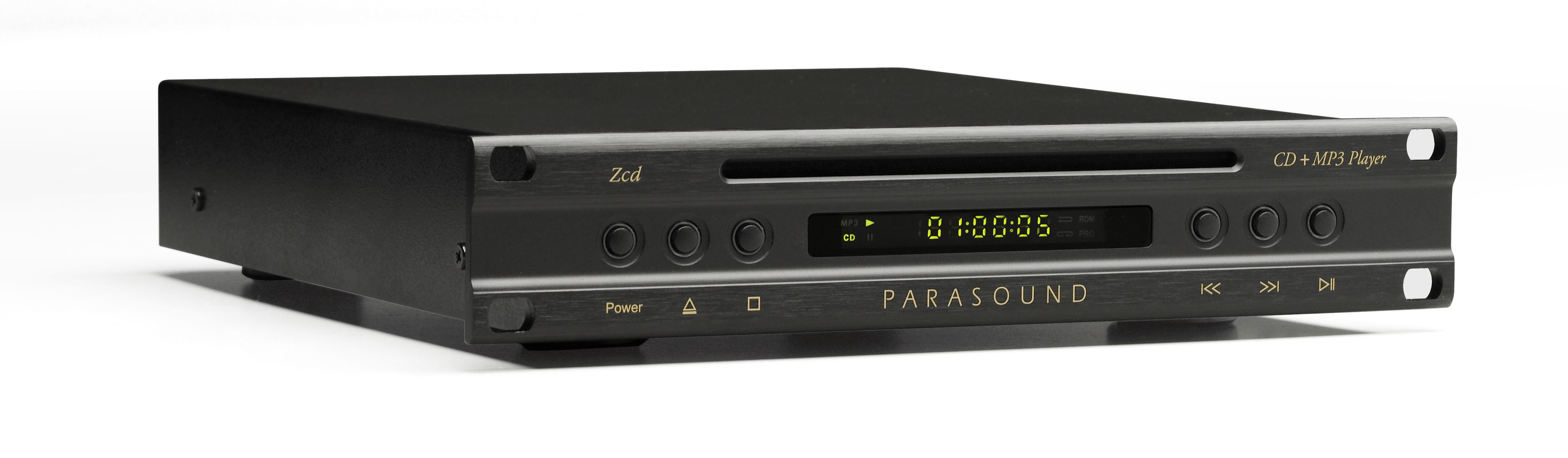
 1 point1 pointThe whole vibration thing is interesting. Suppose you put a mass on something that is springy, and the other end is coupled to something rigid, like a floor. What is the resonance frequency? It is dead easy to calculate - if the spring compresses by delta x metres, the resonance frequency is (1/2pi) x root(g/delta x). You do not need to know the mass and spring constant - just the deflection. So suppose the speaker compresses (say) sorbothane feet by 2mm, the resonant frequency is (1/2pi) x root(9.81/2E-3) = 11Hz. So at frequencies higher than 11Hz the speaker stays (vertically) stationary, and at frequencies lower than 11Hz, the speaker bounces up and down. Of course if it is actually sorbothane, there is high loss, so there is not a resonant peak, but the basic motion remains. Of course it is more complex than that, because the cones have substantial mass, so there will be a tendency for the speakers to rock like a pendulum as well as the cones move back and forth. In this case it depends on where the C of G of the speakers lie, where the drivers are (particularly the bass driver), and how far apart the springy bits (sorbothane for example) are. That in general will be a low frequency, certainly lower than the vertical 11Hz. Try rocking the speaker and see what happens - probably 1 to 2Hz. If you use spikes there is a gotcha. The spikes need to be very, very seriously locked in place. Because of the cone motion, particularly at low frequency, and tendency to pendulum rock, it the spikes are not locked absolutely solid, the speaker can rock on the spikes. Most easily diagnosed with swept sine. Got the badge on that one - testing a homebrew sub I wondered what the god awful noises were as I swept a sine wave - sounded like the worst sort of distortion. Loose spikes.1 point1 pointI wonder if they still make anything like my Sony DVP-PQ1. It has a digital coaxial out (the main reason I got it, as most of them were optical): There aren't too many half-rack (that's what you're looking for, essentially) CD players. If you Google "half rack cd player", you get a bunch of Teacs, and a Rolls HR72, whatever that is. Tascam appears to have a couple of tall somethings, but they appear to be overkill, I'd stick with either the Rega or -- what I use to play all my silver disks -- the Oppo BDP-whatever-the-current-model-is. It's full-size, but I use the built-in DAC.1 point1 pointThe only reason I can think is that it only plays CDs (I.E. not DVDs, SACDs, nor Blu-Rays), and I'm not sure it even plays CD-Rs (earlier Rega models had problems). But yes, it is an excellent transport, if all you're going to play are CDs. I've gotten to the point where I either rip the CD right away, or use the download (if it's Bandcamp/lossless). Then any old computer will do. Or my little portable Sony. There's probably one with a digital out that you can link up to a DAC or the Oppo DAC/amp. I understand that's not what you're asking, so feel free to ignore.1 point1 pointWas going to ask why you're not considering the Parasound ZCD, but I see it's discontinued. Sad, because I use mine as a transport with excellent results, for about 1/3 the cost.
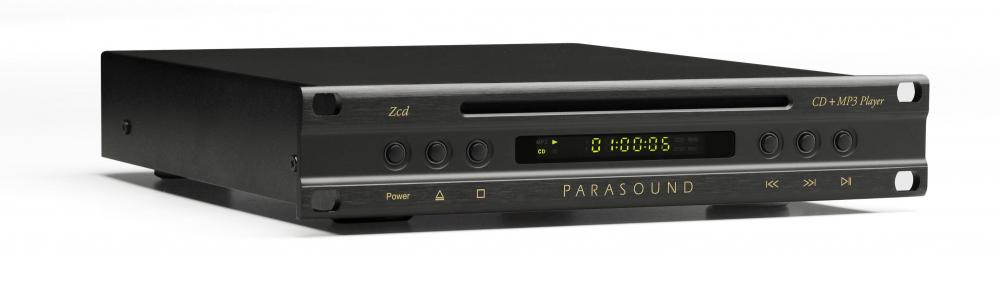 1 point1 pointThe Apollo-R is made to be a transport to the matching Apollo DAC, so I'm sure it'll do a great job.1 point1 pointShelly, having owned a Rega Planet back in the day, I think you'd be very happy with the Apollo R.1 point1 pointSampled some of this at a promo at a local supermarket, But they had already sold out .... Might get it online https://www.goodeggs.com/sfbay/sonomacountymeatco/pasture-raised-honey-lavender-bacon-frozen/5671d4c079f2b40300269611 Or just get it from the source, next time I'm in the area https://socomeatco.csaware.com/bacon-scmc-honey-lavender-C56961 point1 pointYou're right, Dusty. Brain fart. I think I'm right about the blu-tack, though.1 point1 point1 pointI have my speakers decoupled (granite slabs resting on sorbothane pads, then the speakers are on spikes on top of the slabs). I've only lived in old houses with bouncy wooden floors, while owning these speakers, and decoupling substantially improves bass quality in that situation, and helps prevent bothering neighbors. Without decoupling, these old trampoline floors vibrate horribly.1 point1 pointI remember my first touch based interface. It was way back in the 70's. I think they called it a clitoris. I never got very good with it.1 point1 pointTook some time today to set the Fanatec system up. Is anyone still doing this racing crap, besides Brent? Still can't find the missing part for my headset, but I have the crappy ones still.1 point1 pointTouch bar is interesting and I trust Apple, if anyone, to have it be stable and reliable. Other computers with touch sensitive buttons have been less than stellar but obviously touch-based interfaces have come a long ways in the last 5 years.1 point1 pointI know a couple of people that have been waiting for this one. For folks who use the function keys all the time (many Digital Audio Workstations like Pro Tools, Reaper etc use them quite a bit) the touchbar is a big deal. Some people are thinking about replacing their Mac Pro's (pre 2013) with the new MacBook. I hear some whining about the loss of firewire but a couple of adapters solves that easily. We'll see once the early adopters give it a go. Me, I'm still content with my 2012 6 core Mac Pro (I have a 2012 Macbook Pro that doesn't see a lot of use). I would love to have Thunderbolt connections but I've added a USB-3 PCIe card for faster connections. I do hope they update the Trash Can.1 point1 pointHamilton's America on PBS A PBS crew followed Lin-Manuel Miranda around for what looks like a few years as he prepared "Hamilton," put it on, and got to deal with the overwhelming public enthusiasm once it became a hit. PBS did a wonderful job with this. I'm more excited than ever to see "Hamilton" now when it comes to San Francisco next year. Can be streamed here: http://www.pbs.org/video/2365870668/
 1 point













Important Information
By using this site, you agree to our Terms of Use.