Leaderboard
-
VPI
High Rollers16Points9103Posts -
Hopstretch
High Rollers12Points16809Posts -
Voltron
High Rollers12Points34606Posts -
Aura
High Rollers11Points6886Posts




Popular Content
Showing content with the highest reputation on 04/04/16 in all areas
-
4 pointsZombie Burger at Brauer House Sent from my iPhone using Tapatalk4 points
-
3 pointsSoooo it turns out that this place just opened up about 8 miles from our lake house: http://roadcourse.dominionraceway.com/ I wish I had Jeff Level budgets but that's too rich for my blood even at the lowest level membership.3 points
-
3 pointsI just returned from the Texas Mile. Unfortunately, I was not running this time as I wanted to test my car at the 1/4 mile before going WOT for a mile with the new build. DAMN...I've never seen more accommodating weather conditions. Friday was 20mph steady tailwind with gusts to 30mph. It doesn't get better than that...EVER. Shit. Anyhoo, saw some amazing things. A Ford GT in Gulf Oil livery beat his record and went 279.8mph...crazy. A nissan GTR went 255mph. Super neat car...had tire heaters. The driver was a big boy too...didn't stop him. Saw a guy go 255mph in a dayglow pink bike...can't make that up. Some amazing runs and incredible machines. Great people too. Sat and Sun weather was stunning. Damn I love that event. HS3 points
-
3 pointsAnyone who has a chance to do autocross should do it. Basically risk free and an absolute blast.3 points
-
2 points[beavis & butthead mode on] quote "maybe I need to discharge myself" tee hee I've had a very bad day, could not resist. where is steve when you need him.2 points
-
2 pointsThe whole scene was so dark that, if it weren't for having to slow down and stop, I might not have seen half of the wrecked cars or any of the people who were standing there in the median. I did pick up a rib eye and artichokes today!2 points
-
Dublin, Ireland. When you visit the Book of Kells, you exit through this library. It is just as mind-boggling as this picture shows. Any of you who get to Ireland for whatever reason, this is a must visit. We were there early Feb.2 points
-
2 pointsThen make me some. But wait a few hours because I'm really full. Mom. Also, don't onion rings count?2 points
-
1 point
-
1 pointMost US participant has either received or will receive their parts from Group Buy. The sheet has been updated with final shipping costs 6-13USD ea. !!!!!!!!!!!!!!!!!! one participant got an Über board too many, please let me know ASAP !!!!!!!!!!!!!!!!!!!!!!!!!!!!!!!!!!!!!!!!! The remainder goes out thursday this week (if Mouser delivers on time). For those not waiting for Dig.Att.Kits those will ship tomorrow/tuesday.1 point
-
1 pointIntroducing someone new to PCars tonight (some of you played SWBF with him last week.) I think we're going to try to get some newbie practice in around 8 with me, Joe, and Xavier; possibly with David and PCars Jacob too. We should shoot for a little after 10 Eastern for a proper contest. @Fitz, make it happen. **BRENT**1 point
-
I loved S1 of BCS; I'm going to have to find S2 and watch it. Glad to hear it's keeping up. **BRENT**1 point
-
I got caught up with the second season of "Better Call Saul" over the weekend. I really like it. Is it a better show than Breaking Bad? The fact that I can even consider the question is indicative of "Saul's" quality. The three leads here, Jimmy, Kim and Mike, are all fantastic and easy to root for, even though we know from "Breaking" that things are going to end up badly for at least two of them. Highly recommended so far. 4.5/5.1 point
-
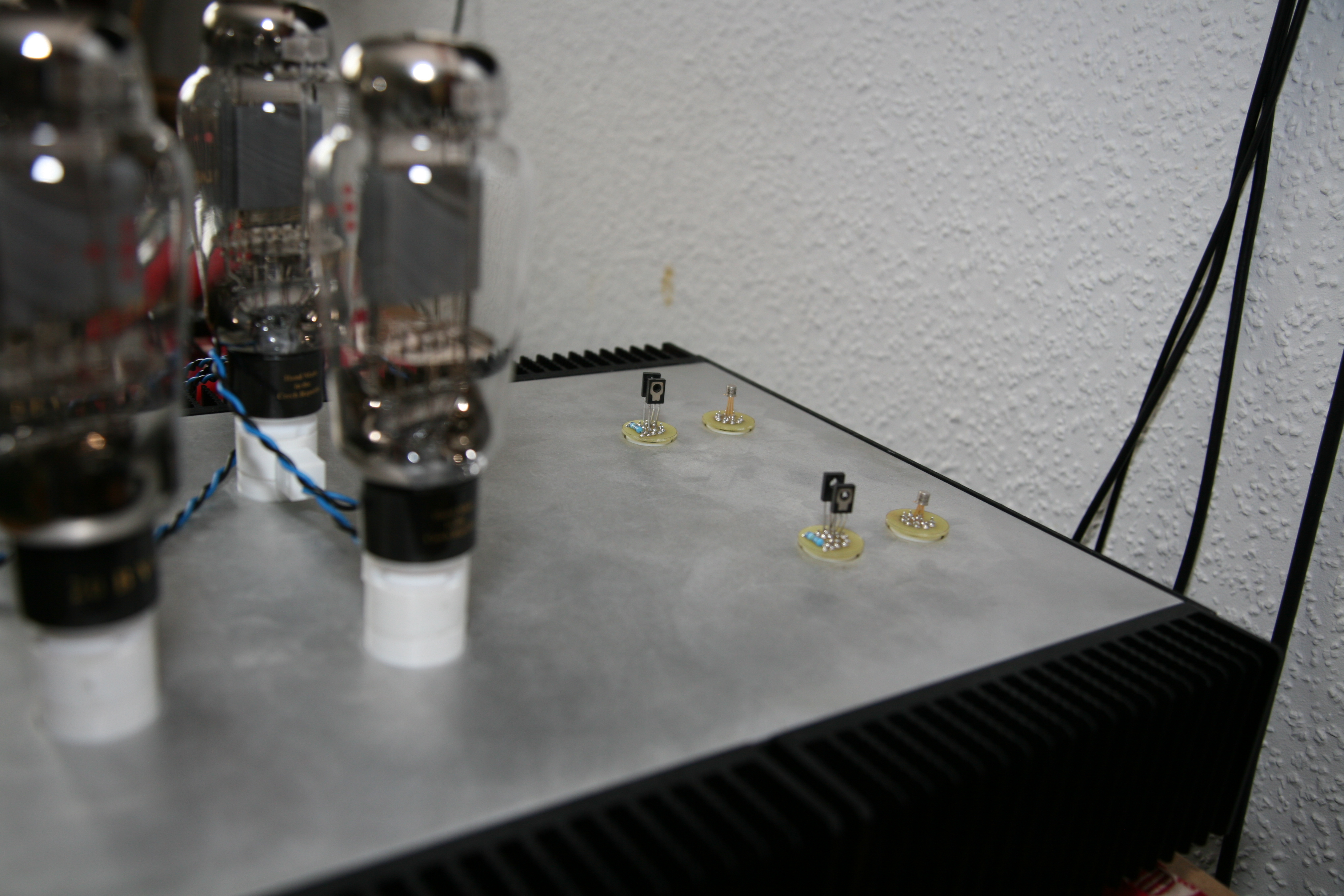
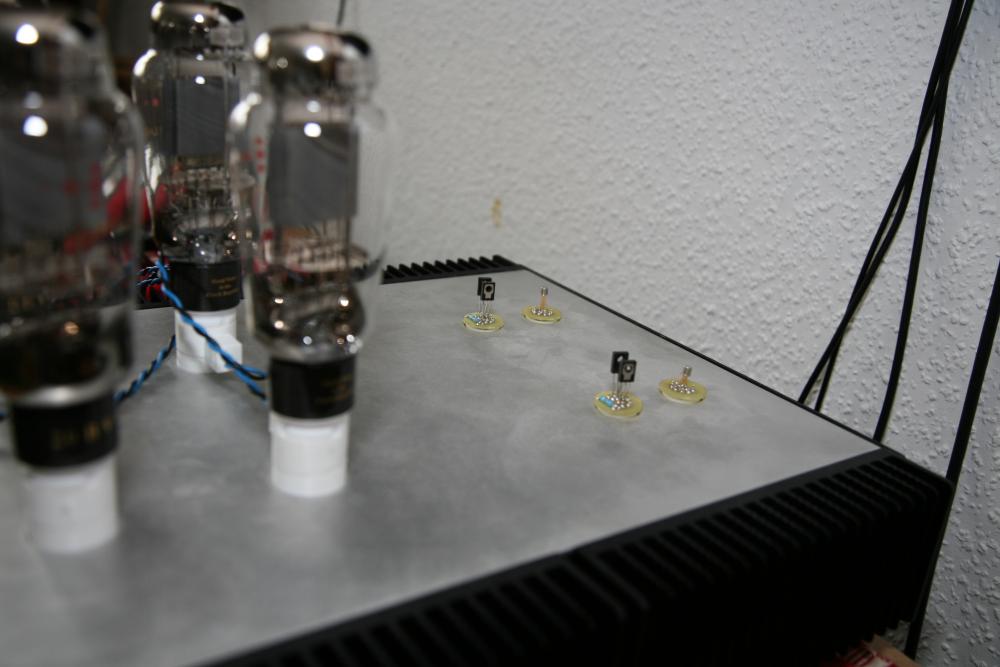
1 pointOK, now it’s done. Swapped the small tubes for solid state adapters. Kept +250V voltage and battery voltage unchanged. The 2SC3840 dissipate some 0.8W each. Might need small heat sinks. If you decrease voltage by 100V you also decrease power dissipation to >1/3W. And yes, they need covers. Working on it.
 1 point
 -
1 pointCalled a zombie burger because food coma after? Me: rigatoni with a kind of Puttanesca/Arrabiata kind of thing. Spaghetti sauce a la Dusty until I come up with a better name (tomato sauce, olives, garlic are the primary ingredients). Oh, and ground bison for protein (no, I did not grind it myself).1 point
-
1 pointThey loved it, because it is pretty fantastic, but they had doubts due to the rock music and the fact a rock band is filming a music video in the place as we eat. Sent from my iPhone using Tapatalk1 point
-
1 pointGlad you are OK and here to tell the story. As they say, "timing is everything".1 point
-
1 pointSalmon and Chablis goes together like bikinis and sun tan lotion.1 point
-
1 point
-
1 pointBloody hell. I've chanced on an accident shortly after it has happened too. And you know what - if you were a few minutes earlier.....is what it goes though my head. The only biggy I've been personally involved with was back in 1991. I braked into traffic on black ice, and slewed out of control into the rear wheel cluster of an oil tanker. Blew his rear wheels and buckled his wheel rims. Blocked the whole freeway (the A1, UK). Got away with front impact whiplash. So I went out that evening and had the biggest steak and most expensive bottle of wine in celebration of being alive.1 point
-
1 point
-
1 pointWhile that looks fantastic, the Mother in me wants to make you a big plate of fresh veggies.1 point
-
1 point
-
1 pointAutocross Level 2 Course. Fucking freezing cold but I am having a blast. Traction Control is not your friend on the course.1 point
-
1 pointI don't either, but I can cut 12 of them, put them in a circle, and divide the error by 12.1 point
-
1 pointI spent the day trying to cut a chunk of wood with a 30 degree angle. After a few tries, I am as close as 29.996. That's probably going to have to work.1 point
-
1 pointI think that is more to do with (a) the thickness of the block - to (air) season timber you reckon on 1 year for every inch of thickness for hardwoods (b) it is basically half a log which is almost guaranteed to have massive internal stresses and (c) the growth ring density varies hugely from the center to the edge of the photo, and that puts enormous internal stresses on the wood. That log has seen some major seasonal changes - the growth ring density varies by a factor of 50 or so - might even be higher. The way to think of wood as as a stack of straws following the grain of the wood - in life they carry the sap up the tree. In the photo you are looking at the end of the straws, and it is through that cut end that moisture is lost. Since the density of "straws" varies according to the density of growth rings, moisture is lost differentially across the log, building stress. What I'm saying is that it is almost inevitable that the wood I'm looking at is going to crack in some way, usually following the growth rings. Often blocks are supplied with a wax capping over the end grain to prevent the wood from cracking during transport, but that is no guarantee. I brought some cocobolo (an eye wateringly expensive rosewood) blocks into the house too quick, and I could hear them ticking as the damned stuff cracked. I've also cut thick veneers (~2mm) out of blocks, and after a short time they warp concave or wavy as a result of internal stresses There is basically nothing you can do though. Even if you were to run some theoretical glue down the cracks, the wood would simply find the next highest internal stress and crack there. Look upon it as a feature that adds character to the wood. Forgot to mention that when I'm making something (I'm a trained amateur) I cut and plane all the parts oversize and then bring them into the house for a month or so, so that the humidity is right and the wood gets its final moisture content sorted out. The parts move around a bit, hence machining oversize. Then I plane and thickness to final size and assemble and finish. All this is the same reason you make drawers with enough vertical clearance. Seasonal changes in humidity can cause the height of the drawer to change by a percent or so - and if you make a nice piston fit when the humidity is low it will jam absolutely and immovably solid when the humidity goes up.1 point
-
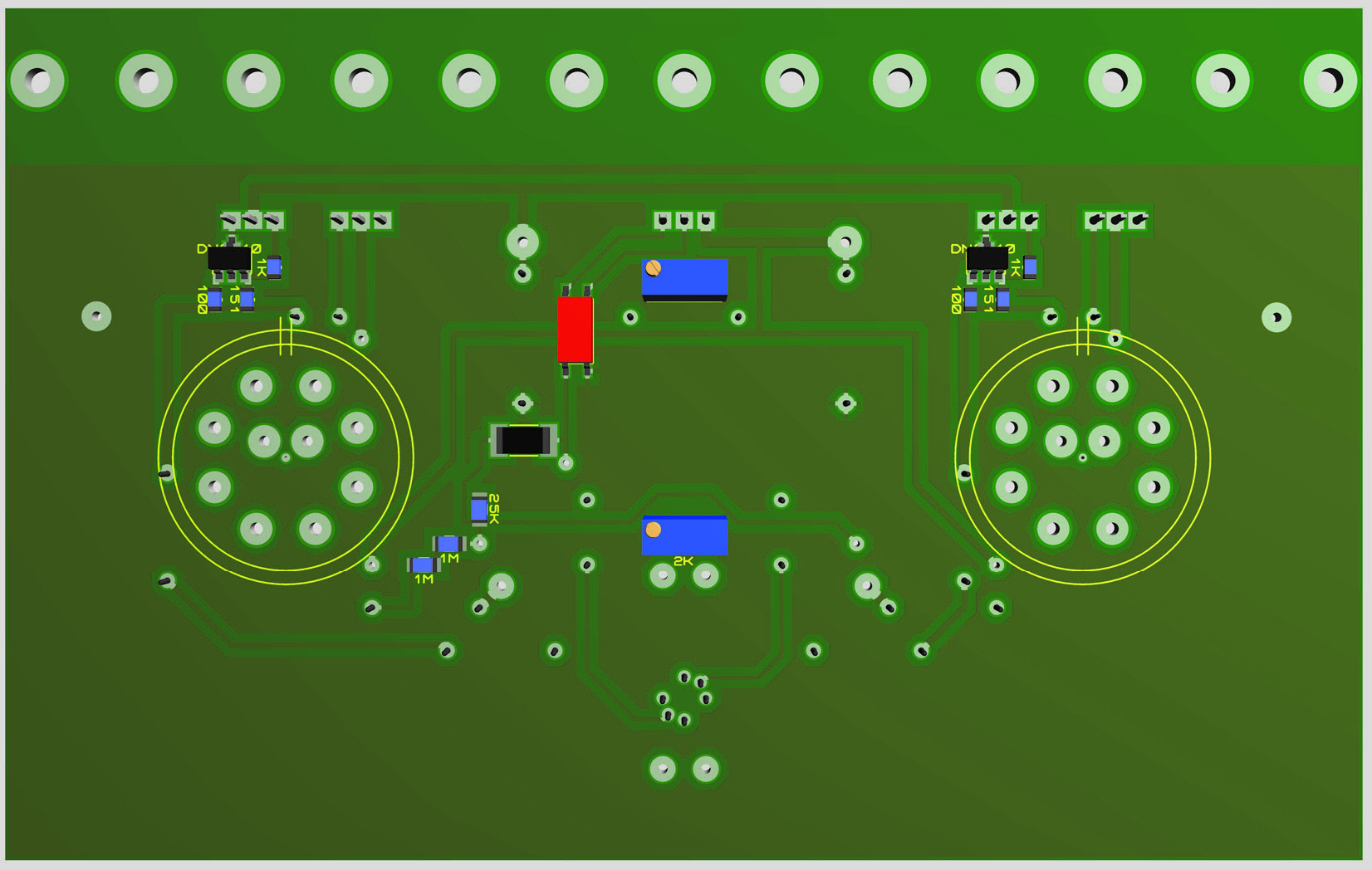
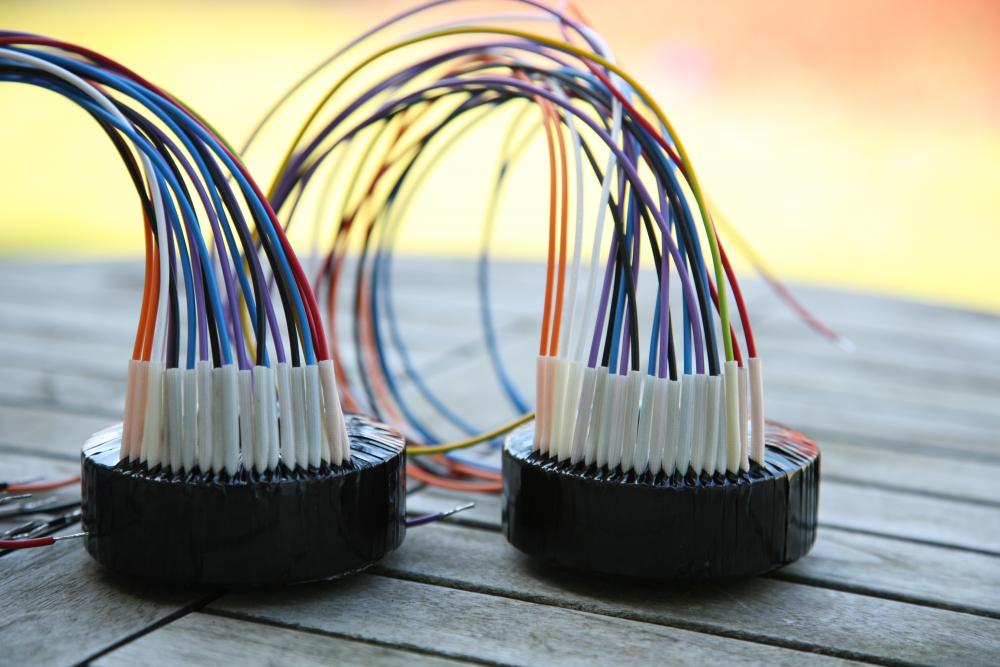
1 pointPick a lead. Ordered transformers for DHT filament. Not sure the brain was involved.
 1 point
 -
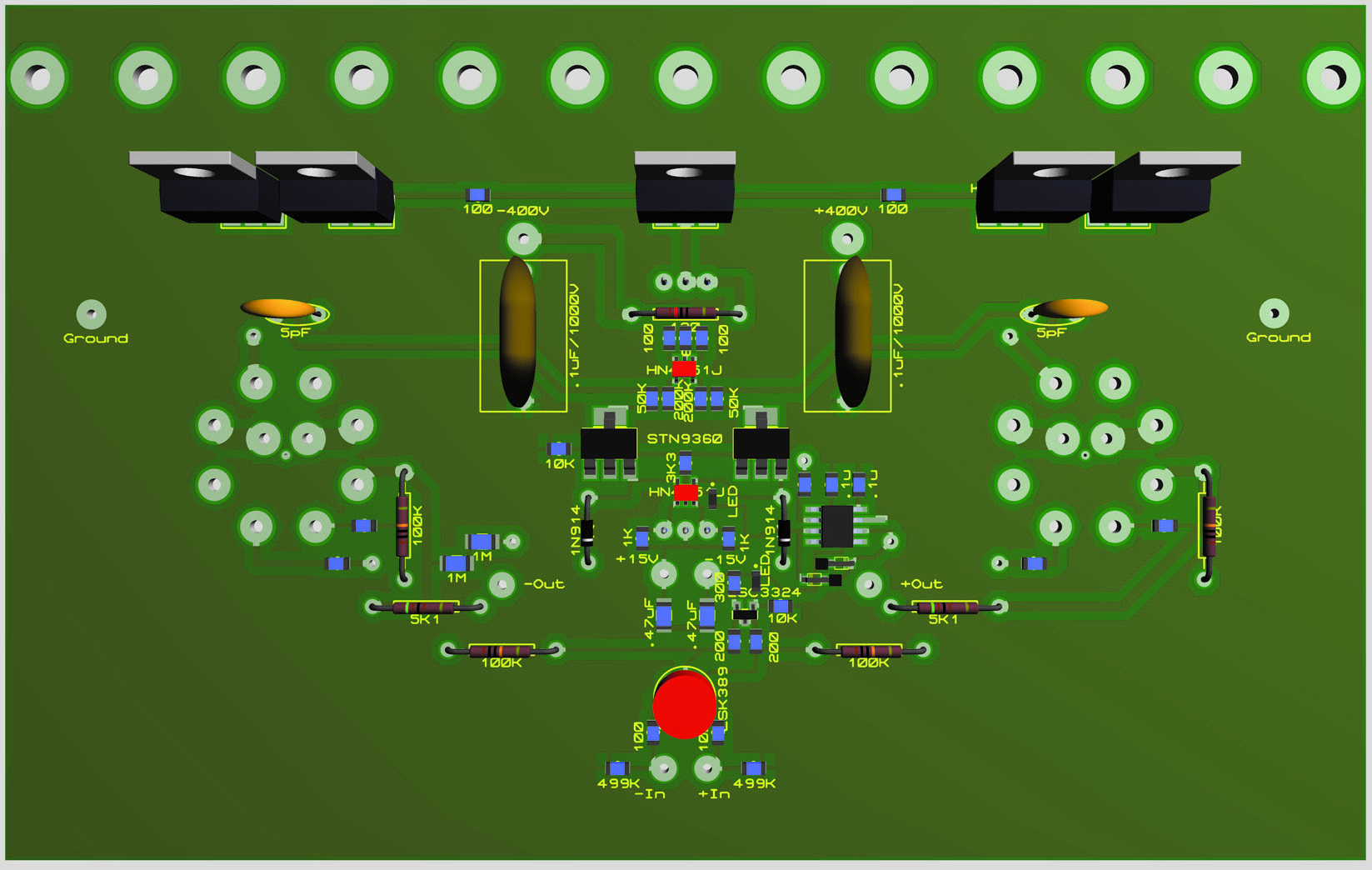
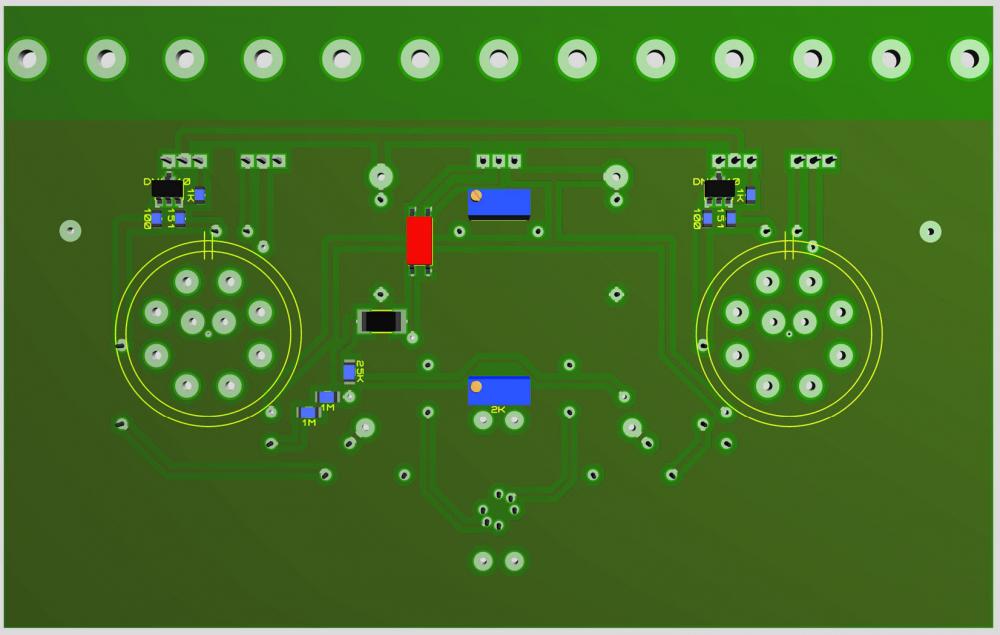
1 pointHave listen to the DHT carbon style for three weeks now. It’s bloody good – think I like it more than the T2. Below is a draft of how a smd version of DHT might look.

 1 point
 -
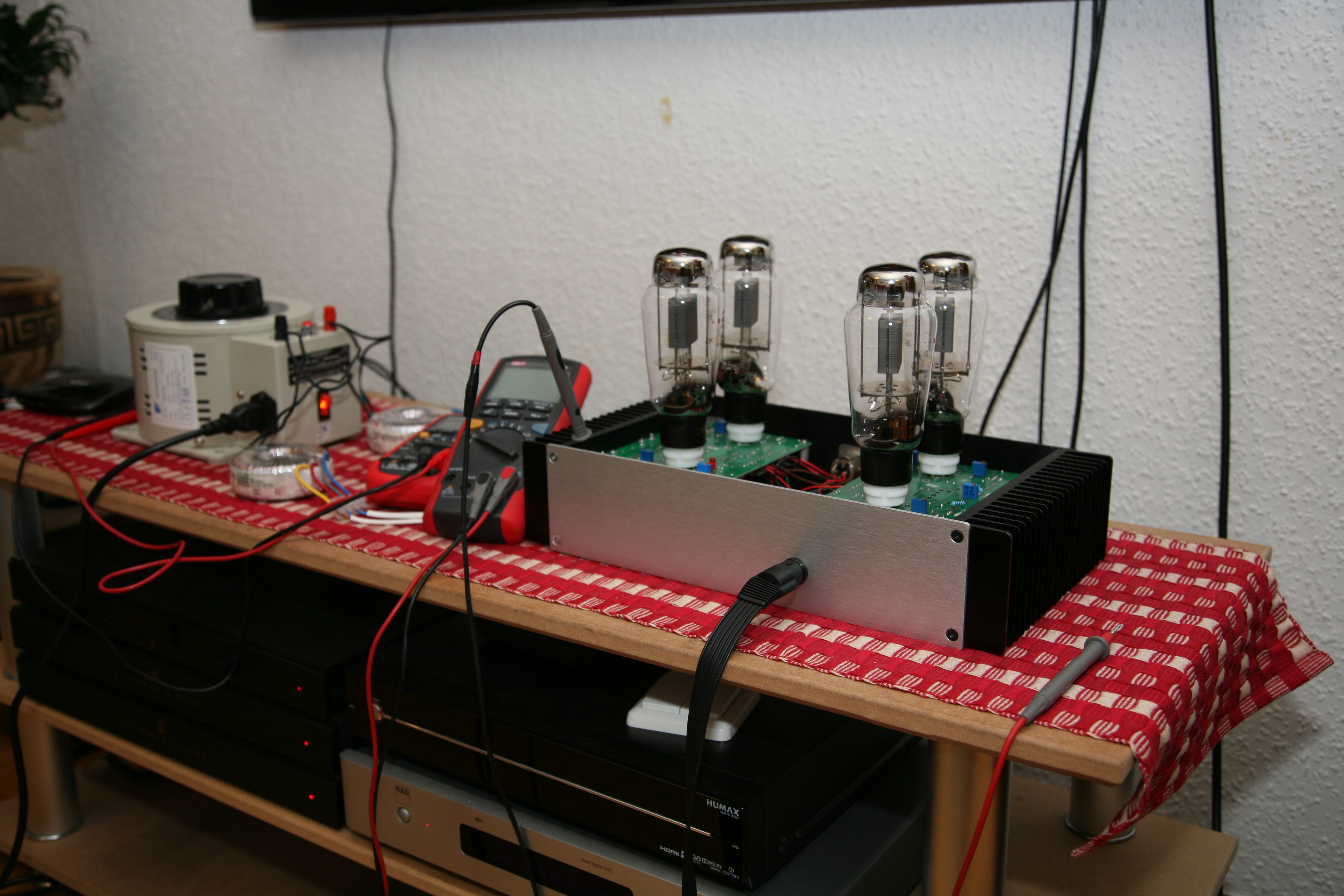
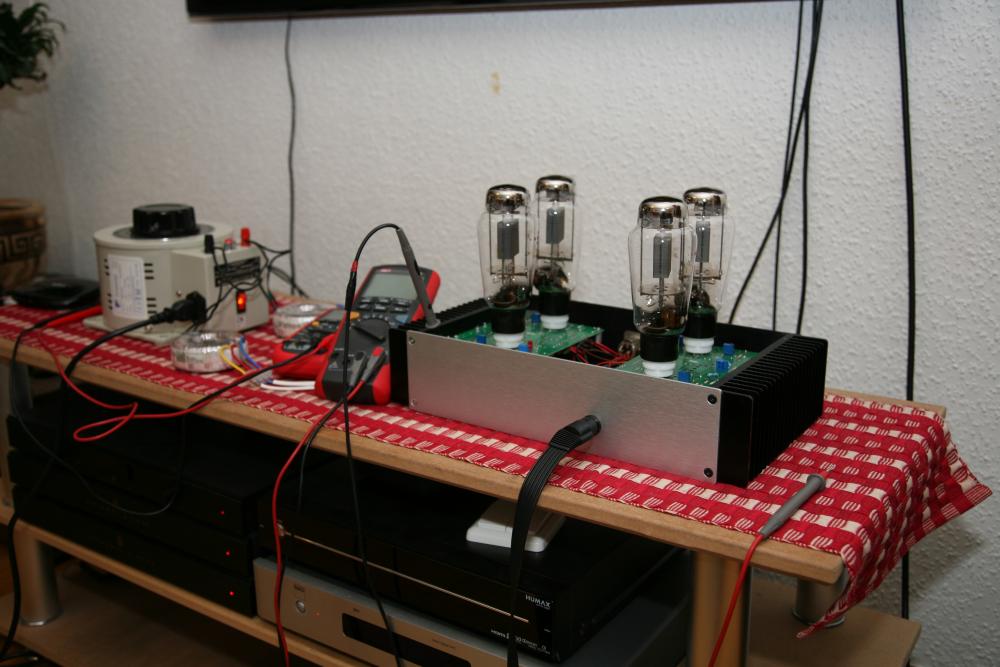
1 pointContinued the rebuilt. Emission Labs DHT Tubes, EML 20B-V4. To the left is variac. Its purpose is to set the two small transformers to appropriate voltage for the filament.
 1 point
 -
1 pointThe problem with thin film materials is this. Although the material itself has excellent high voltage properties, it you draw a sketch you will see that the weak point is where the insultating bush goes through the hole. At that point, the distance betwen the device tab and the heatsink is only the thickness of the pad - a few thou. Actually, I think Kevin zapped something in his first build of the power supply as a result of this, somewhere in the bowels of this thread, and it was that event that led to the use of ceramic insulators. The very best solution is to use not only the ceramic insulators (the weak spot is still the hole - but the thickness of the insulator is amply good enough for the voltages present. Then use the Aavid long PPS bushes - I think it is the 7721-3PPS with 1/8" long shaft. In my (not so humble!) opinion, PEEK and ceramic screws are not capable of handling enough torque for optimum heat transfer. The datasheet optimum for a TO220 package is 1.1Nm (8.9 in lb). So I used stainless screws - there is ample insulation length in the Aavid bushes. Craig1 point