Leaderboard
-
MexicanDragon
High Rollers12Points8373Posts -
Augsburger
High Rollers10Points13165Posts -
shellylh
High Rollers10Points18863Posts -
Hopstretch
High Rollers9Points16809Posts




Popular Content
Showing content with the highest reputation on 05/22/18 in all areas
-
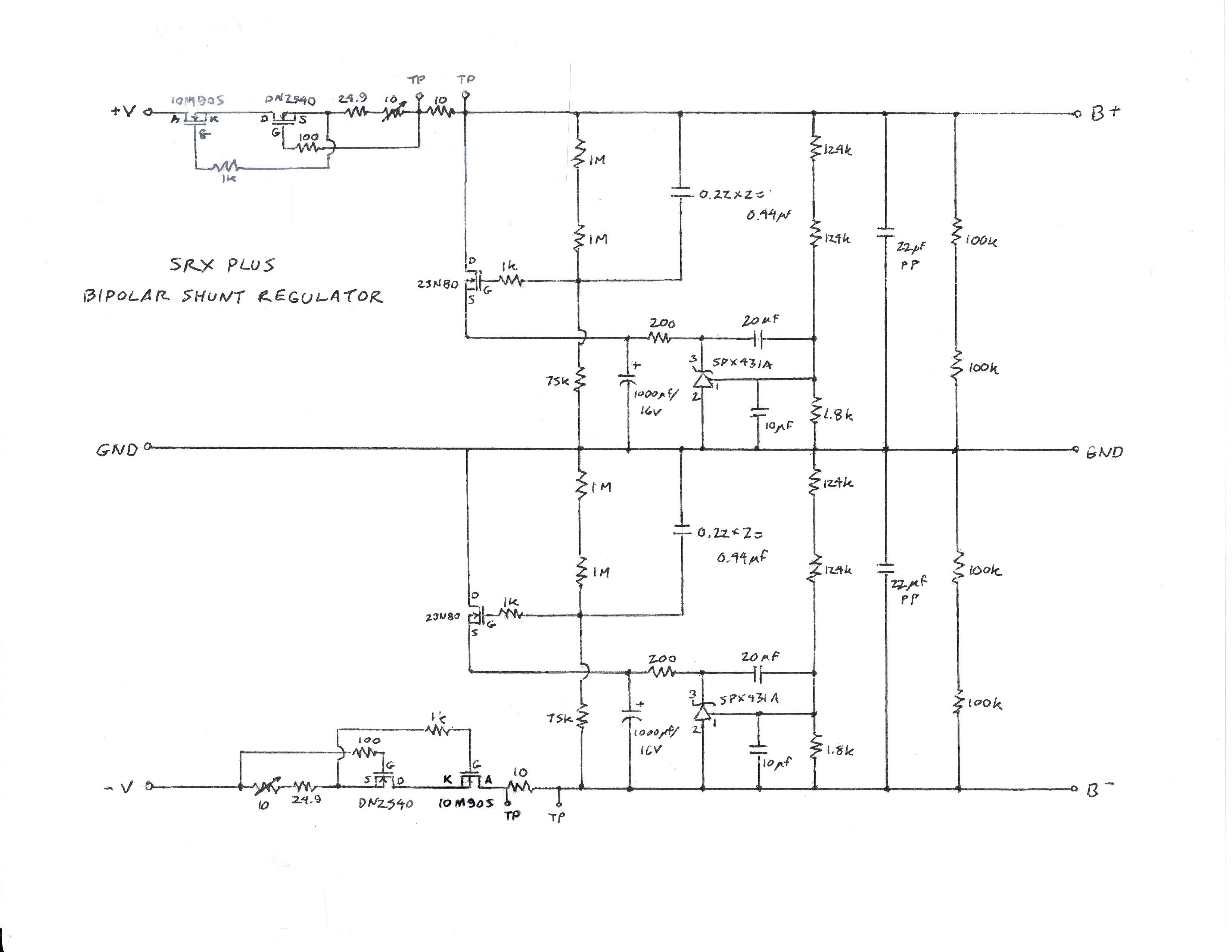
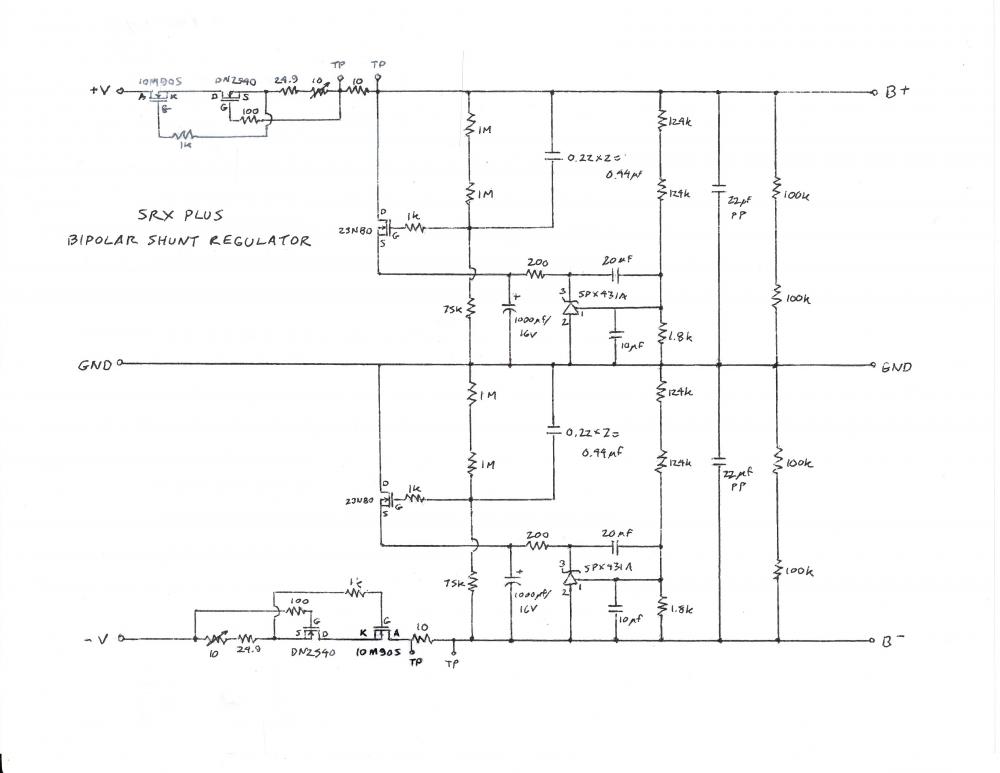
Sorry to start a new topic on this, but I thought if I posted it on a previous thread it would get lost. The issue with the original power supply was that it was noisy at times. I had originally measured < 2 mV power supply noise, and 3 - 5 mV noise at the amp outputs. But on re-measuring, the power supply noise was > 5 mV with the amp output noise measuring around 50 mV. In fact, the noise measured before and after the regulator was similar. Thinking the regulator was noisy, it was rebuilt with new devices, without improvement. Since the current source (CCS) in the positive supply line should block noise from the raw positive supply, the likely remaining point of entry was the negative line. Adding a CCS there did the trick - noise dropped ten-fold. However, with a CCS in both lines, the output resistors were unable to keep the B+ and B- voltages balanced – the voltages shifted towards one polarity, until the voltage across its CCS dropped to less than 5 volts, compromising its isolation and resulting in rising noise. So, the single shunt directly connecting B+ and B- had to be discarded in favor of separate regulators for each polarity, to control B+ and B- and maintain isolation. Each regulator is similar to the original circuit, using an SPX431A (the A suffix has a tighter 0.5% tolerance) IC regulator to set the DC voltage, with associated capacitors to stabilize its internal IC, reduce its output noise, and restrict its function to DC control. The shunt MOSFETs counteract AC variations and noise by compare B+ and ground (positive regulator), or ground and B- (negative regulator) via capacitors connected to gate and source. I used 23N80s, but 19NM50s should also work. Positive and negative CCS should be adjusted to pass the same current. The schematic is posted below. It is still simple enough to be built point-to-point. With the revised supply schematic, voltage initially rose above the final value, then settled to steady state in 5-10 seconds, demonstrating the slow response of the 431 to AC perturbations, and was stable to within 0.2 volts (0.03%) thereafter, with essentially no warm-up drift. With a Fluke 189 meter, unweighted noise measured between B+ and B- was generally < 0.5 mV rms, with occasional spikes up to 1 mV rms. Unweighted amplifer output noise was <3 - 5mV rms. It is stable and relatively low noise, but not particularly low impedance. However, due to the constant load of the amplifier, with its differential design and multiple current sources, the latter is less important. Notes: 1) The 10 ohm test point resistors for both CCS should be 0.1% tolerance to allow the current sources to be set as closely as possible to the same current. When set to 0.43 volts (43 mA) across the test resistors, the shunt current will be around 3 mA. 2) The shunt supply will burn about 5-10 watts while the amp is running. However, with solid state rectifiers, the shunt supply will burn 35-40 watts at turn on for about 10-20 seconds, until the tubed amp circuit starts drawing power. It is ESSENTIAL that the shunt MOSFETs have sufficient heatsinking to absorb 35-40 watts at least for a short time, otherwise sooner or later they WILL BLOW UP. 3) The 100k output resistors and 200 ohm shunt resistors at least 1 watt rating, gate resistors ¼ watt, all other resistors ½ watt. I used 0.22 μf/400V Cornell Dubilier polypropylene caps and 22 μf /630V Solen polypropylene caps for my build. 4) The resistor chain values are shown for +/-350 volts nominal. To change to other voltages, you can alter the value of the 1.8 kilohm resistors connected between the SPX431 reference and anode terminals. To calculate the resistor R for voltage V, use: V = 2.5*(248k + R)/R, or R = 248k/[(V/2.5) – 1]
 3 points
 -
2 points
-
2 pointsI love the infrared burner and actually do use the rotisserie attachment. I am stuck in work hell but can give you my model info and more details later tonite.2 points
-
2 pointsMy CFA-Unbal/Bal system VSPS: Unbal/Bal preamp not finished yet2 points
-
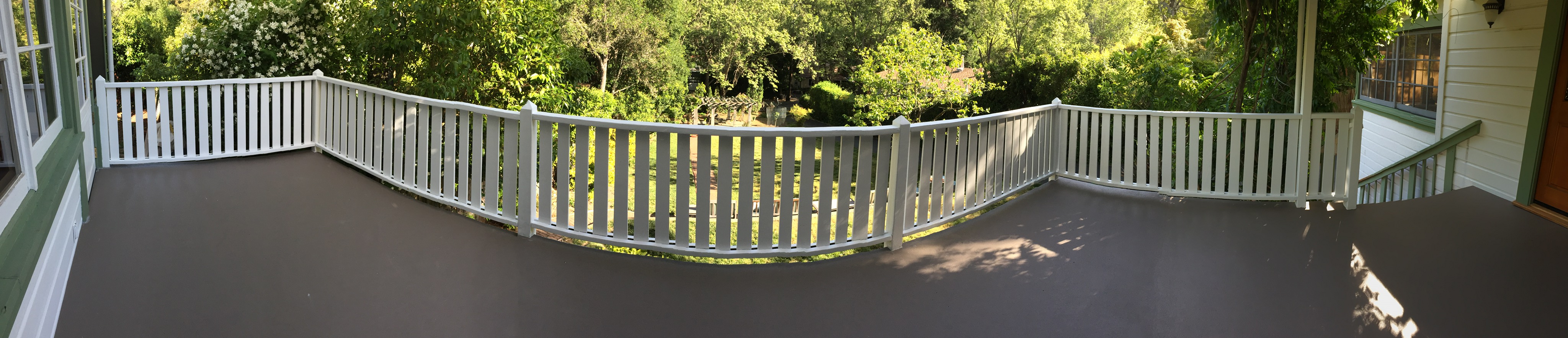
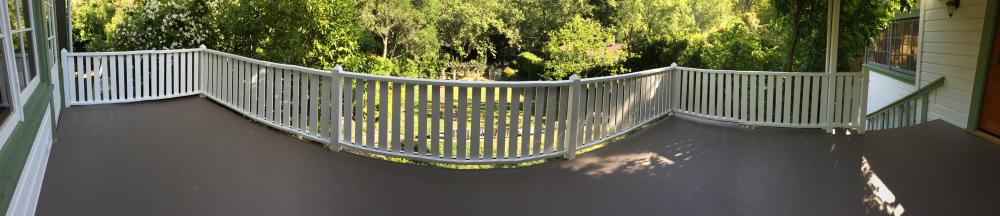
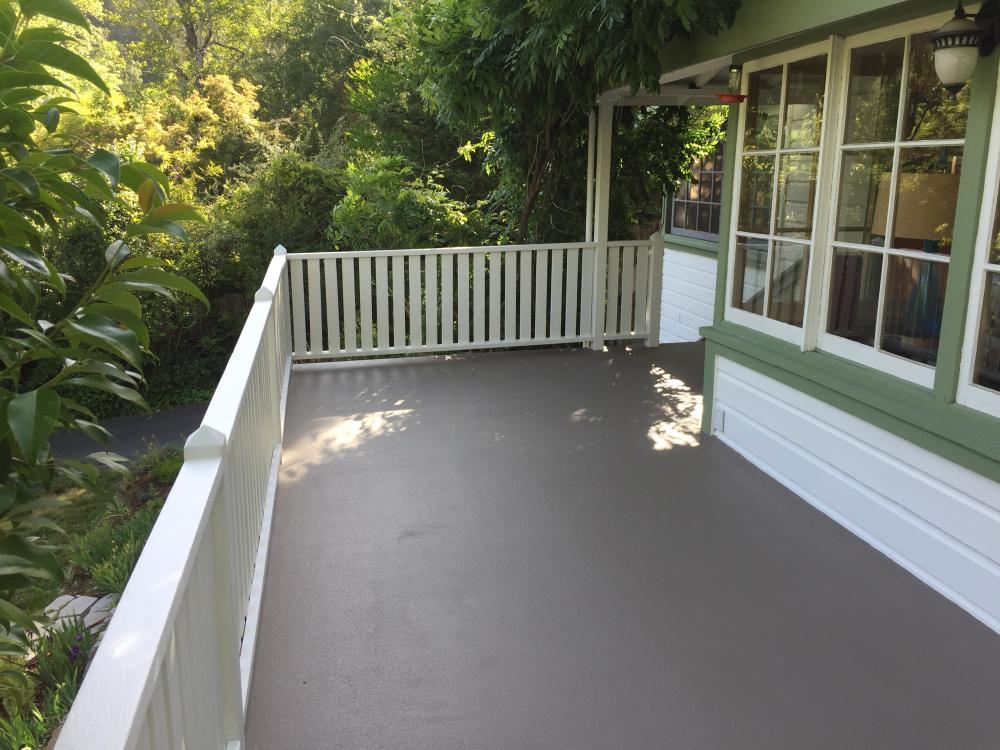
2 pointsFinished the porch and it simply looks like it did before, just better built, clean, well painted, waterproof, solid and safe.
 2 points
 -
1 pointI had this issue with my Blue Hawaii. It was drawing more power than the GRHV was set to output. As I recall, I changed the 5R1 resistor (the large 3W one) to 2R5 or thereabouts and that solved the issue. I just soldered another 5R1 on top of the existing one and it worked fine. The 5R1 sets the amount of current that the PSU will supply.1 point
-
1 point
-
1 pointDefinitely go with something like the one on the left--huge difference in the final appearance.1 point
-
1 pointI've only used the common drip edge. Architectural shingles are fine.1 point
-
1 point
-
1 point
-
1 pointThe VE Enterprise E-Lite looks to be a modification of the Stax SRM-T1 but with 6SN7 outputs and constant current output loads. Also reported to have a basic regulated PS using zener diodes and MOSFET follower, which sounds like a simplified KGBH power supply. See discussion here: https://www.head-case.org/forums/topic/13089-enterprise-e-lite-electrostatic-amp/1 point
-
1 point
-
1 pointIf your using asphalt shingles, a coating is not necessary. You want to start with 50 lb. roofing felt unless you're laying on top of the old roof. A cheap Porter Cable compressor will do fine... https://www.lowes.com/pd/PORTER-CABLE-6-Gallon-Electric-Pancake-Air-Compressor/4764588?cm_mmc=SCE_PLA-_-ToolsAndHardware-_-CompressorsDiyAndStationary-_-4764588:PORTER-CABLE&CAWELAID=&kpid=4764588&CAGPSPN=pla&store_code=3095&k_clickID=9ad8cc19-1d7f-43de-b203-f066a153f524&gclid=Cj0KCQjw3InYBRCLARIsAG6bfMQK5c4ispX7SCzq3ZD82JDdm_tGdixU2HLzavwtgjZoX0r2ewWQ5rIaAvAOEALw_wcB I like the Hitachi roofing nailer, and it's price squarely in the middle of the pack... https://www.lowes.com/pd/Hitachi-1-75-in-15-Degree-Roofing-Pneumatic-Nailer/10697931 point
-
1 point
-
1 point
-
1 point
-
1 point
-
1 point
-
1 point
-
1 point
-
1 point
-
1 point
-
1 point
-
1 point
-
1 point
-
1 point
-
1 point
-
1 point
-
1 point
-
Back atcha with an album title- "No-one Cares About Your Creative Hub So Get Your Fuckin’ Hedge Cut":1 point
-
1 pointSeared Peking duck breast, foie gras ravioli with morels and Shrimp Clemenceau and lobster velouté Sticky toffee cake with caramel1 point
-
1 point
-
1 point
-
1 point
-
0 points3D Headphones Startup Shutters, Leaving Backers Empty-Handed and Hundreds of Dollars Poorer https://gizmodo.com/3d-headphones-startup-shutters-leaving-backers-empty-h-1826192178 https://techcrunch.com/2018/05/20/after-tens-of-thousands-of-pre-orders-high-end-3d-headphones-startup-ossic-disappears/ The $200.00 disappearing act. They had more than 22,000 preorders.0 points
-
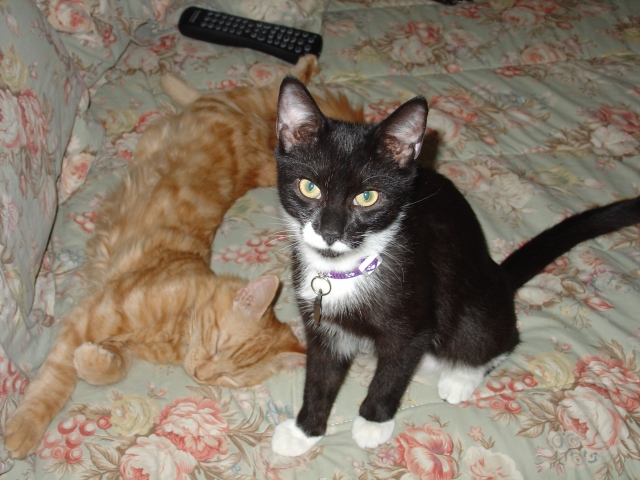
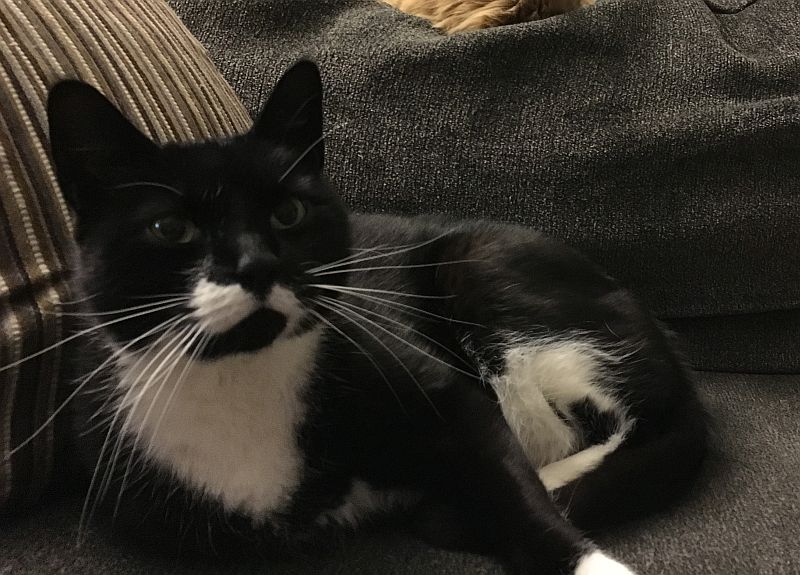
0 pointsRIP to one of our cats, Gryphon "Diablo" Just got back Saturday from 2 weeks in Australia, and while we knew he had some issues, it turned out to be a large and aggressive tumor of some sort. According to our neighbor watching the house and cats, the "eaten" food amount dropped significantly on Thursday. We took him in today, got the bad news; then I got Andrew at school so he could say goodbye. Pics from when we first got him (he's the tuxedo cat), and a couple years ago. RIP bud.....
 0 points