Leaderboard
-
Hopstretch
High Rollers15Points16809Posts -
Voltron
High Rollers13Points34606Posts -
Grahame
High Rollers12Points16831Posts -
VPI
High Rollers8Points9103Posts




Popular Content
Showing content with the highest reputation on 08/03/17 in all areas
-
7 pointsI must go, my ribeyes need me. Idea is roughly 110 on low/smoke and then reverse sear super hot up to 130. Let's see how it goes.7 points
-
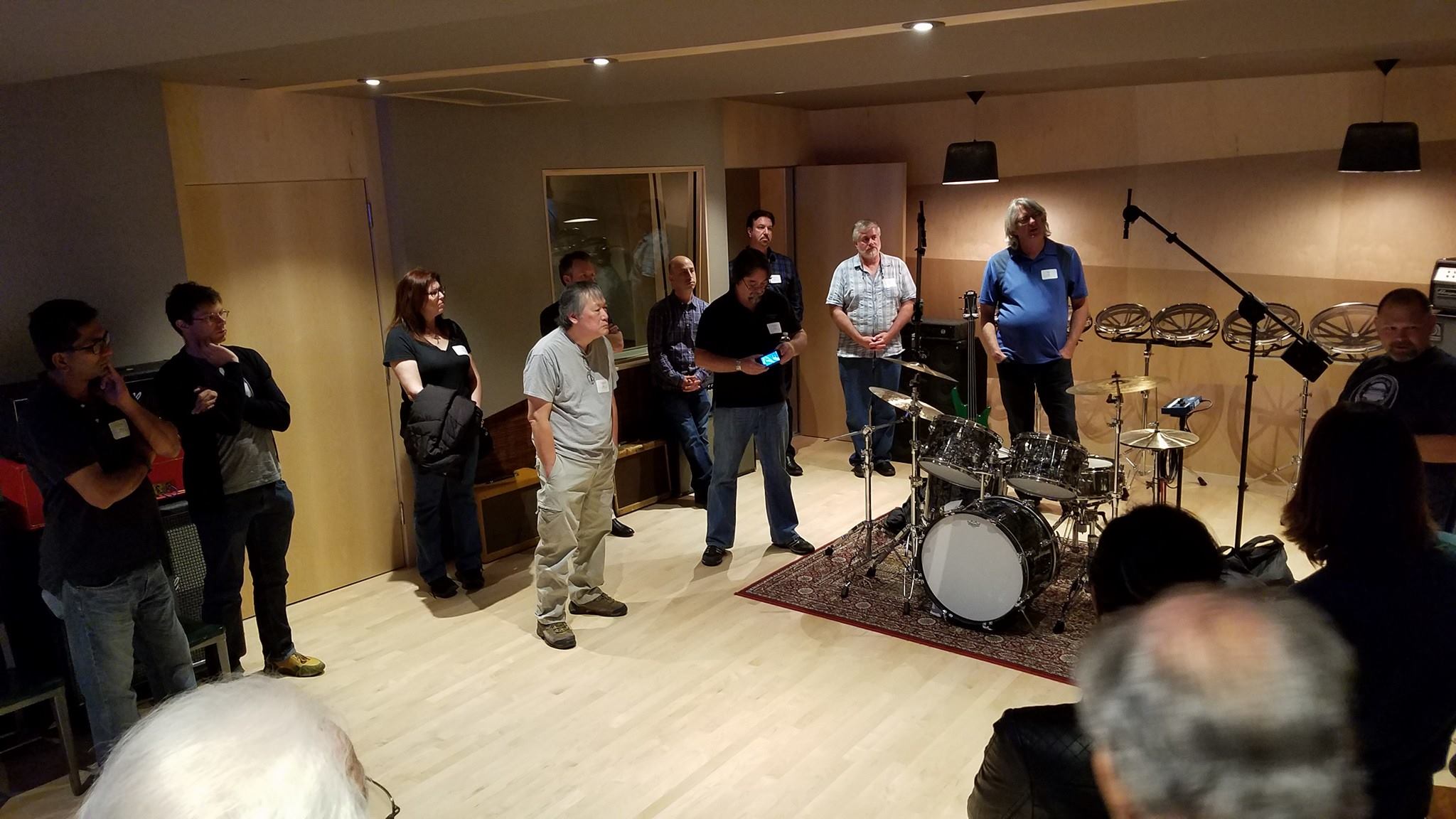
4 pointsI photograph like an old homeless guy looking for a handout (gray shirt/hands in pockets) I shudder every time I catch a glimpse of me! Since I hit 60, I just don't give a shit?
 4 points
 -
3 pointsYes new update and yes Tapatalk is becoming super spammy, I can pay them to get rid of those ads but may just remove support for it. Not really worth it anymore with the mobile theme(s) being decent enough. Also switched to a new dark theme option called 'Deflection' it's a little cleaner looking I think.3 points
-
3 pointsReminds me,.. I had three twins vanilla bean ice cream sandwich for the first time last week. I've promised myself to have one every month for the rest of my life. Sinful!3 points
-
3 points
-
3 pointsChanged the rear brake pads on my car. Very brake dust, much grime, and getting the caliper pistons twisted all the way back in without the proper tool sucked.3 points
-
Peter Bernstein - Signs Live! With Brad Mehldau, Christian McBride and Gregory Hutchinson Available on Spotify, recently released2 points
-
2 pointsmaybe there are 2 other caps hiding in there. pretty much have to be. max gain for a 6sn7 is 20 and max gain for a 6sl7 is 70, so 1400 would be max voltage gain at 6% distortion. cut it down to a gain of 500 and you are still at 2% distortion. with no feedback frequency response is going to be much worse at 20khz, like 6db. the resistor current sources make it worse. stupidly poor design that seems typical of schiit. kind of wonder that if they ever did make something really nice, people would notice.2 points
-
2 points
-
2 pointsI did. Initial impressions are favorable. Next steps: ribs -> pulled pork -> brisket.2 points
-
2 points
-
2 pointsI opted to use needle-nose pliers, with a bit of profanity to help. Do I look like Jeremy Clarkson to you?2 points
-
2 pointsI used to think Sambal Oelek was the answer to everything (similar product, made by the same company, too). It wasn't; it was the question. 'Yes' was the answer.2 points
-
2 pointsMy Mom's husband just grilled sirloin burgers. Yummm, but that was tempered by the disappointing news that my Mom is making stew tomorrow. My Mom makes absolutely terrible stew. I'll smile and pretend it's delicious.2 points
-
1 pointTapatalk has been updated again after the forum software update I did last night. Should be working again, but apparently Tapatalk has lots of ads now. I can get rid of the ads by paying them a monthly fee, probably going to just remove Tapatalk altogether in the near future. The mobile theme(s) are much better than they used to be, makes Tapatalk a bit redundant.1 point
-
1 point
-
1 pointI didn't think you were the kind of guy to be worried about that1 point
-
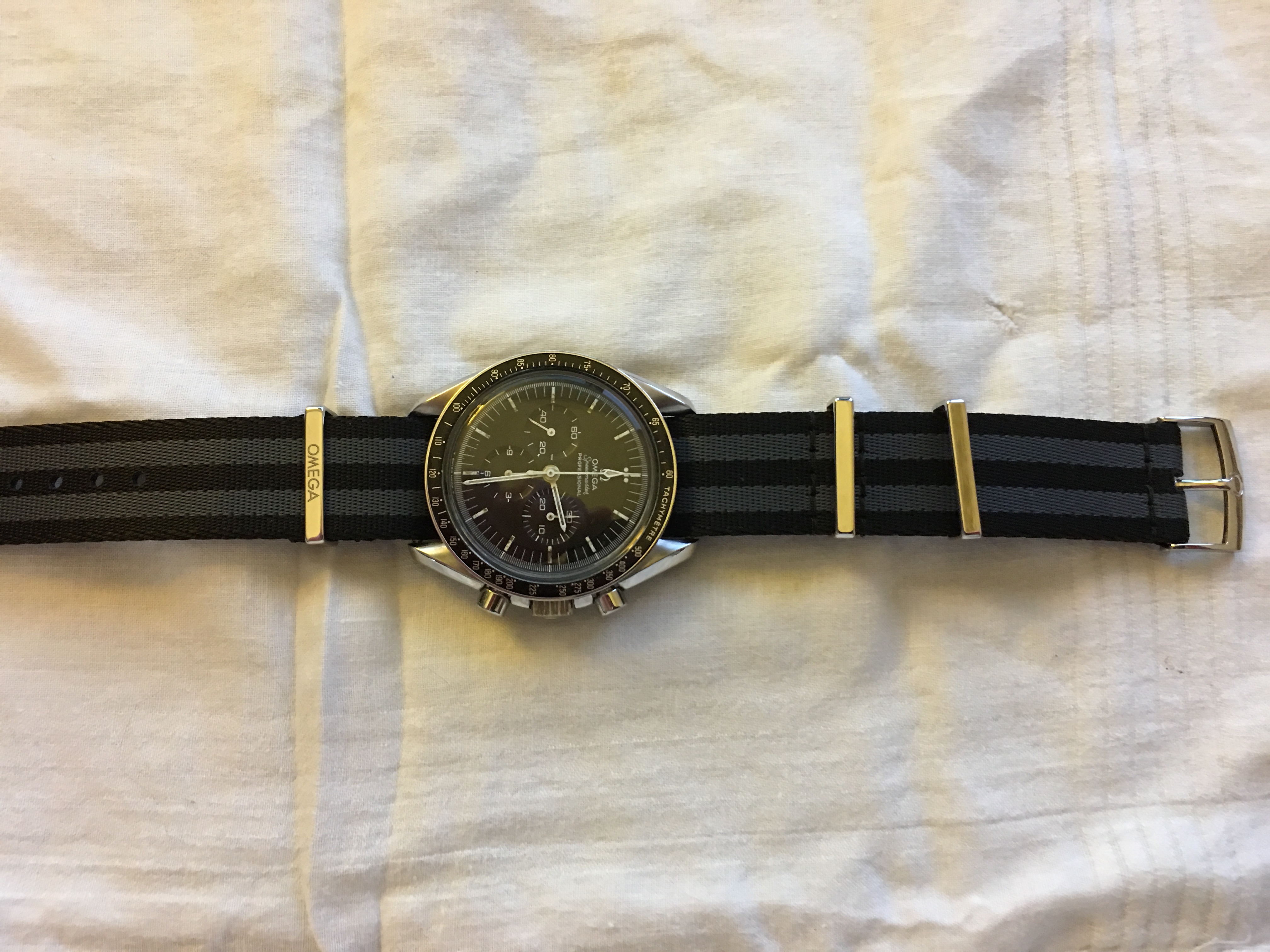
1 pointThe Speedy's are just plain sexxxxxy. I've been threatening to get one with a leather band for dog's years. Surgeon General's Warning: this thread may be hazardous to your bank account... HS1 point
-
1 point
-
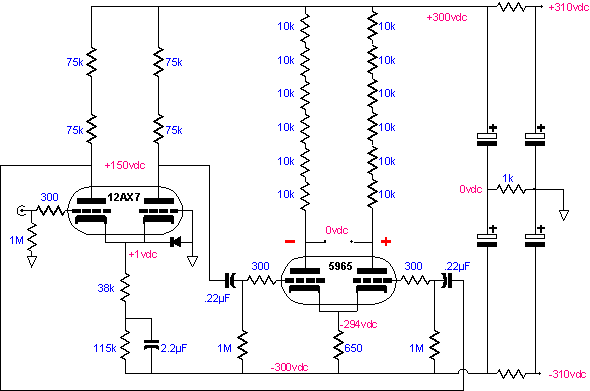
1 pointAgree with spritzer. Now the original 6SN7 is the octal equivalent of the 6CG7/6FQ7 in the SRX Plus, but with only 4 tubes, they are pretty much limited to the Egmont topology, especially since they had both single-ended and balanced inputs. In fact, Jason Stoddard says, "It’s not a unique design—you’ll also see stuff like this also from John Broskie," Here is Broskie's stat amp. You will see it is very similar to the Egmont posted above, with a wrinkle - specifically, the resistor/cap combo in the input diff amp tail to do some Aikido style power supply noise cancellation. If Schiit was running the power supply at +/-400 volts I hope they were using the A/B variant of the 6SN7 tubes as that is over the rated voltage of the 6SN7. Note that the SRX Plus uses 6SN7GTA/B (max static plate voltage 450 volts, max power dissipation 7.5 watts combined) which increases the voltage and power limits a bit over the 6CG7 (max plate voltage 330 volts, max power dissipation 5.7 watts combined) in the original SRX, or the 5965 (max plate voltage 300 volts, max power dissipation 4.0 watts combined) in Broskie's design. Using the A/B variant of the 6SN7 in combination with the constant current sources gets the circuit off its knees in terms of drive capability, although it is not nearly as capable as the top Gilmore designs in ultimate drive capacity. Incidentally, if anyone is concerned with running 6SN7GTA/B tubes at 320-350 volts static plate voltage, RCA has plate curves running up to 650 volts plate voltage. 400 volts on the other hand may be pushing things a bit.
 1 point
 -
1 pointmy favorite power supply is the GRLV, it outperforms everything I have seen by a large margin.1 point
-
1 pointhttps://www.head-case.org/forums/topic/12821-quaffable-2017/?do=findComment&comment=7713501 point
-
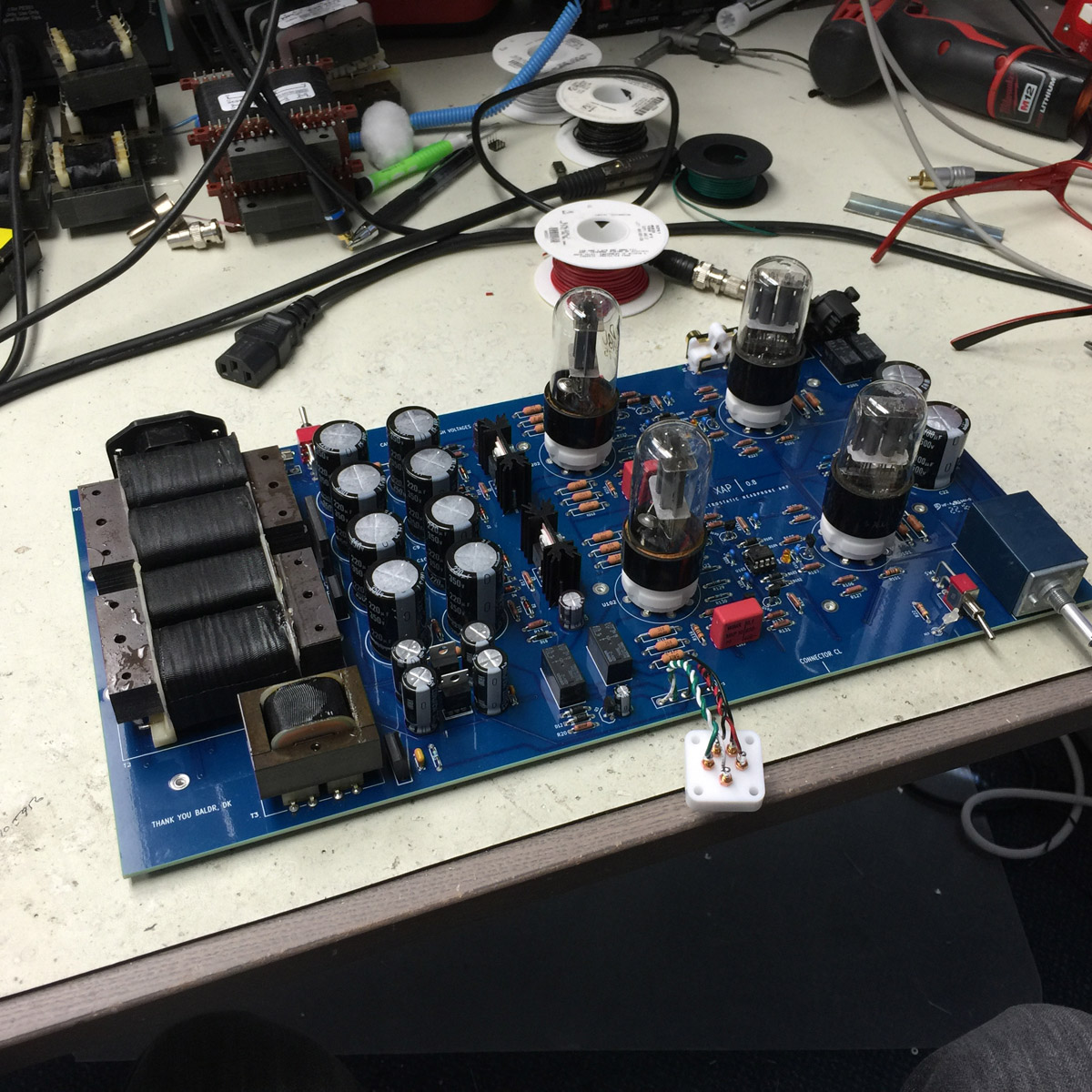
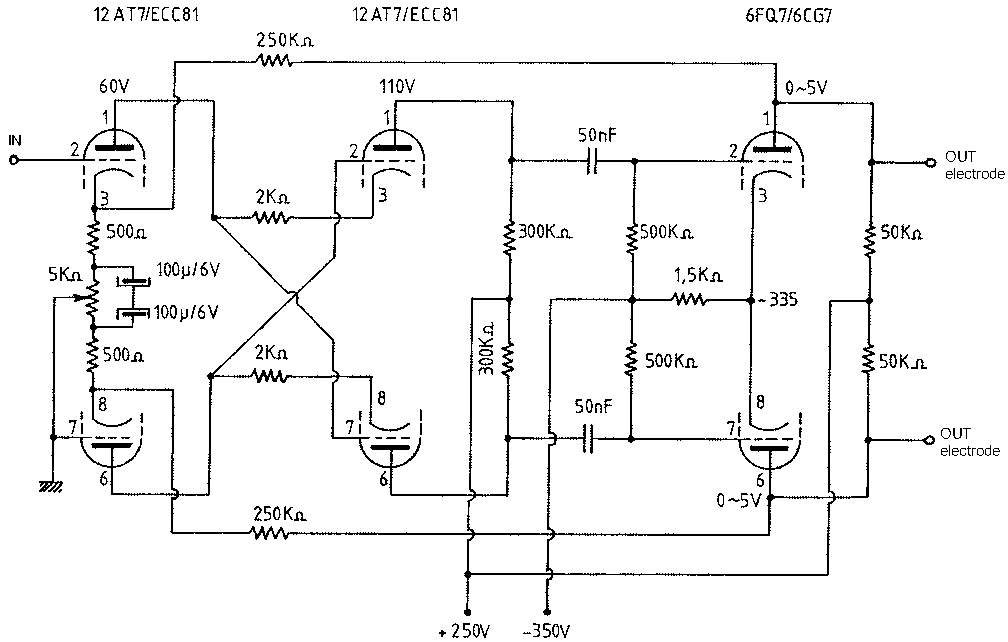
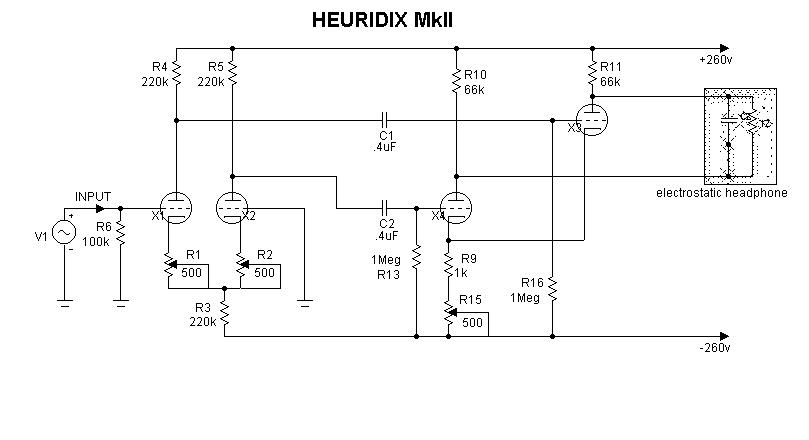
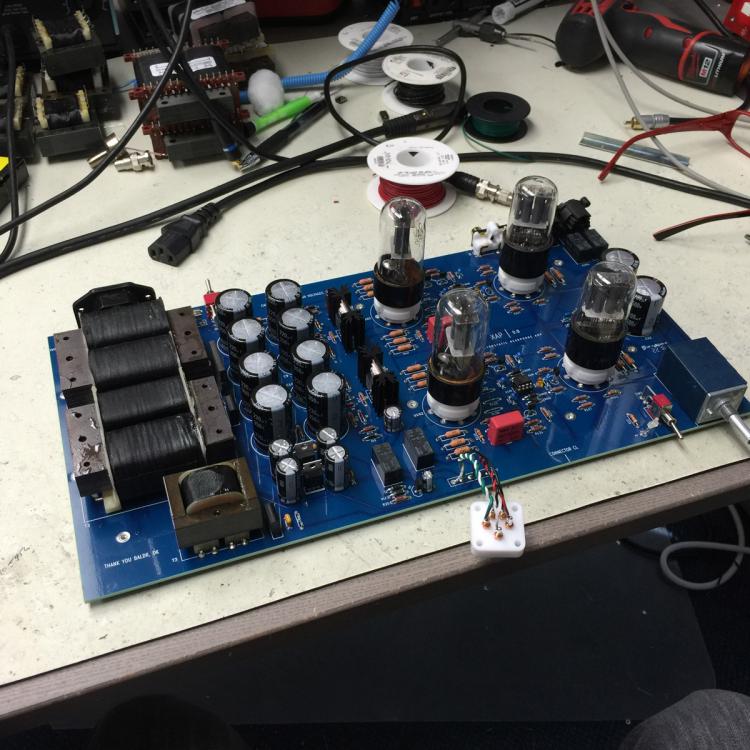
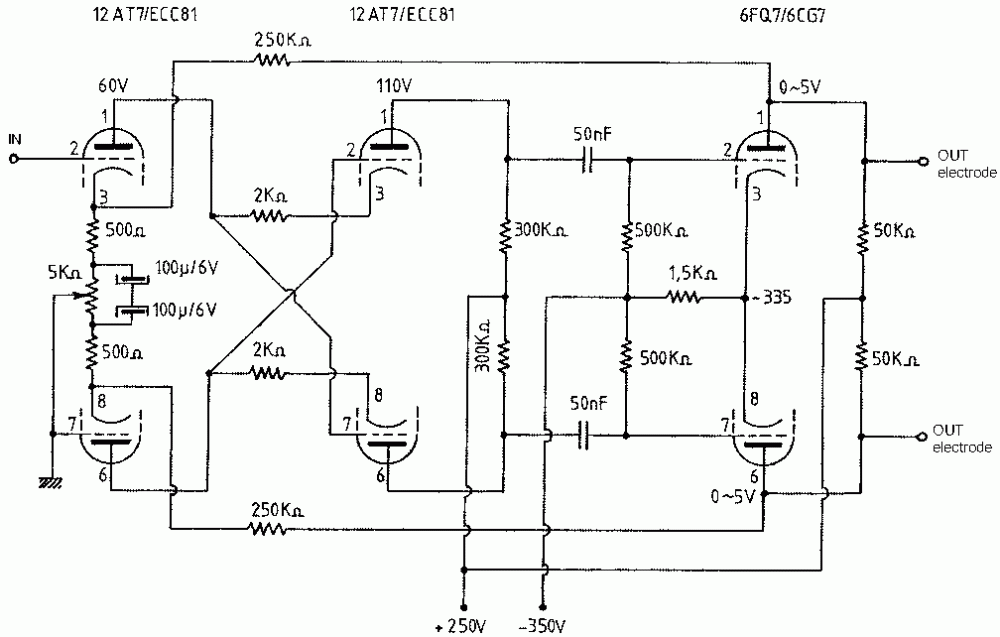
1 pointThe SRX uses 12 triodes so that's what they ended up with (or something like it) but this is the SRX: Quite an elegant circuit and the cross coupled stuff is something many modern engineers struggle with. This is what Schiit were doing: So, 6SL7 is just the highest mu (gain) octal dual triode there is so used for the front end to provide gain. The circuit above uses ECC83's which are more suitable for this role but 6SL7 would work. Then you have a single cap between the stages and the rest is all DC coupled. Probably the same as the Triology amp but supposed to sell for 1k$ and not 6k$.... Now see how this compares. 6SL7's on the right feeding through a cap (red Wima) to the 6SN7's on the left. Probably three 20K plate resistors or something like that and the servo on the cathode to control the offset. Then you have the PSU on the extreme left, two HV supplies with series 350V caps to handle surges (which 500V caps would have handled just fine) and the regulators on the small heatsinks. Small PSU beneath it to run the opamp, relays and stuff like that. Bias supply could be the small transistor and diodes to half wave rectify and regulate. Heaters probably AC as they float at -400VDC.
 1 point
 -
1 pointAwesome grill. Been looking at that and the MAK 2 star general. The Elite is an incredible grill with great reviews. Enjoy1 point
-
1 point
-
1 pointIf they are covered by warranty then take them back to Stax. If they are not covered and you don't want to spend 100KYen on new drivers, you can open them up and try to get the dust out of there. Be warned though that you can't see the dust particle causing this as it is minuscule. The space between the diaphragm and the stators is 0.5mm (500um) on either side so the piece is much smaller than that.1 point
-
1 point
-
1 pointyou probably want the version with the on board servo then. my guess is that the input impedance is something like 10k now that the lsj and lsk dual parts are available, a 2 channel version would be possible with a much higher input impedance1 point
-
1 pointOr as a guy I worked with years ago used to say "If a job is not worth doing, it is not worth doing well"1 point
-
1 pointWhere did the company get its name? Before writing the business plan for Three Twins Ice Cream, Founding Twin Neal Gottlieb was sharing an apartment with his twin brother, Carl, and Carl’s wife, Liz, who is also a twin. The trio dubbed their apartment “Three Twins” and when it came time to start the company, Neal knew just what to call it. http://threetwinsicecream.com/faqs/1 point
-
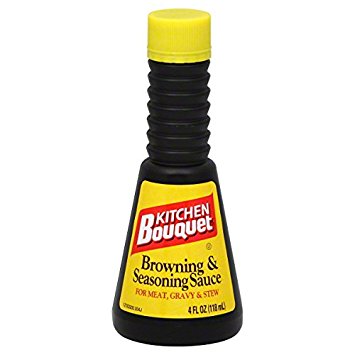
1 pointMy Mom would have her feelings hurt, so it's just easier to pretend it's good. Luckily she doesn't make stew very often. Kitchen Bouquet seems to be used by people of a certain age. I don't know how to describe it, other than it makes things taste burnt.1 point
-
1 pointNever heard of kitchen bouquet but can you just help her make it better? My mom is very happy when I help her cook or cook for her.1 point
-
1 pointMy acid reflux will not tolerate that. I should really call it soup because she doesn't thicken the beef broth at all. The real problem, however, is that she uses a full bottle of Kitchen Bouquet. That stuff is nasty in small doses and absolutely disgusting when over used.
 1 point
 -
As a side note, did you guys know that "The Girl From Ipanema" was originally titled "The Girly Man From Ipanema"? It just didn't flow off of the tongue, so was subsequently changed.1 point
-
1 point
-
I'm learning some harmony and music theory with a jazz guitarist, so also trying to make the damn thing sound. Insight about "how music works" gives a completely different focus, but I'm still far away from being as aware as you on those performance features. I like Richter, but also Annie Fischer or Elly Ney playing Beethoven sonatas. I don't like Lang Lang either1 point
-
1 pointI will try to explain myself with my limited knowledge of English. Please don't taunt me Although the GG is now to my liking, IMO there is still a big difference between both: The Cabon sound is much flatter, more precise and detailed. The problem is that he doesn´t forgive the bad recordings or sources. You can hear all defects and goodness of a recording. Sometimes this is good... or not. The GG with the "fat bottomed girl" he has a nice bass and a midrange colored and more balanced between both, IMO this makes it less precise (a bit), but at the same time make it more musical and relaxed. With my EL34 quads (JJ, Mullard and Tung-sol) I think that the GG sound is a disaster because you have U-shaped equalization and I don´t like this kind of sound. IMO both amps have an opposite character and you can determine perfectly which of the two you are listening to. If you have an aggressive source (for example DAC with many treble or bad records), you probably would appreciate having the GG. For other hand if you prefer a sound as faithful as possible, the Carbon is your amplifier. PD. I haven´t any "sacred cow" yet (007/009), I only have Lambda, 202 and 307.1 point
-
1 pointMade a whatever I could find in the pantry curry. Sent from my iPhone using Tapatalk1 point
-
1 pointBrent gets away with a lot by not always informing us of his biscuit consumption. For all we know, he may be directly responsible for the likes of Cheeto Jesus (thanks, Mike) sitting in the oval office, North Korea's missile success, hell even Brad and Angelina's break-up. I'm suggesting to the BHCM Committee (Betterment of Head Case Members) that we install a permanent Biscuit Monitor. Think of him as a Secret Dis-service officer to patrol Brent's every move. All in agreement press the 'like this' tab.1 point
-
1 pointFor a single sentence the first one packs a punch on so many levels.1 point
-
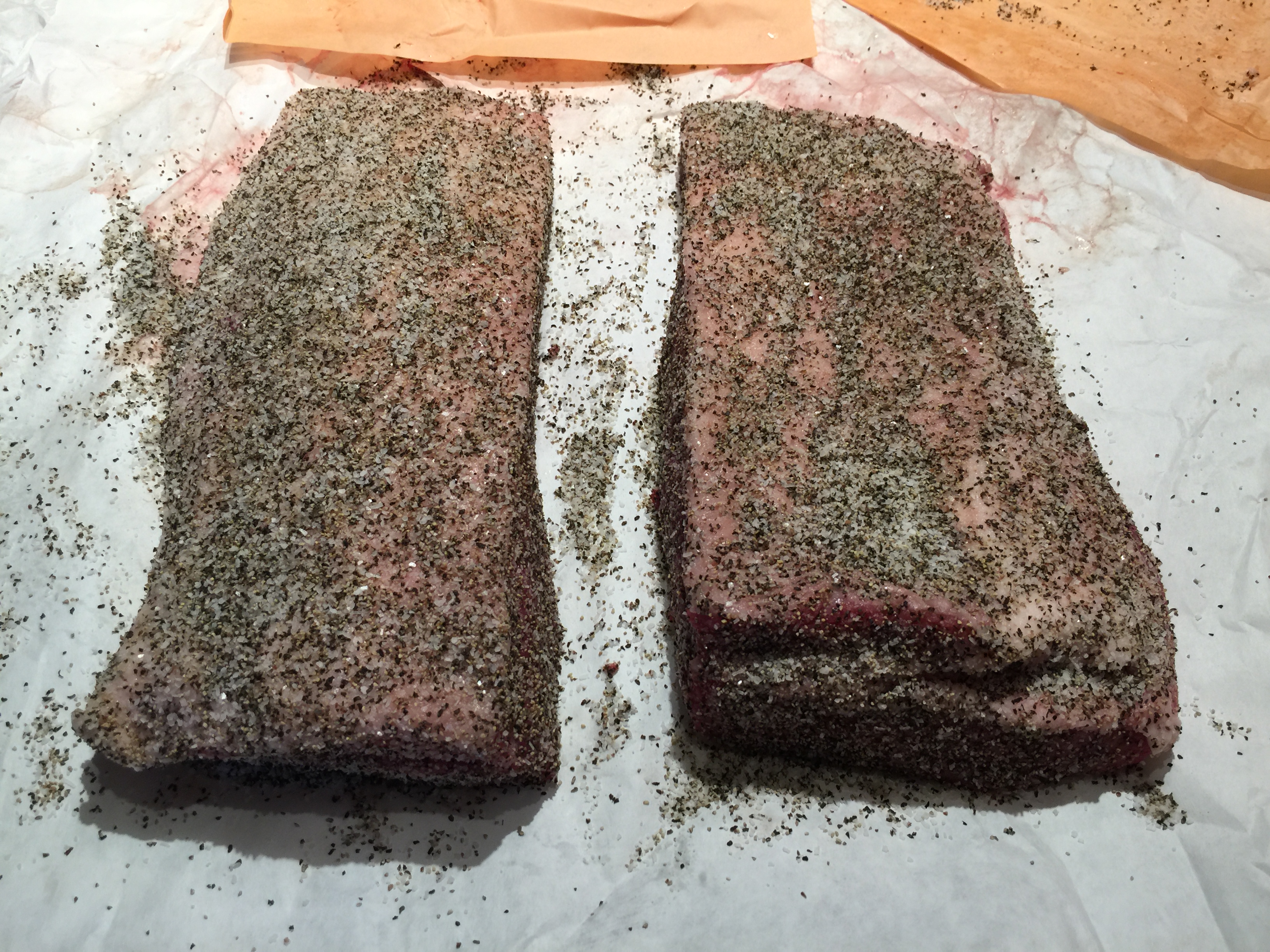
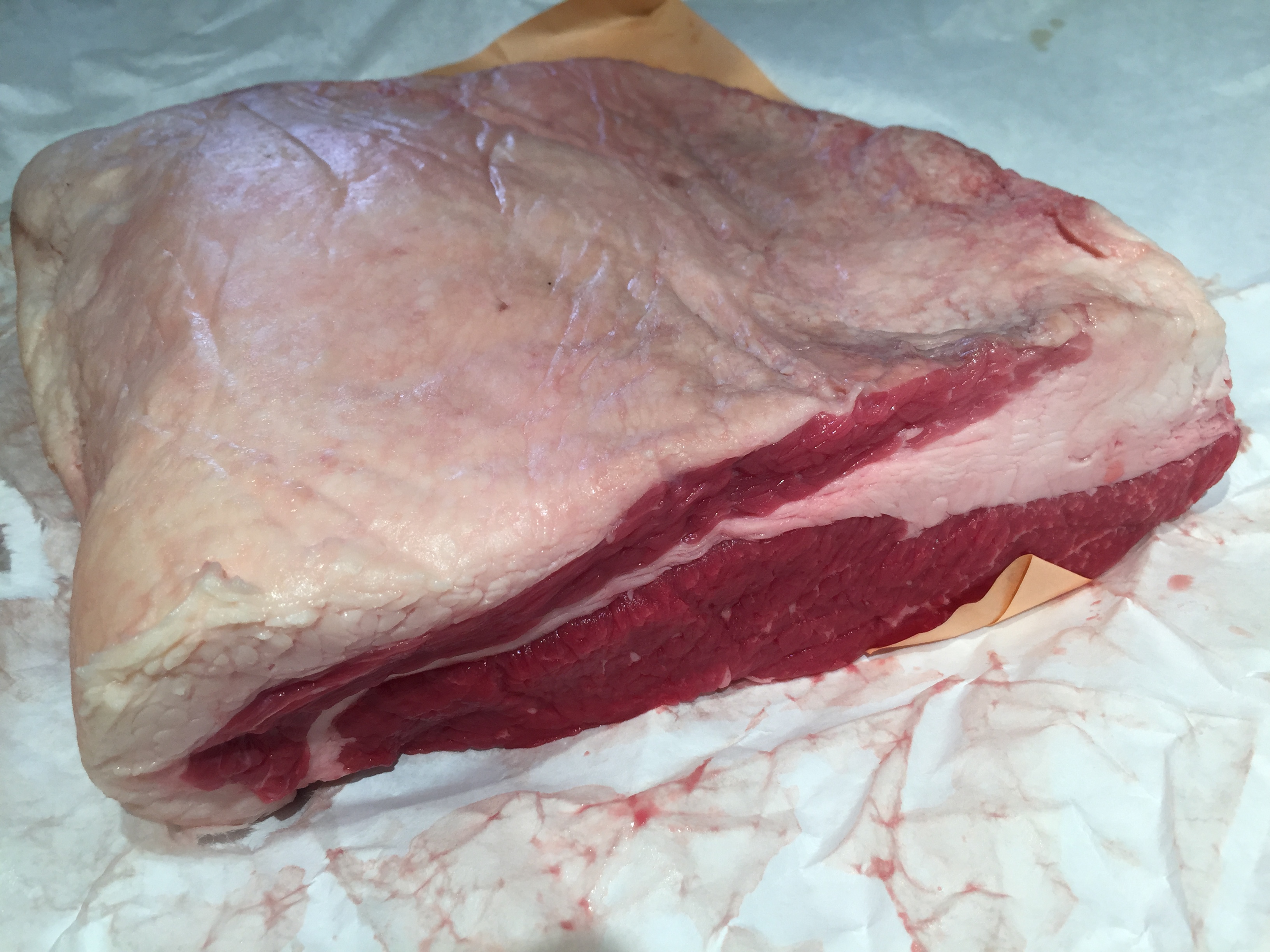
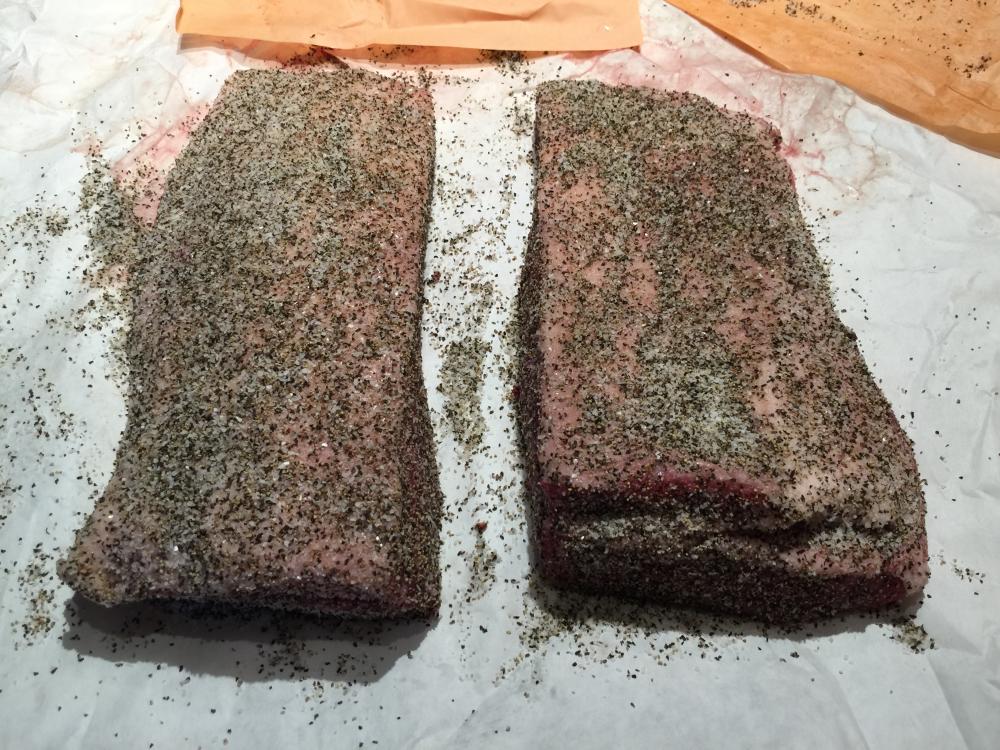
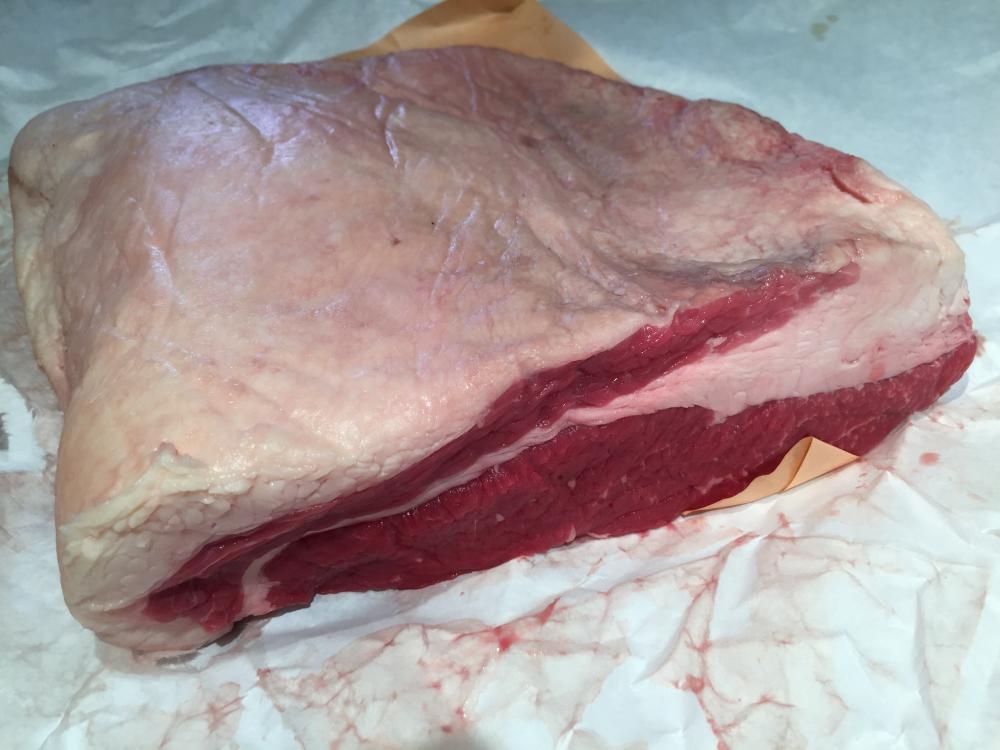
1 pointThese will hit the smoker around 7 tomorrow morning. Which were cut from this.
 1 point
 -
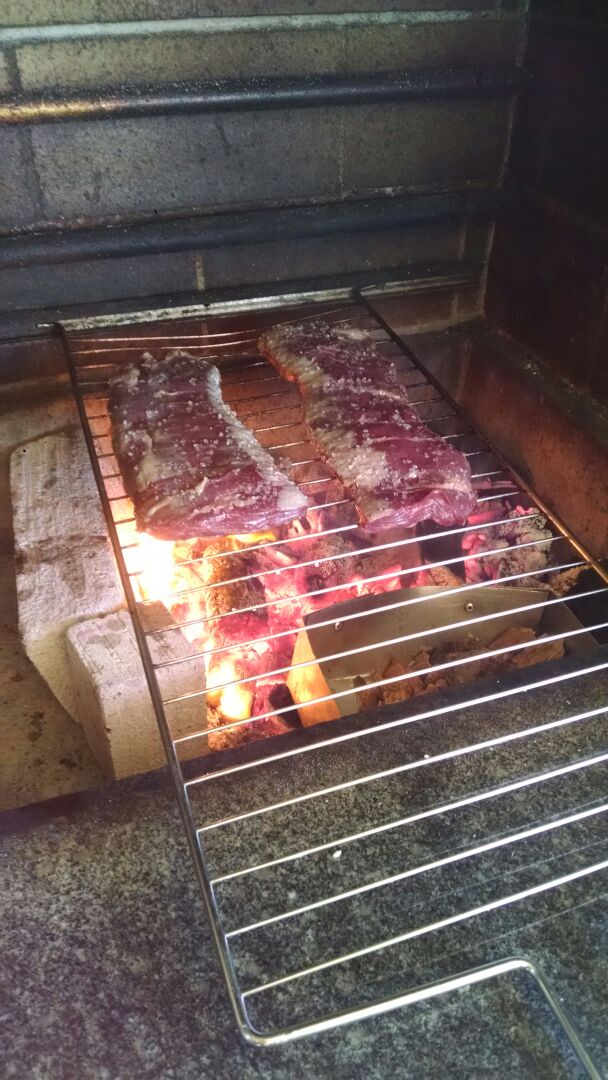
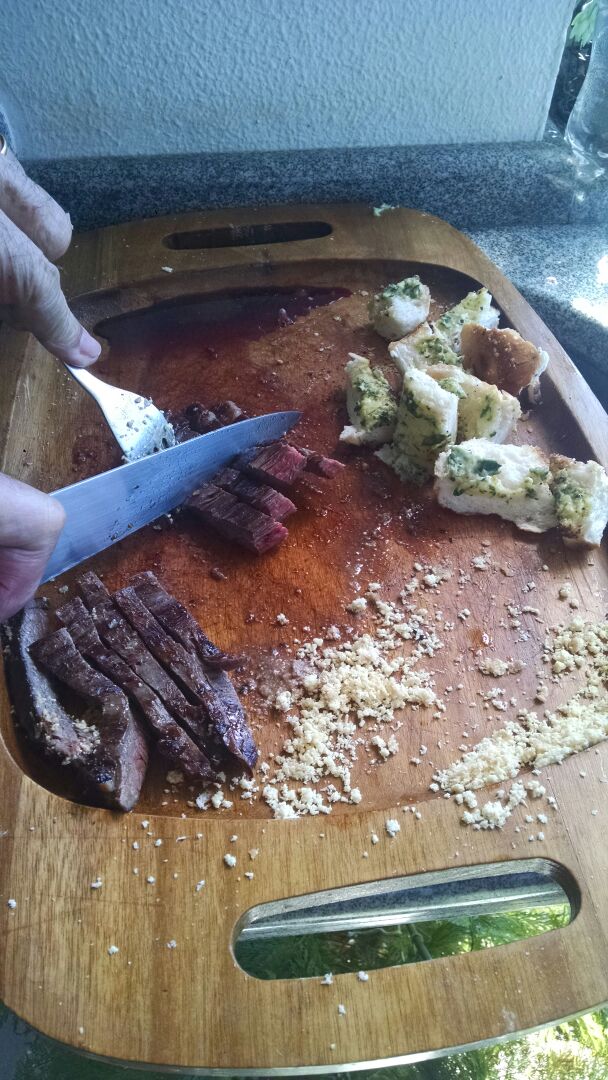
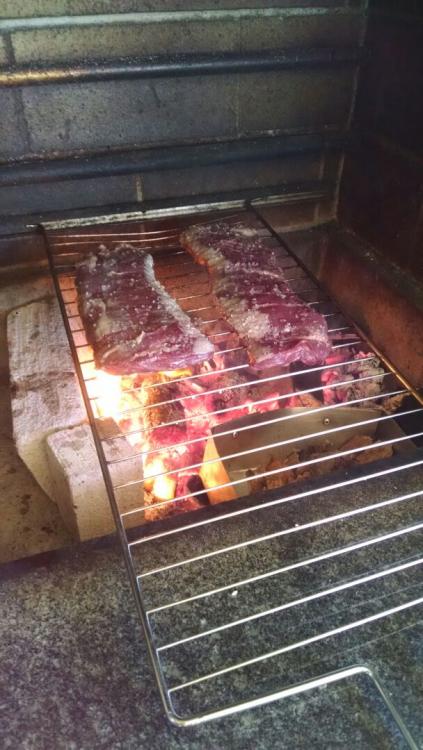
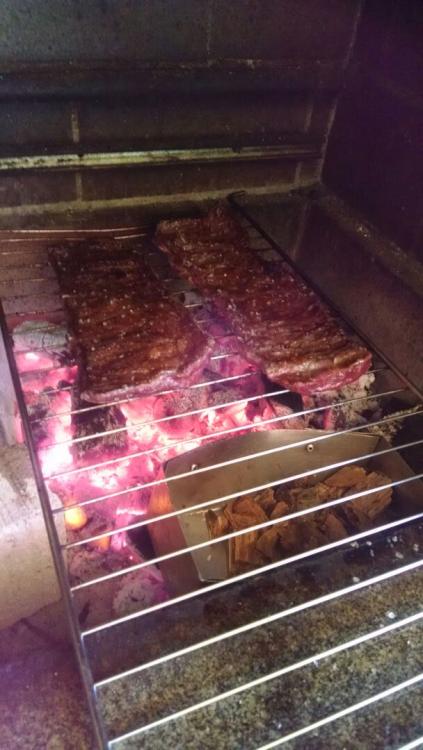
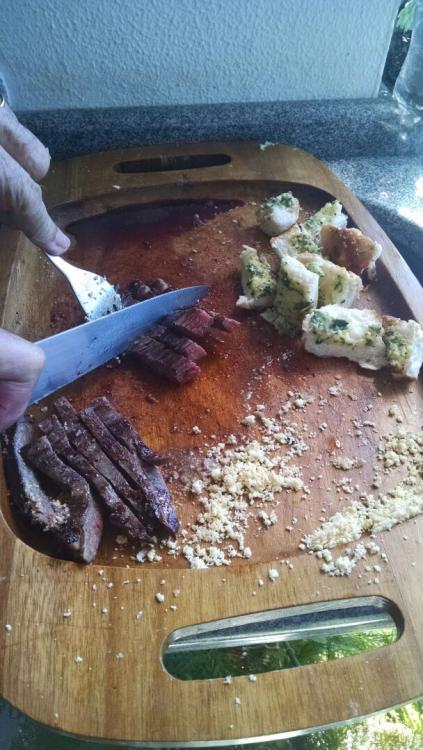
1 pointChurrasco. Brazilian bbk. Diaphragm flank steak, known here as entranha, or fraldinha do diafragma.
 1 point
 -
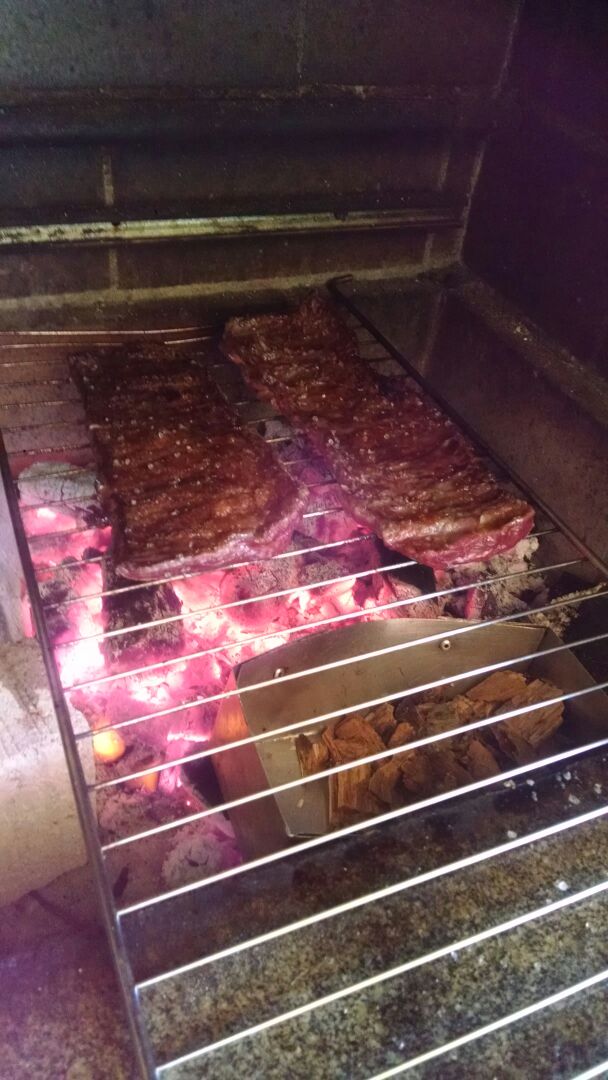
1 pointSo, after a 6 hour slow cook, decent results for a first try. I had to mess with temp quite a bit, and eventually removed the TTT and continued with just the slow n sear. We also discovered that St. Louis ribs may not have been the best choice. But in the end we had good bark, a decent smoke ring and smoke flavor. Not a bad first outing. Sent from my iPhone using Tapatalk1 point
-
1 point
-
1 pointYeah, my first impression was, "critical?", but...any difference is a difference, so it's not lossless. Lossless has a very specific meaning.1 point