

Leaderboard
-
Hopstretch
High Rollers17Points16822Posts -
Voltron
High Rollers15Points34632Posts -
Aura
High Rollers15Points6886Posts -
n_maher
Administrators10Points27522Posts




Popular Content
Showing content with the highest reputation on 12/07/19 in all areas
-
I couldn't help but shudder when I saw the picture of Lester Maddox in your post Ric! I was in school in Stone Mtn. Ga. when he was governor and one of the reasons I left home. And just like another duly elected official, he was an embarrassment to those how didn't vote for him and a hero for those who did. It was bittersweet to have run across him years later in Underground Atlanta selling autographed ax handles to drunken tourists (he was famous for running black folks out of his restaurant with an ax handle he kept behind the counter). Interestingly, that same year I was working banquets at the Hyatt in Atlanta and met a fellow named Carter who was holding a small fund raiser I was bar backing at.2 points
-
2 pointsThanks all! A good day was had, lounging by the pool during the day, out to dinner with friends at night. Heading home from Florida today, not looking forward to snow, and work. I actually got called for an emergency issue yesterday from work, but was able to give direction to resolve in about 2 minutes.....felt good to help and not feel stressed.....2 points
-
1 point
-
Interesting rant, James. As I'm seeing it is that nowadays the sound quality you get from an affordable device (let's say a chinese smartphone with a 50 bucks pair of IEMs) is superior to anything you'd say it sounded just decent 50 years ago when Hiend audio was developing to get its heyday. Even listening to current lossy files the sound quality has a better dynamic range, less noise, wider frequency range and less distortion than what you were getting from an expensive top of the line Sony Walkman in the 80's. The problem is that Hiend isn't justifying the prices for a better sound, it has become another luxury good more likely to show how "winner" and exclusive is its owner than to provide an improved, more intense, listening experience. This is the move we've been seeing on "exclusive" watches, cars, clothes... anything that is targeted to those few millions of humans that for one reason or another have a few millions yearly to spend just to show off. Since those riches create the trend, then the lower income wannabes target to more affordable yet very expensive products that still will show off how successful and "winner" they are. They're still way wealthier than average, they can afford a 150.000 BMW SUV but not a 1M Bugatti, nor a 500.000 Ferrari. Manufacturers have now a really big market of high rent individuals that would allow them to sell the same shit at 10x the price. Possibly the same amount of people that in the 60's were able to afford a pair of Quad 57 with a matching amplifier and Thorens turntable. Manufacturers aren't stupid, nor their shareholders. If you can sell a camera/watch/speaker/whatever for a several thousands, why getting a lower profit would be acceptable? The paradigm has shifted to the higher prices/benefit as long as the whole production can be sold for a bulkier price. The world has got a load of wealthy ones in the last couple of decades while the middle class (former market of these goods) has got poorer. It's clearly more profitable selling your production at a much higher price/benefit than trying to produce a larger number of items at a lower cost to reach a wider market. Possibly the planet will benefit of this trend too.1 point
-
1 point
-
1 point
-
1 point
-
1 point
-
Test Tone @ Home live right now: http://mixlr.com/illuminator/chat1 point
-
1 point
-
1 point
-
1 point
-
1 point
-
1 pointA very happy birthday to you, Todd! Stay away from MA as long as you can, the weather here is nuts.1 point
-
1 point
-
Nice second link Grahame. Although I think they have got it wrong in a big way with their business strategy over the last three or four years, they still make absolutely everything in that little company in Steyning. And that is every screw, nut and connector. The only thing that is bought in is the tapered arm tube, which they buy in raw and unfinished state from Chicago White Metal, and then do umpteen finishing steps to at SME. So I doff my cap to their attention to detail at a minute level. But they have positioned themselves increasingly to the financially exceptionally well heeled.1 point
-
1 pointHappy Birthday, Todd. May your day be better than an Economy flight on United!1 point
-
1 point
-
1 point
-
1 point
-
1 point
-
1 point
-
1 point
-
1 point
-
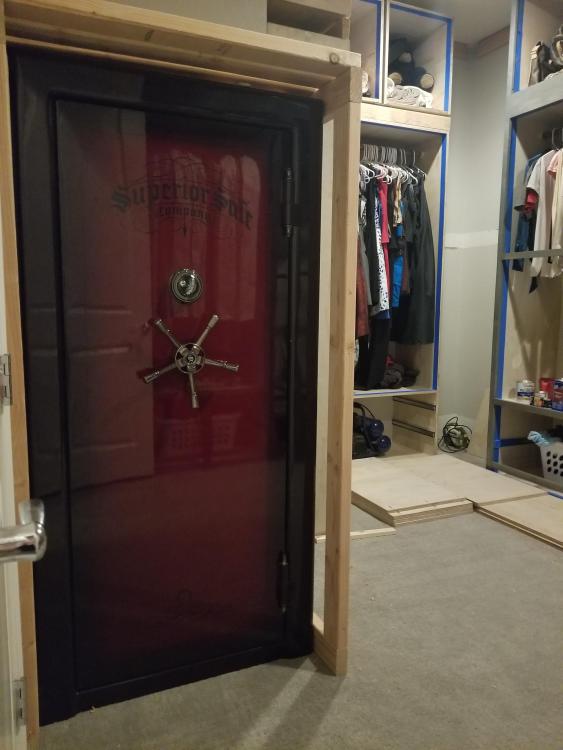
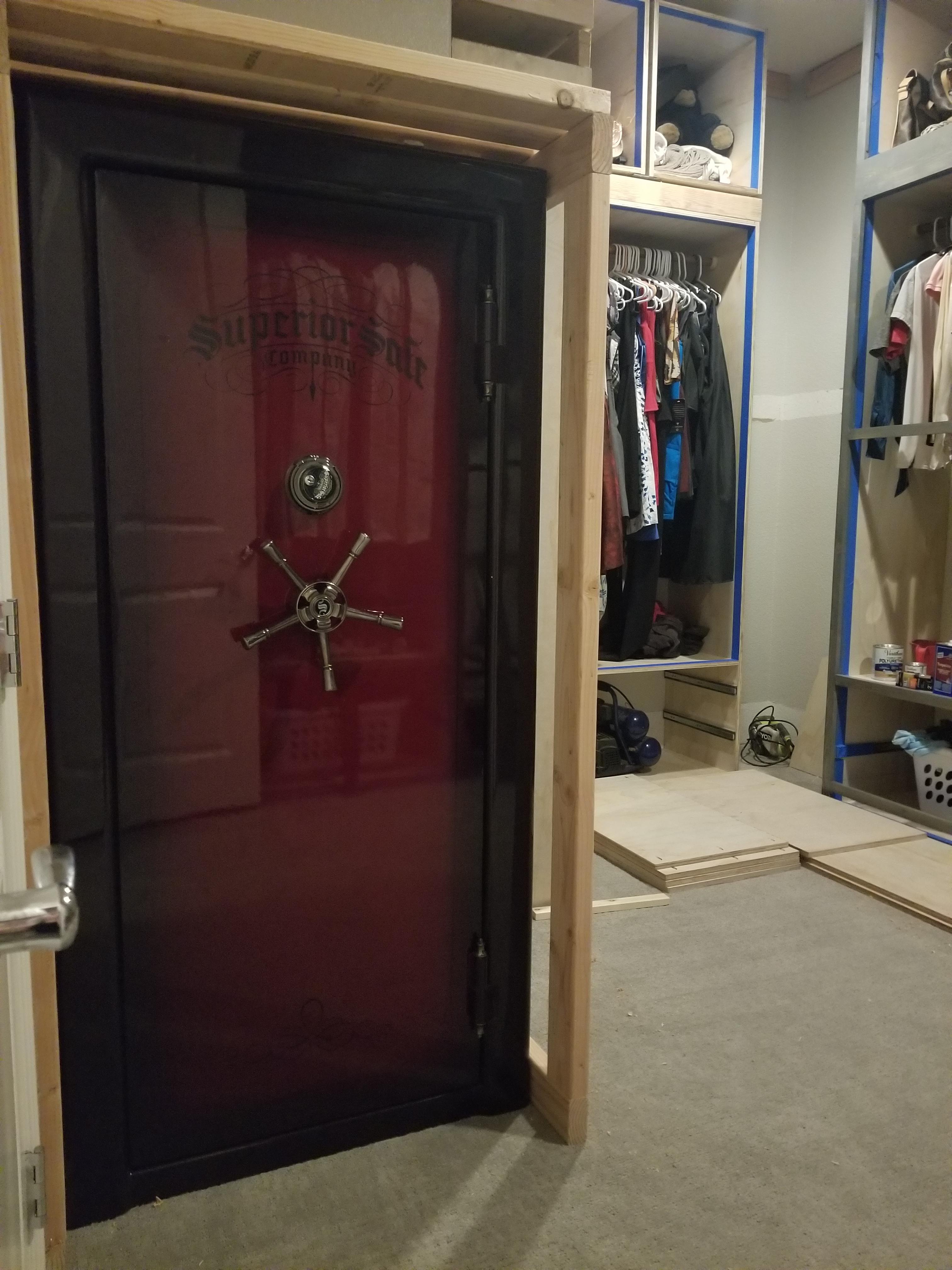
1 pointWell the new "watch box" arrived to day and was installed into our master closet. Now the wife can finish building the rest of the cabinets that surround it. Maybe another weekend worth of work. It will be great to have a fully functional closet again..
 1 point
 -
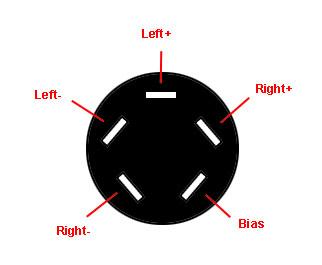
1 point1 pointI read the review. Please, by all means let us know how do those Klipsch perform. The world needs more efficient and sensitive devices. And people, probably.1 point1 point1 pointpowersetup.pdfpowersupply.pdfsssetup.pdfstaitcbias.pdfhybridsetup.pdfhybridsetup.pdfstaitcbias.pdfsssetup.pdfpowersupply.pdfpowersetup.pdf I found some snapshots I'd taken.of the website. I've got the board layouts as well.1 point1 pointIt's been a while but since the Exstata is based on the Stax SRM-1 Mk2 it should just be a balance and offset adjustment. The pots should be matched on the PCB so for balance, put the probes between + and - of each channel and adjust to 0VDC. For offset ground the black probe while the red is in the + output for each channel and adjust to 0VDC.
 1 point1 pointNow for something pretty rare... the ESP900... This is the closed back version of the ESP950 made for medical use such as MRI's etc. Not much is known about these and only a few sets have ever surfaced. I'll do a more indepth post about these when I modify them and dig into them a bit. Stock...well...they don't sound good. The earpads are unique to these so when you press them to the head...the sound gets better but it is no 4070...that's for sure.

 1 point

























Important Information
By using this site, you agree to our Terms of Use.